

Translated with the help of AI. We apologize for any errors and would appreciate your help in correcting them.
Translated by order of the educational portal university.poker
Original source: GTO Wizard
There are two articles on our training portal that are a good prerequisite for this article: "Optimal strategies for playing the turn in different situations", "How to analyze the textures of poker boards" turn
If you have already read them and just need a quick refresher, here are the key concepts to keep in mind:
- The value of the hands is more clearly defined on the turn than on the flop, they have clearer incentives, and they follow these incentives more clearly.
- The more equity a player has, the more likely they are to place a bet.
- The more likely a player is to have nut hands compared to their opponent, the more likely they are to use larger bet sizes.
In this article, we'll look at how these principles apply to 3-bet pots. 3-bet pots differ from single raise pots in two ways:
- Lower SPR. This makes exposure with strong hands with one pair more acceptable, which tends to give the nuts an advantage of 3-betchik even on boards that are clearly not favorable to it.
- Stronger preflop range. While both players narrow their range to some extent to accommodate this, especially with deeper starting stacks, it is nevertheless true that larger cards dominate the ranges of both players. The rank of your overpair or the rank of your kicker when you hit the top pair (especially if that pair is an ace) is more strategically important than in a raise sweat single.
1. Blank flops
In light of the above principles, the flop is 

 great for the 3-beat, which can aggressively barrel on most runouts without paying attention to the risk of running into a thrips trips. To be clear, the point is not that there is no risk, but that it is low enough to be outweighed by other factors.
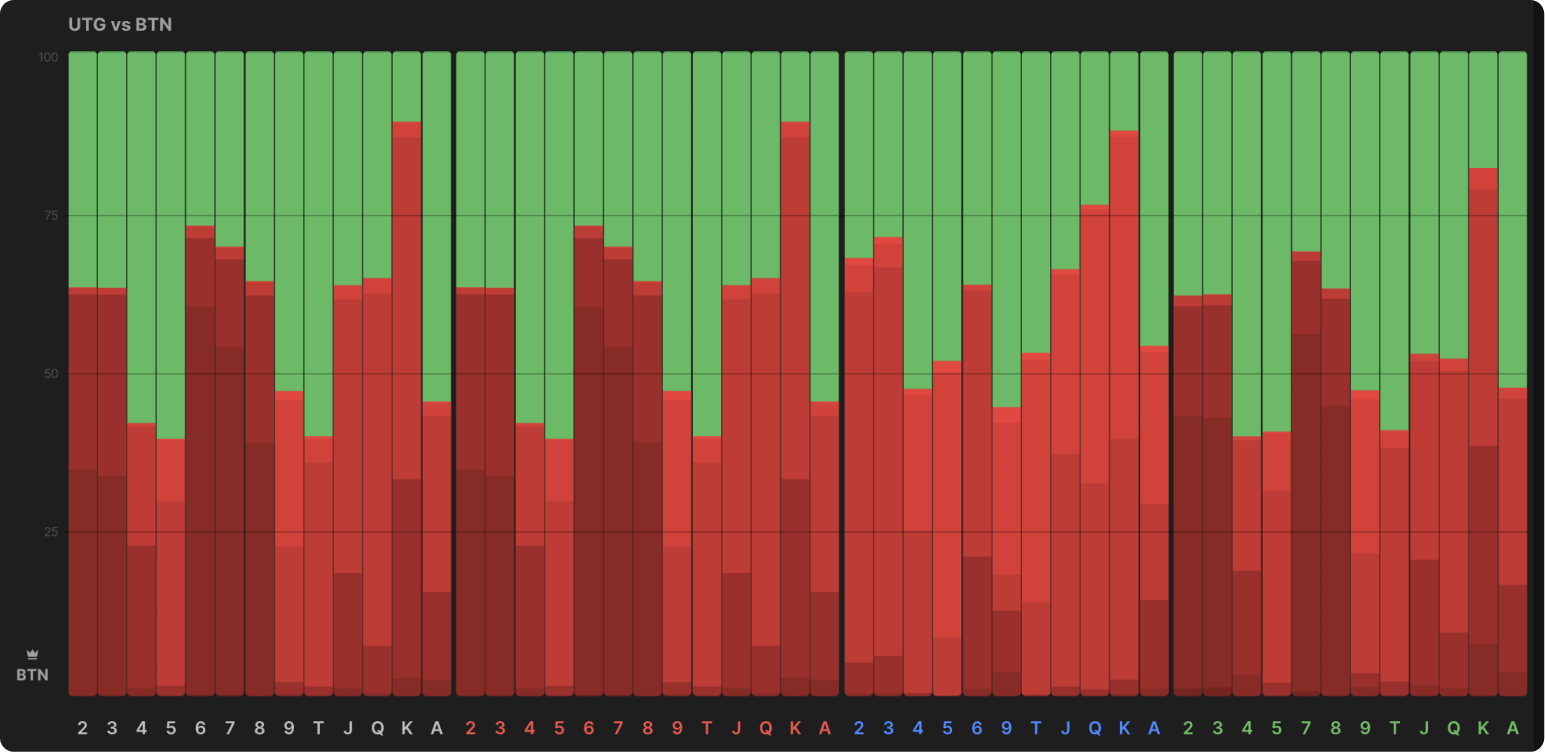
Here is the BTN strategy on all turn cards (grouped by rank) with start stacks of 100bb in 3-bet pot vs UTG after the continued bet on the flop at 50% of the pot has been colluded:
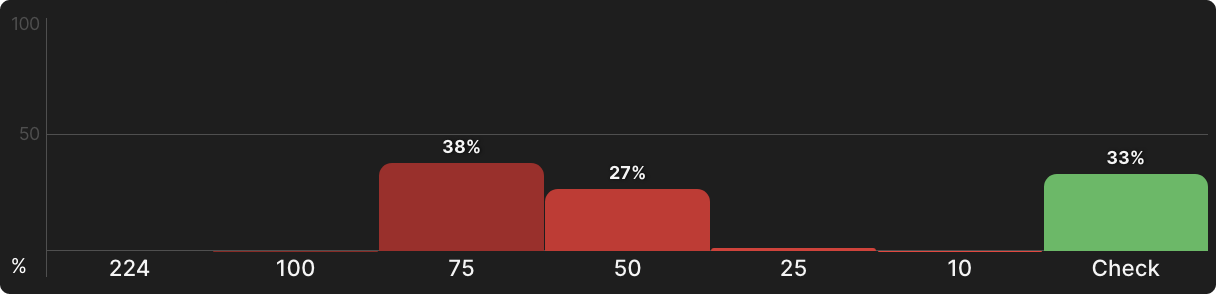
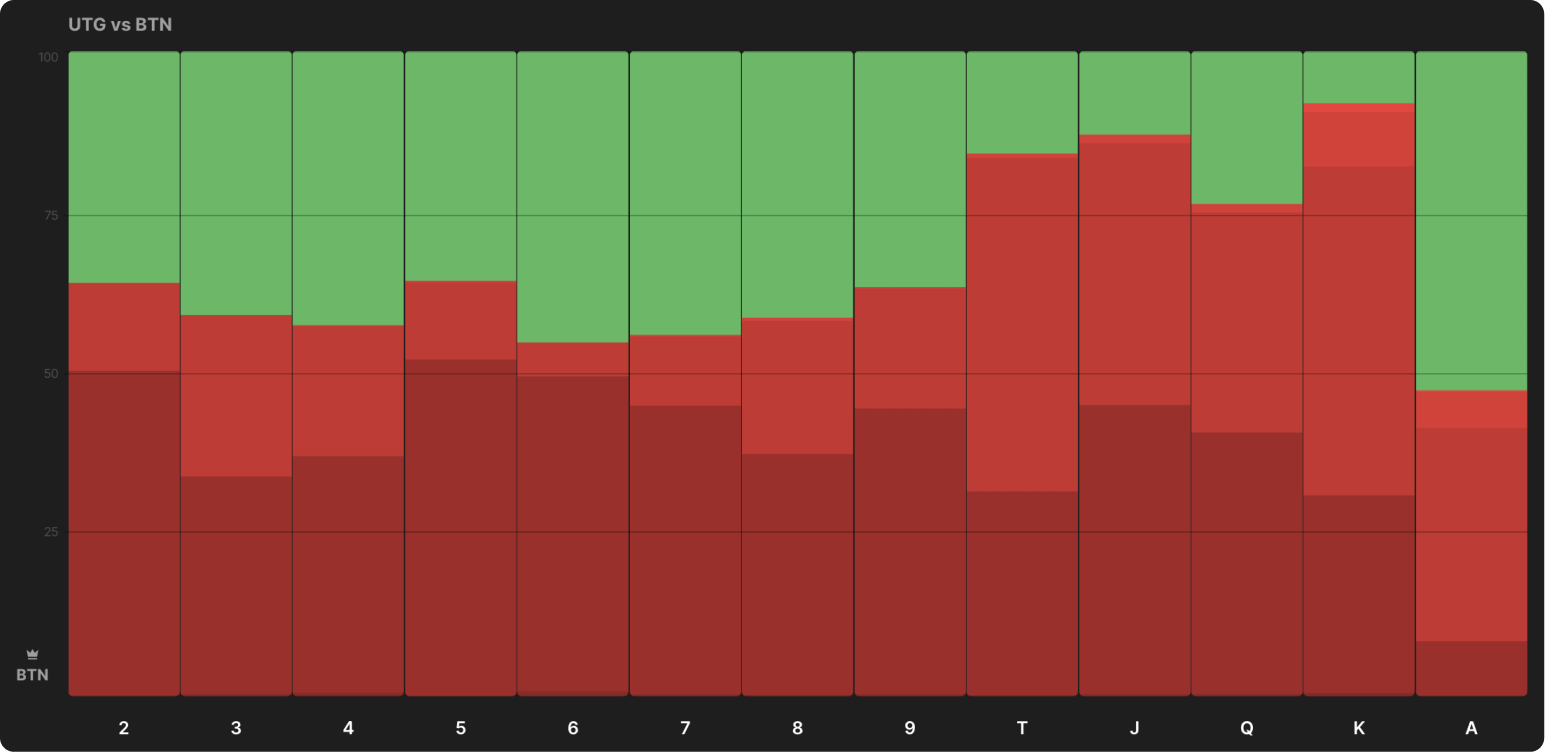 size. Green - check, red - 50% of the pot, dark red - 75% of the pot
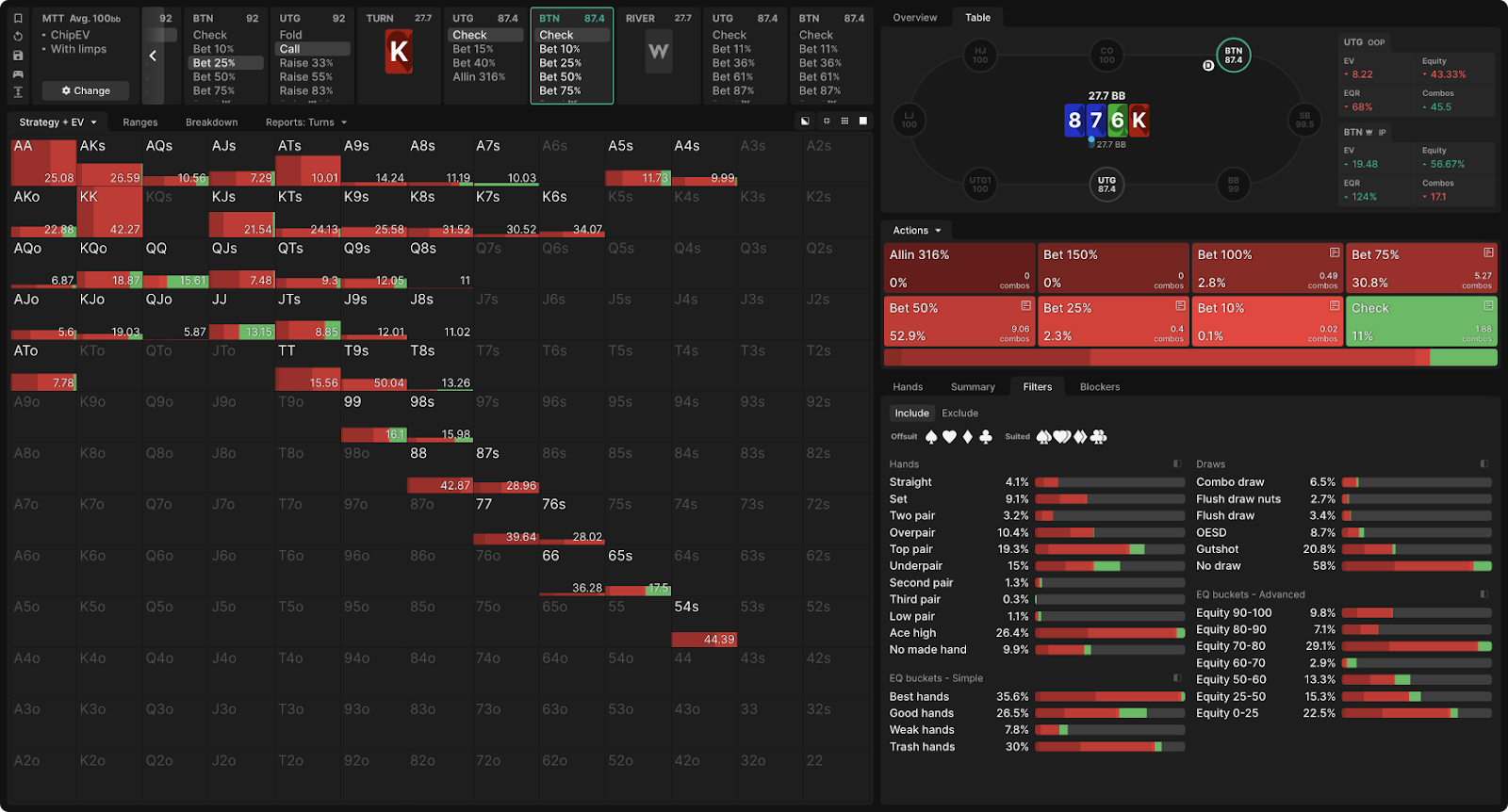
Solver involves a combination of 50% bet and 75% pot on most thorns, putting Push on the river, which is a little more or a little less than the bet on the turn. Using the “Custom Solutions” function, which includes automatic selection of the optimal bet size, the solver AI stops at 67% of the pot as the optimal size on a regular turn,
such as .
.
Next, he offers a Push on the river in the amount of 67% of the pot, an ideal example of geometric growth of the pot for billing:
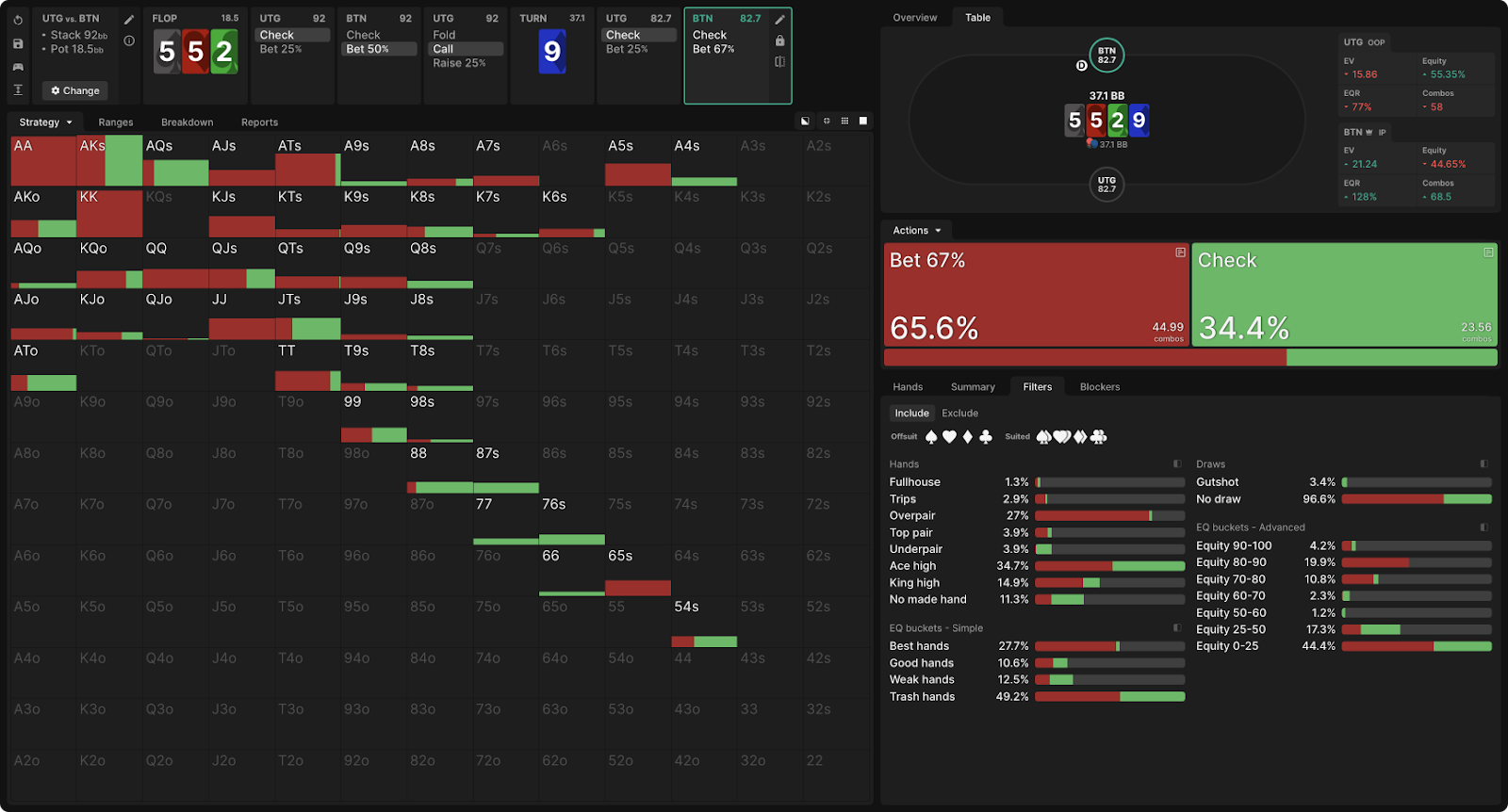
We also see that virtually all Q9 and stronger hands are betting value again on the velly on this turn and that overcards are the best candidates for bluff, with the exception of AK and AQ, which have less incentive to bluff because they can win without improvement. Positions do not play a big role here.
The 3-beat strategy looks almost identical when it is on UTG1 rather than BTN:
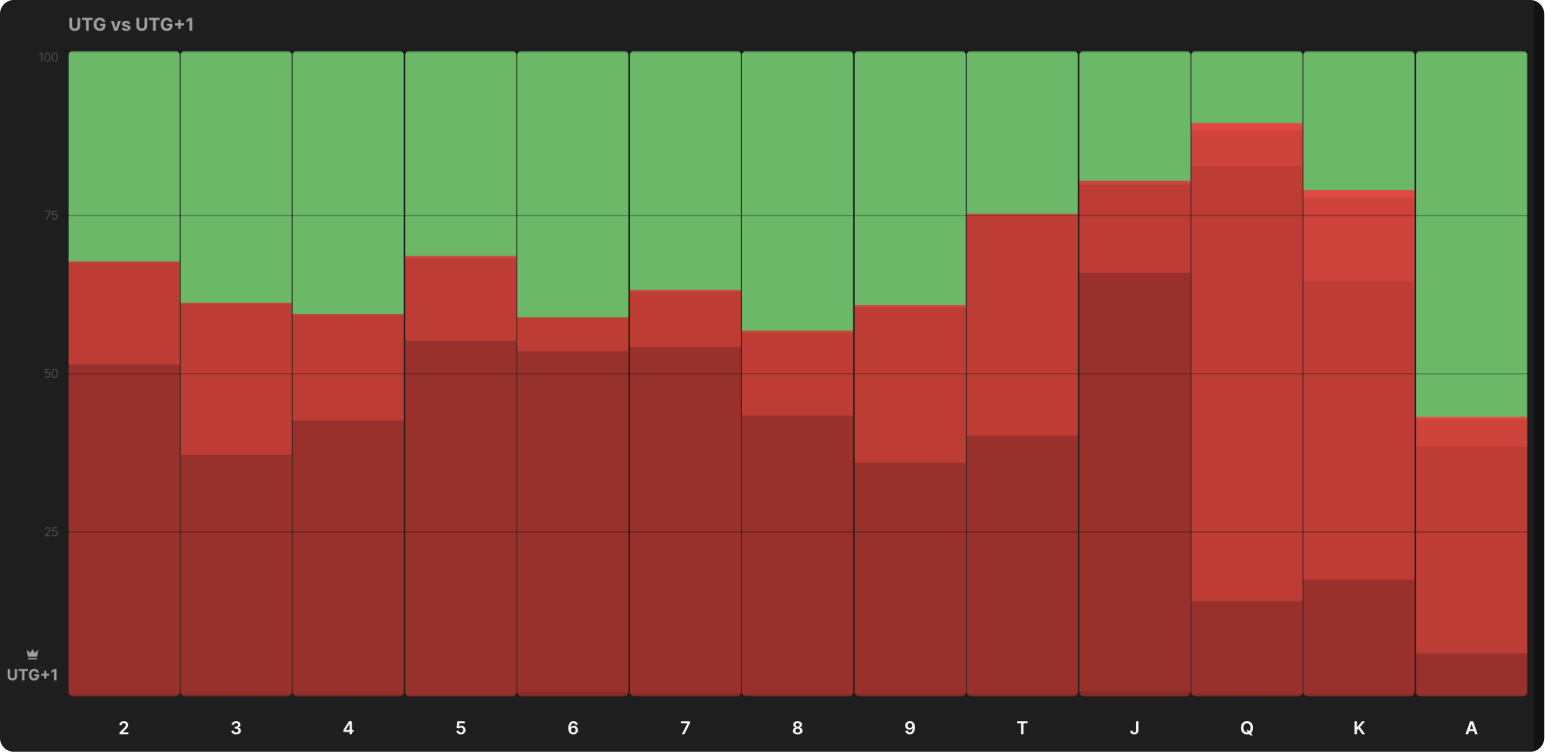
Even 3-betch on BB barrelite with a similar frequency on similar maps, with the main difference being that since his 3-bet and continued bet are slightly larger, and his bet on turn is slightly smaller to support the geometric growth of the pot:
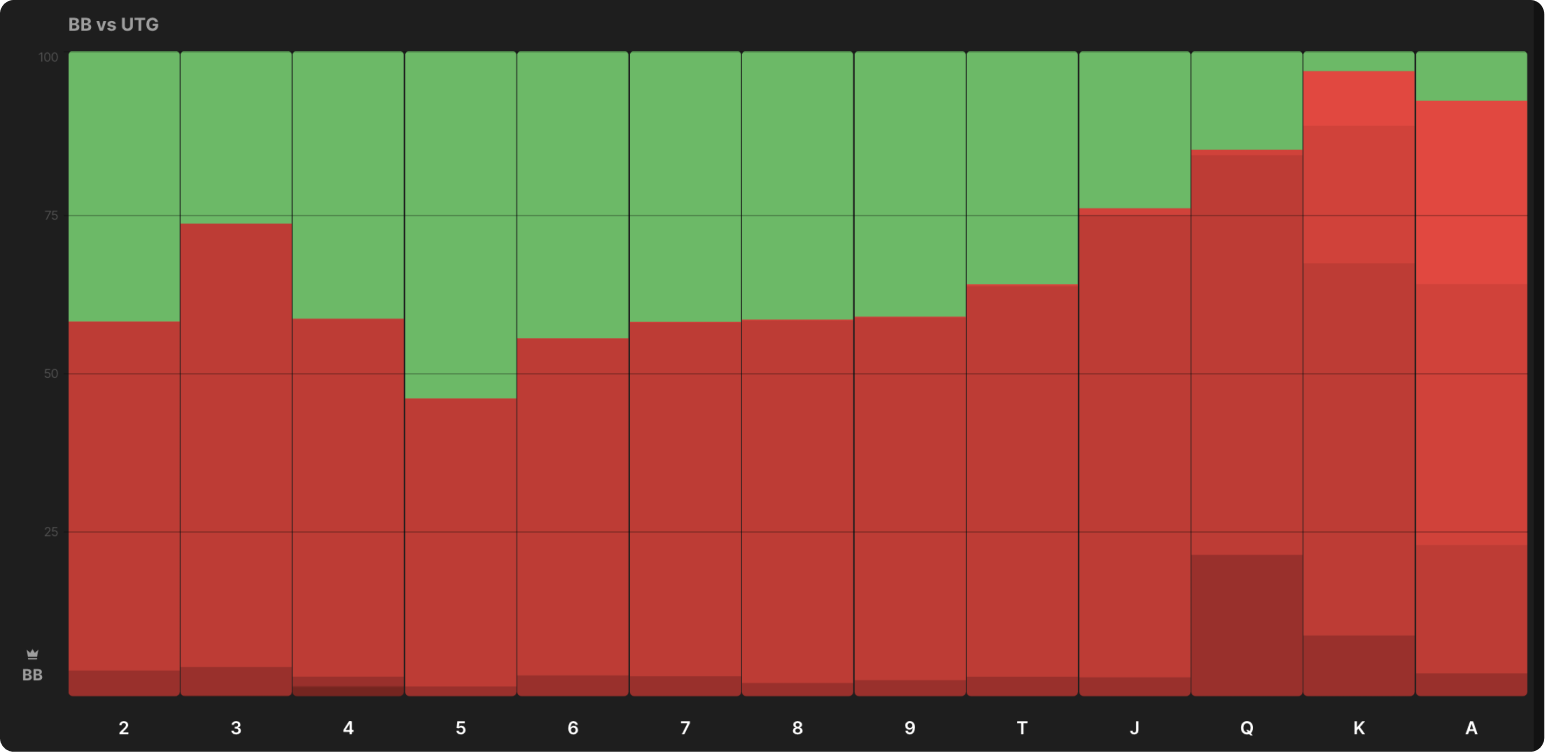
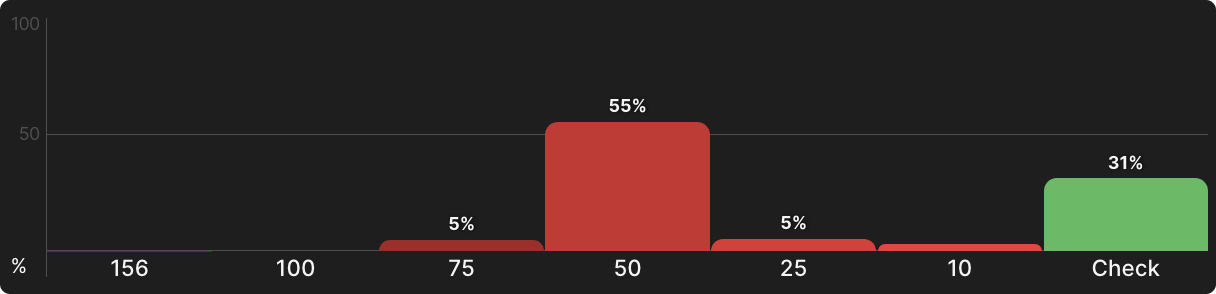
When you have a nuts edge, distributing bet across multiple streets puts maximum pressure.
We see a similar effect when we look at BTN vs UTG at 40bb depth. SPR is slightly higher than 1, but BTN almost never goes all-in, preferring to maintain geometric growth with rates of 25–50% of the pot:
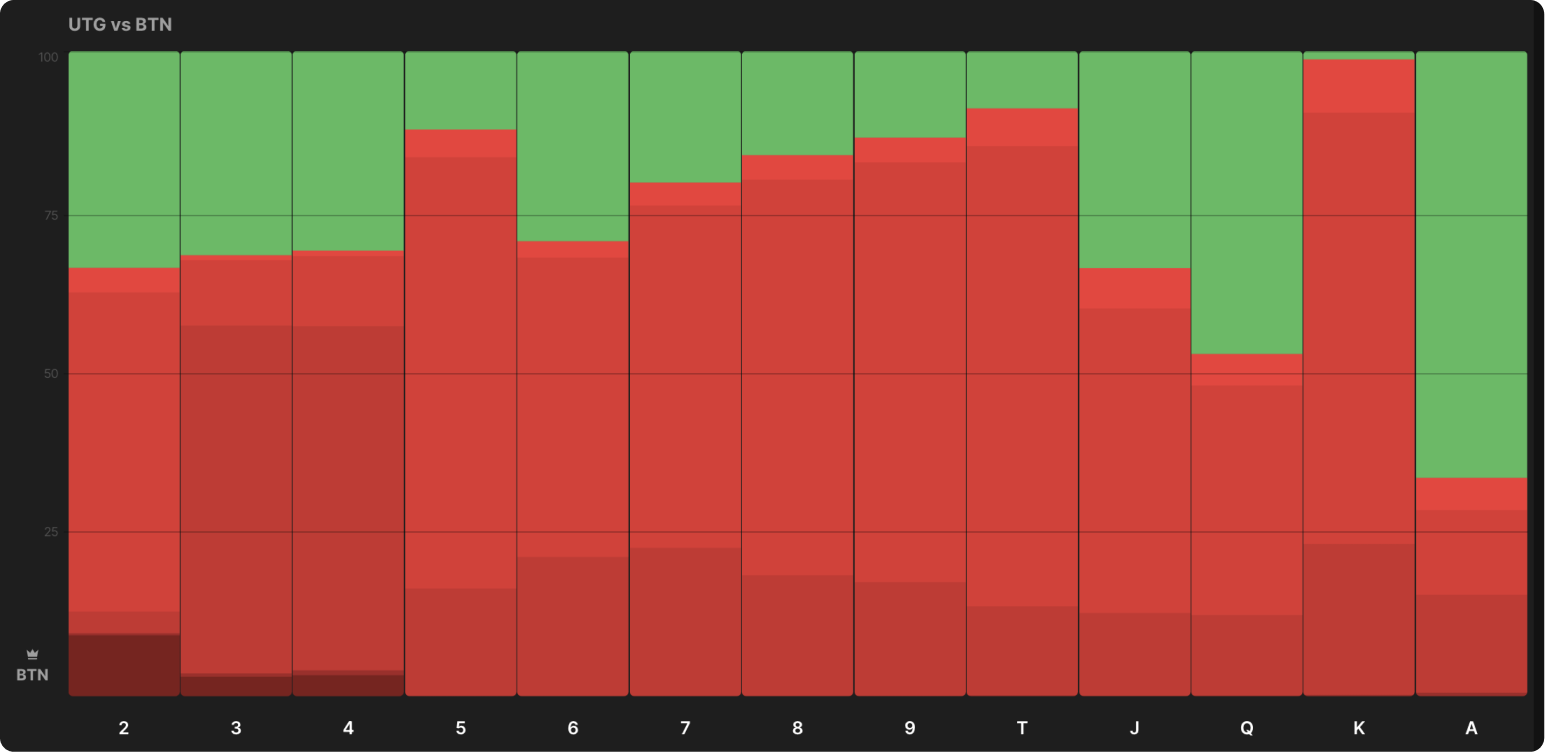
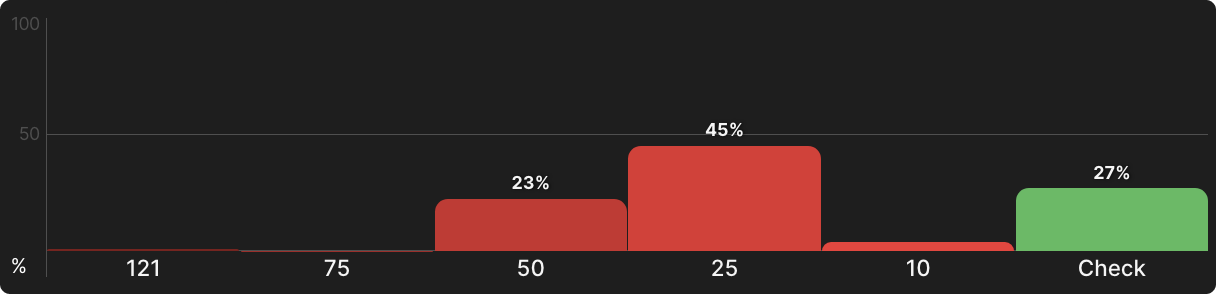
In my experience, many players often go all-in in this situation based on a few incorrect statements:
They think they are exerting maximum pressure.
This is a good message, but when you have a nuts edge, spreading bet across multiple streets actually puts more pressure. You still have the opportunity to eventually invest all the money, but you can “drag” a few more cheap bluff on the turn, after which the villain will surrender on the river. So you will win a little more when your villain calls the turn and dumps the river.
The distribution of bet across multiple streets actually puts more pressure.
They don't want to be reared.
Again, this is a good idea, but it's worth thinking more deeply about why (!) you don't want to be twisted. Often, getting a raise is a sign that your opponent has a strong hand, and in this case, the ability to fold cards is preferable to having your entire stack in the pot. While it's frustrating to fold and miss out on the chance to improve on the river, it's often as little as 10% equity or so — hardly the end of the world. In addition, your advantage in nuts does not allow your opponent to make too aggressive edge.
If you have a strong reluctance to receive a reraise, it is worth considering why you do not want to receive it and how likely such a scenario is.
They want to deprive the opponent of equity and avoid a difficult decision on the river.
This is most understandable with hands like TT or JJ, which are quite strong but lose a lot of equity on over-card rivers. Overall, in the equilibrium chip EV model, the Push with TT is 22.78 bb on the turn compared to 23.73 bb at 25% pot, so this is not a big mistake.
But most of the rivers will not be overcards, and even if they are, your hand may still be good enough to push on the vellya. Anyway, so calculated the solver. In fact, it is not so likely that your opponent will have a king or queen after the call of bet on the flop and turn, and with such a small lag for him, it is not so necessary to reset lower pair. Ace is a different story, and you should actually make a check back. Fortunately, the position gives you the opportunity to do so.
When you have a strong desire to deprive an opponent of equity and avoid a difficult decision, it is helpful to think about which hands you are trying to deprive of equity and how likely you are to face a difficult decision.
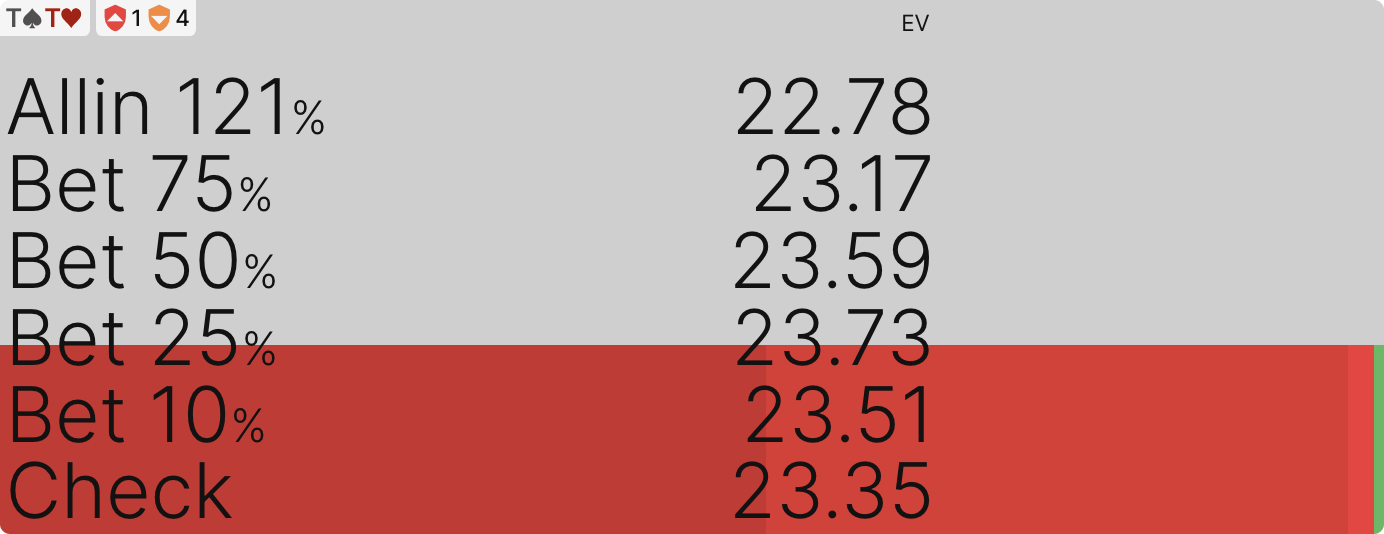
Speaking of position, we do see a little push on the turn when the 3-beat is out of position.
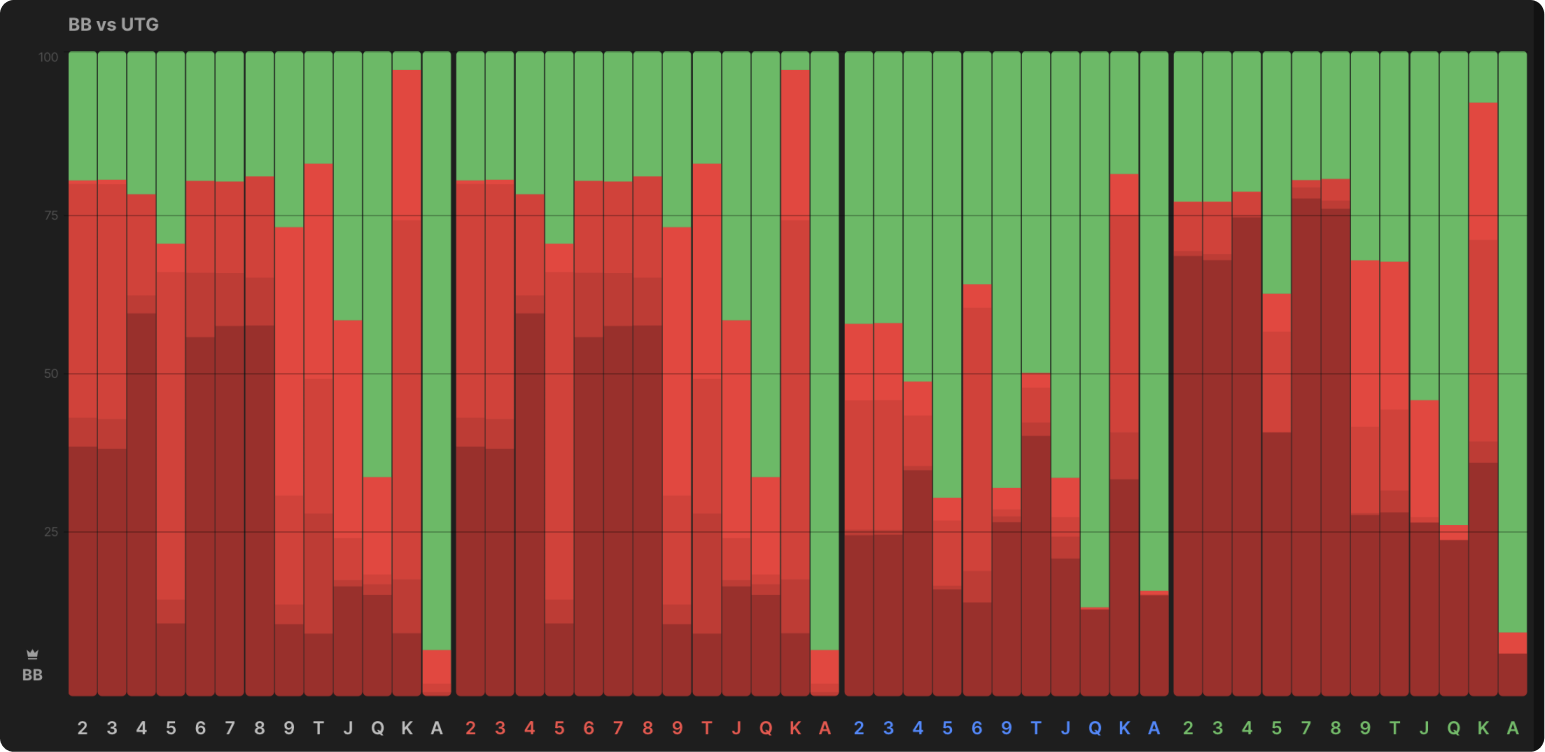
Here is BB vs UTG strategy in the depth of 40bb:
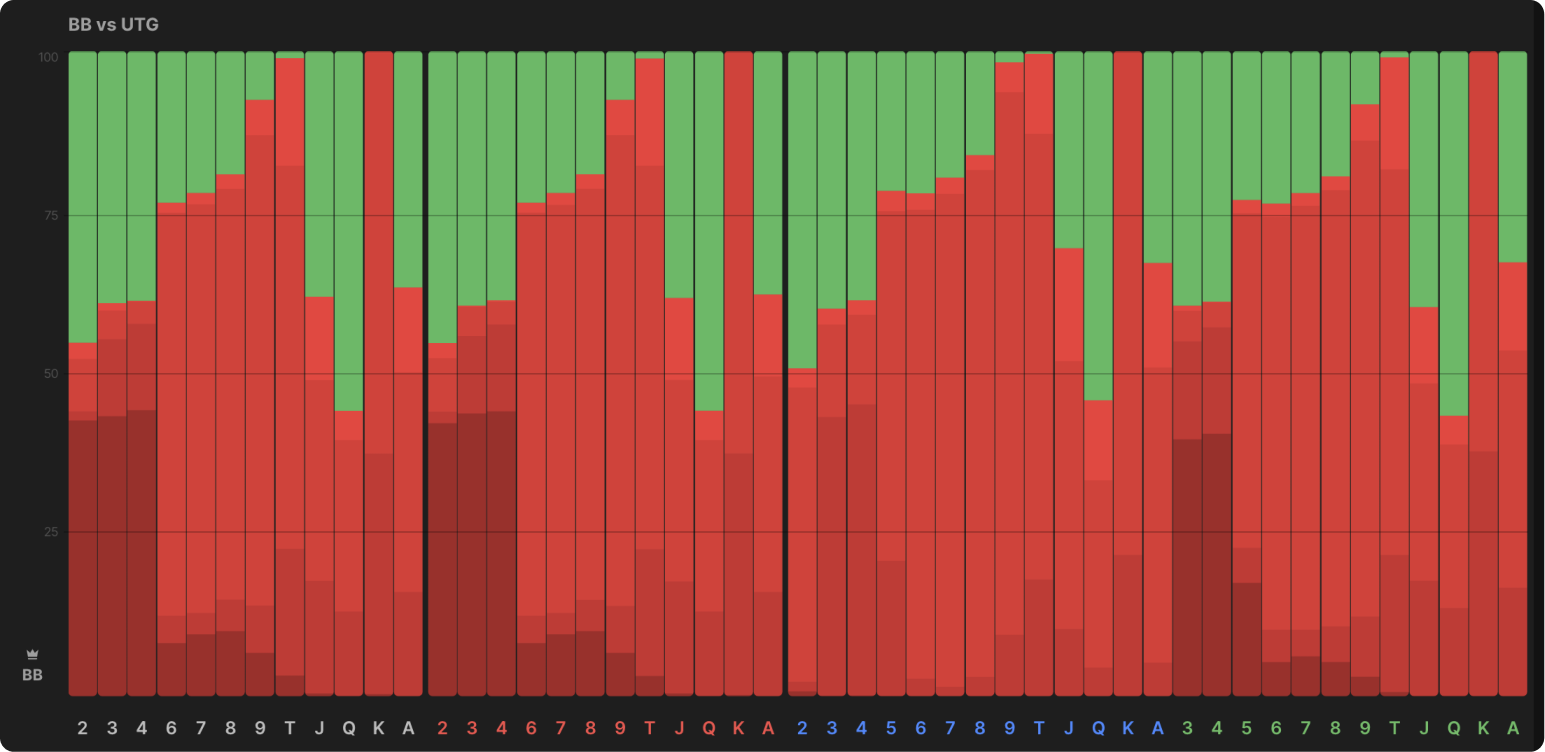
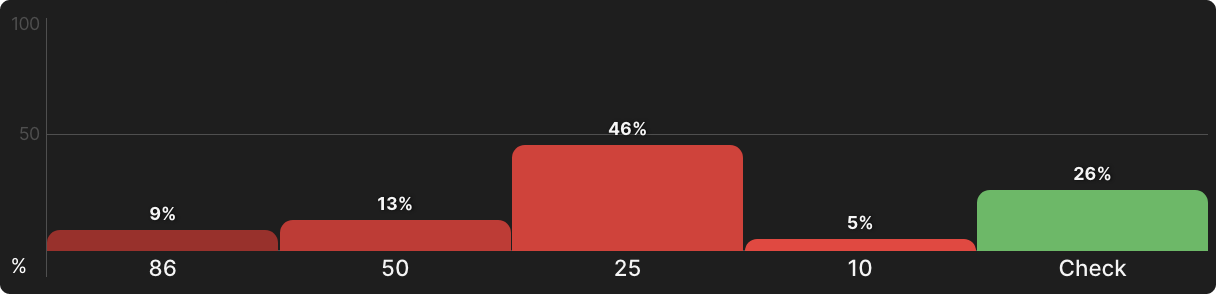
Pot control without a position is more difficult, it stimulates you a little more to push on the turn. But only a little more.
A player without a position cannot guarantee a free card on the river by making a check, and he will not have the opportunity to make a check in response to unfavorable rivers. Thus, he has a little more incentive to go all-in on the turn, but only a little more. It has a substantial push range on just a few specific turns, all the low cards that flush draw gives. On these thorns, he has some incentive to push low flush draw, medium pair and AK without flush draw. None of these hands are pure fluffs because they are still well suited for all-in check-raise.
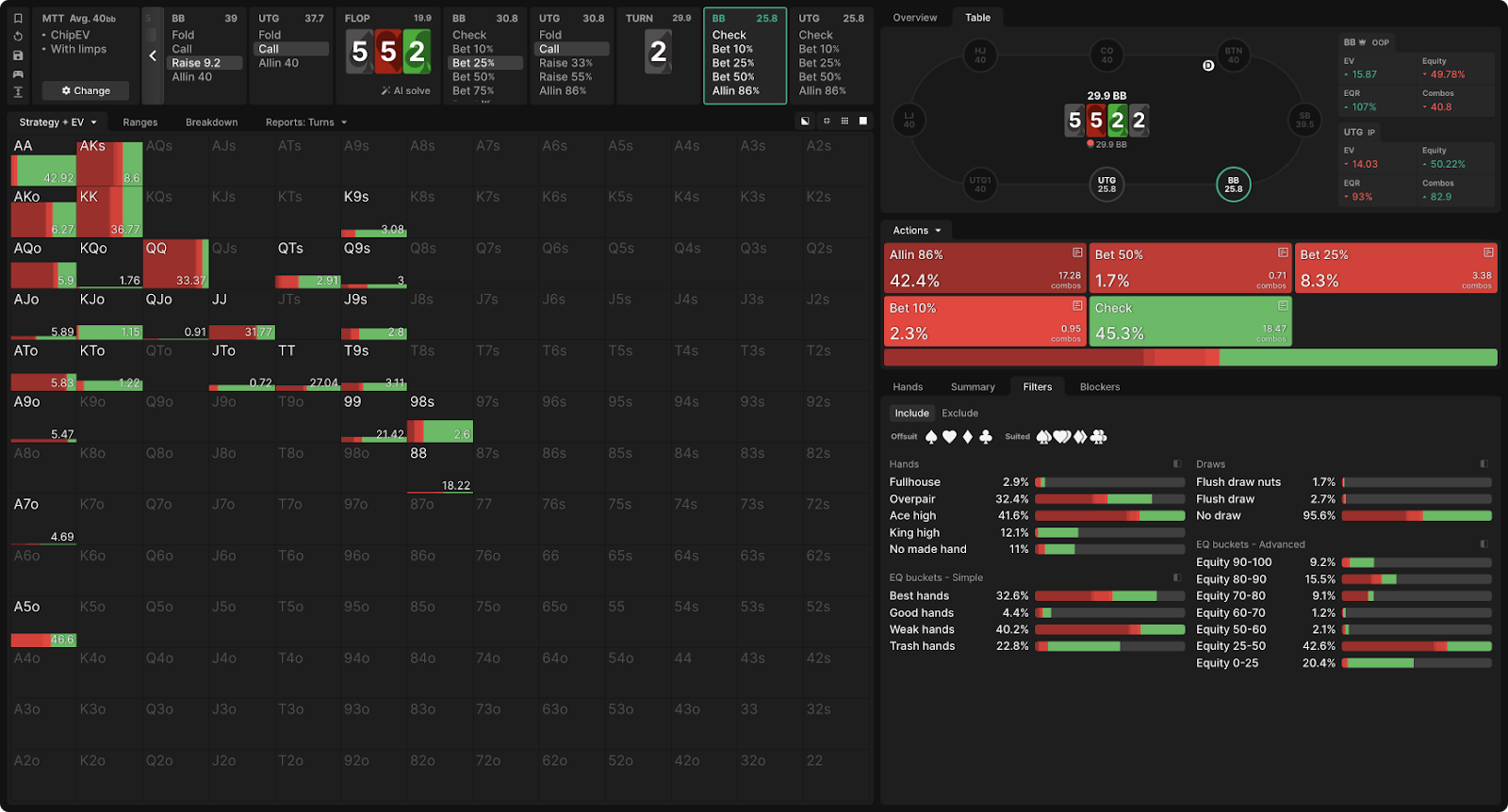

2. Medium bound flops
Although these boards are much less favorable to 3-betch than blank flops, the barrel turn frequency on them is not much lower. This is due to the fact that 3-betchik has already taken into account the relative unfavorability of the flop with a lower frequency of continued bet. When he makes a bet on the flop, it is done with a range tuned to facilitate an effective barrel on the turn.
Here is BTN's strategy against UTG in depth 40bb on 

 :
:
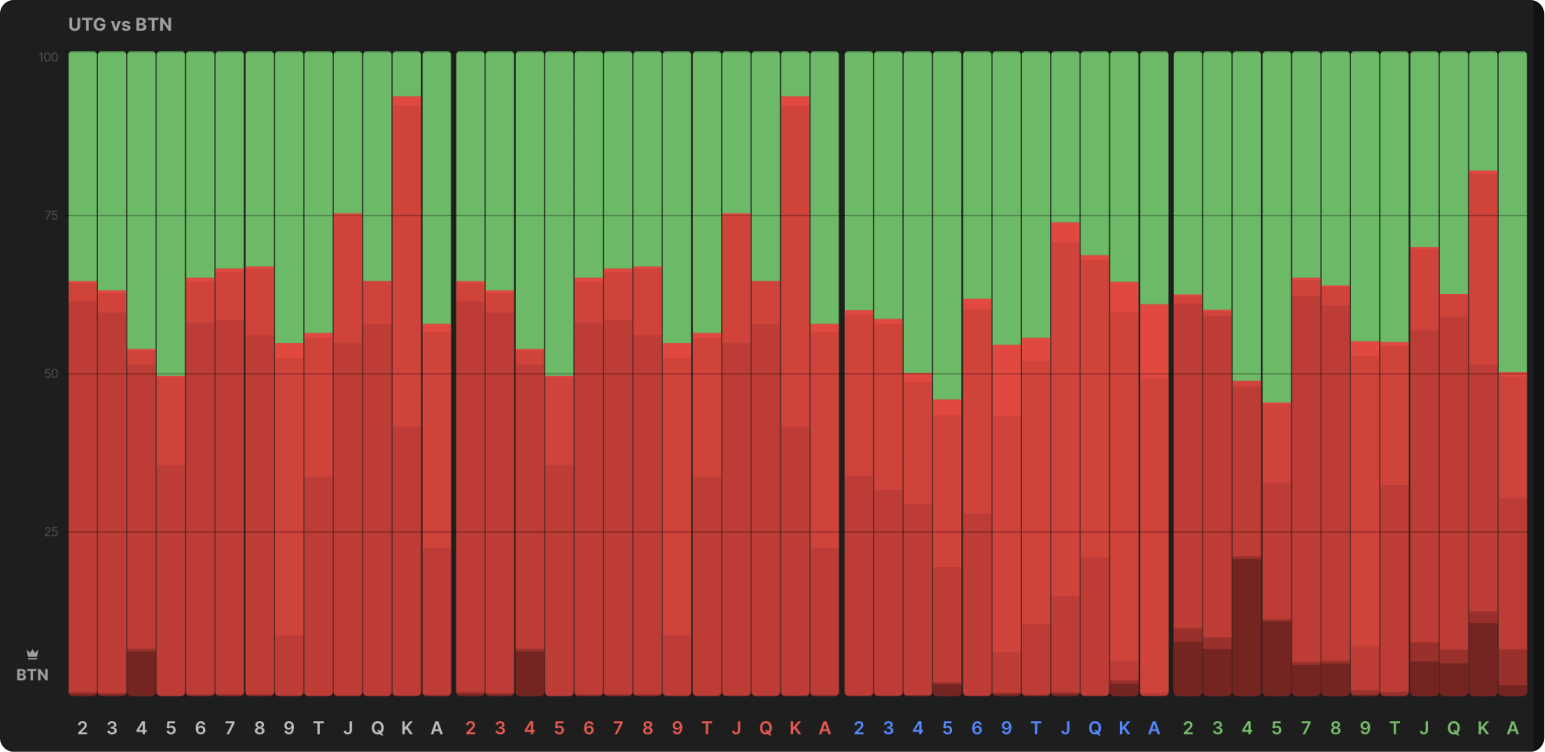
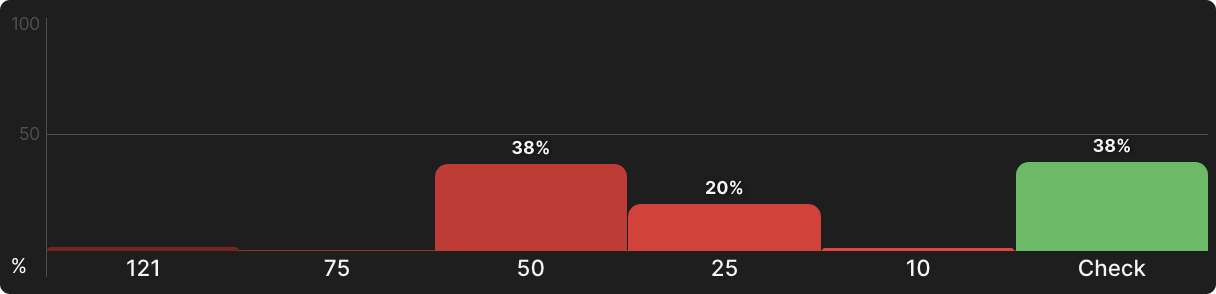
Despite the coordinated board, BTN makes very few large bet or push turn bets. When he makes big bets, it's almost exclusively on double-flush bet boards, where the rivers are most dynamic. Basically, he makes bet of geometric size (meaning the geometric growth of the pot for exhibiting on the river), still considering his overpairs as nuts and preparing pushes on the river. Exceptions are cases when 9, 10 or diamond falls on the turn. These cards undermine the edge of the BTN nuts by forcing it to target the weaker part of the UTG range with less bet sizing. As is usually the case with geometric rates, the BTN barrel range on most thorns is polar. This means that he is basically not betting with modest pairs or draw who are at risk of getting a raise.
Instead, it is put with strong ready-made hands, draw with low equity (overcards, gatshots) and combo draw, so strong that they can call to raise:
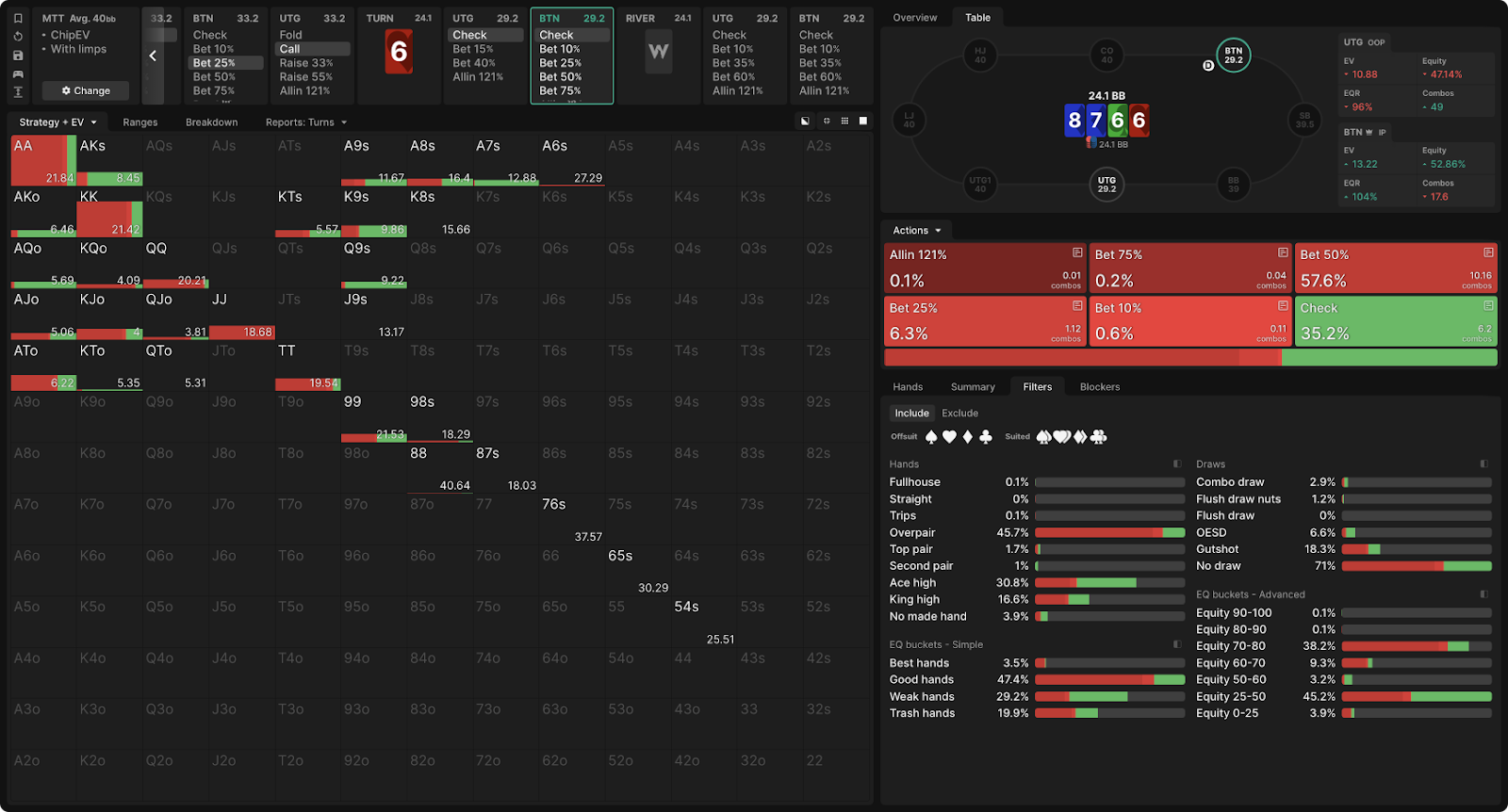
The main change in the deeper stacks is the larger bet sizes on the most blank terns to ensure the geometric growth of the pot.
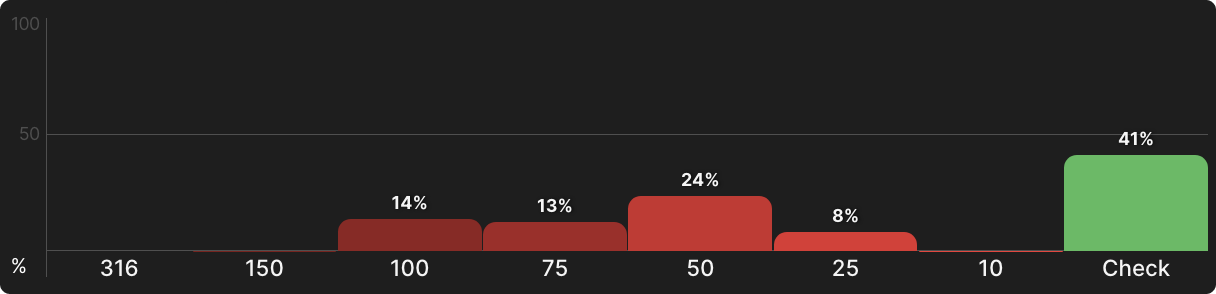
On overmaps of thorns favoring 3-betchik, especially offsuited kings, he actually runs out of bluff, and therefore he barrels less geometric sizing, which also allows for more subtle bet for equity/protection:
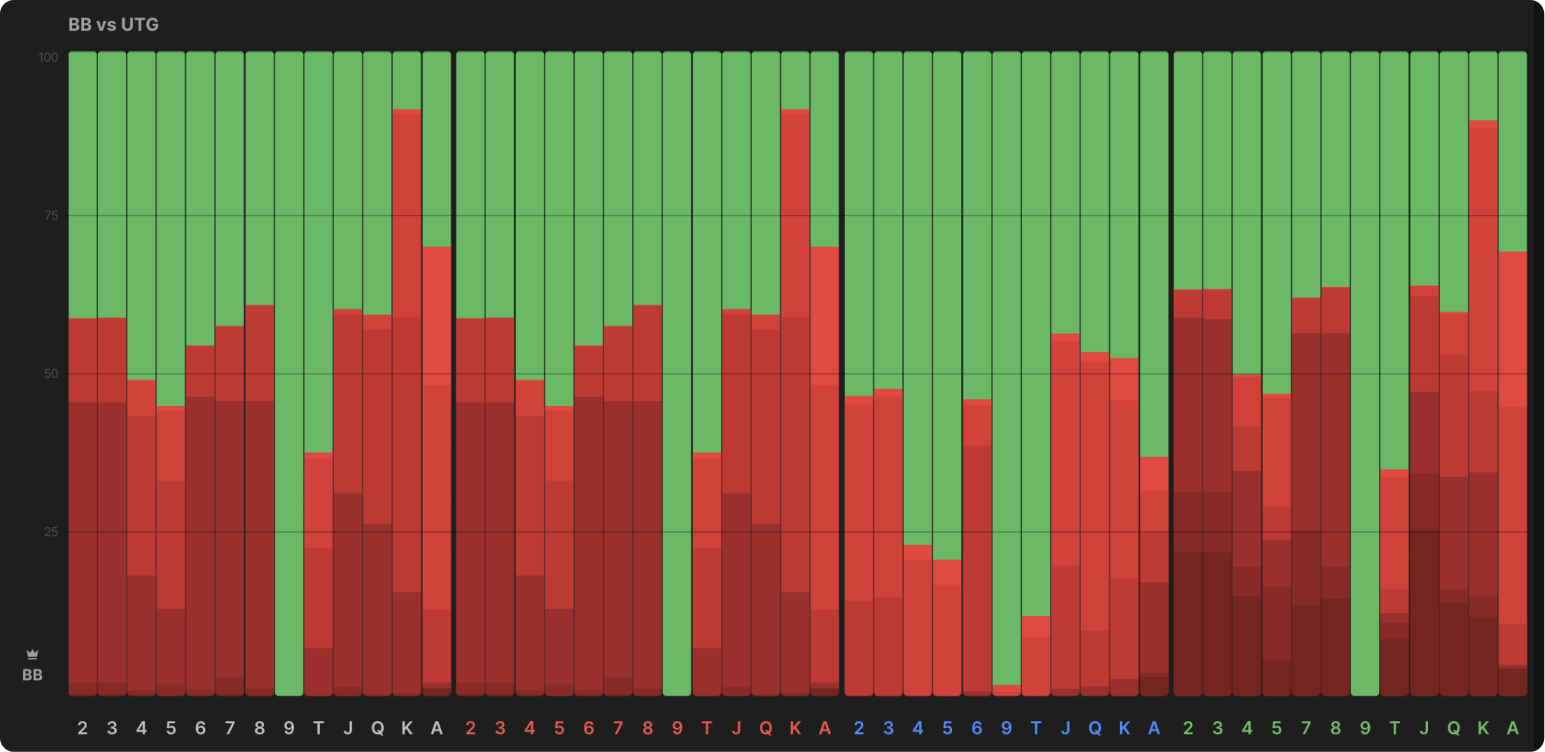
Let's go back to the depth of 40bb. We see that on this more dynamic board, a player making a 3-bet without a position (BB) basically refuses geometric bets on 3 streets and plays the push-or-check strategy when the stacks allow.
The exception, again, are the overcards that are most suitable for him, on which he wants to make more subtle bet:
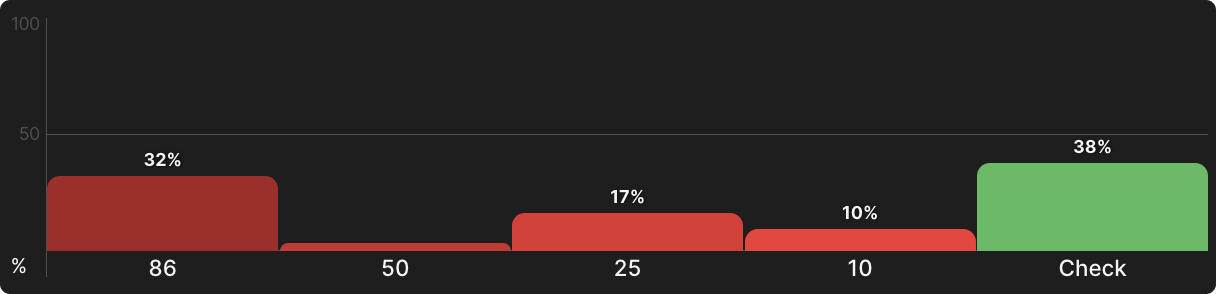
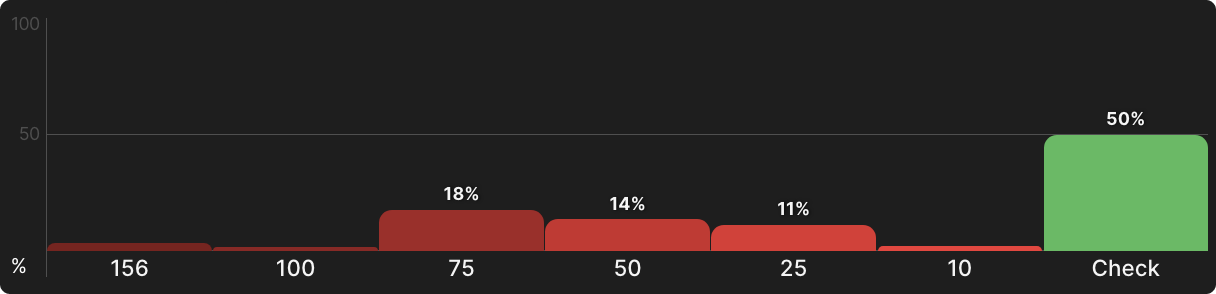
With deeper stacks, Push is mostly not an attractive option, so it makes more checks (sometimes check-push, which offers a more favorable risk/reward ratio) and block bets:
3. Conclusion

After the player in the position shows aggression on the preflop and on the flop and receives only calls from his opponent, he will enjoy a significant advantage of nats on most thorns. To make the most of this edge, you should aim to use the same size bet on the turn and the river, even if the stacks are very small. Only when you are without a position do you have the incentive to turn. You should only do this on the most dynamic boards. When you are not pushing, your barrel on the turn should be polar, especially if you are in position and therefore have the ability to guarantee a free river by making a check. With a low SPR, your opponent does not need a strong hand to push in you, and you do not want to knock out your draw and hands with average equity. Be sure to take the time to hone the skills in your game.