
Translated with the help of AI. We apologize for any errors and would appreciate your help in correcting them.
Before reading this article, I recommend reading the articles: What you need to know to develop the right methods of working on the game?, Emotions — what is it? And how to use them to increase your poker income?
Poker is a game for money. It is not surprising that the happiness of victory or the bitterness of defeat can lead you out of a state of mental balance. Moreover, it negatively affects your game and joy and anger.
In this article, experienced MTT coach Alexey Exan13 will tell in detail what Tilt is, how and why poker players get out of emotional balance, what types of tilt exist, how to deal with them and not break mice against the wall after the next move or unsuccessful session.
1. What is Tilt
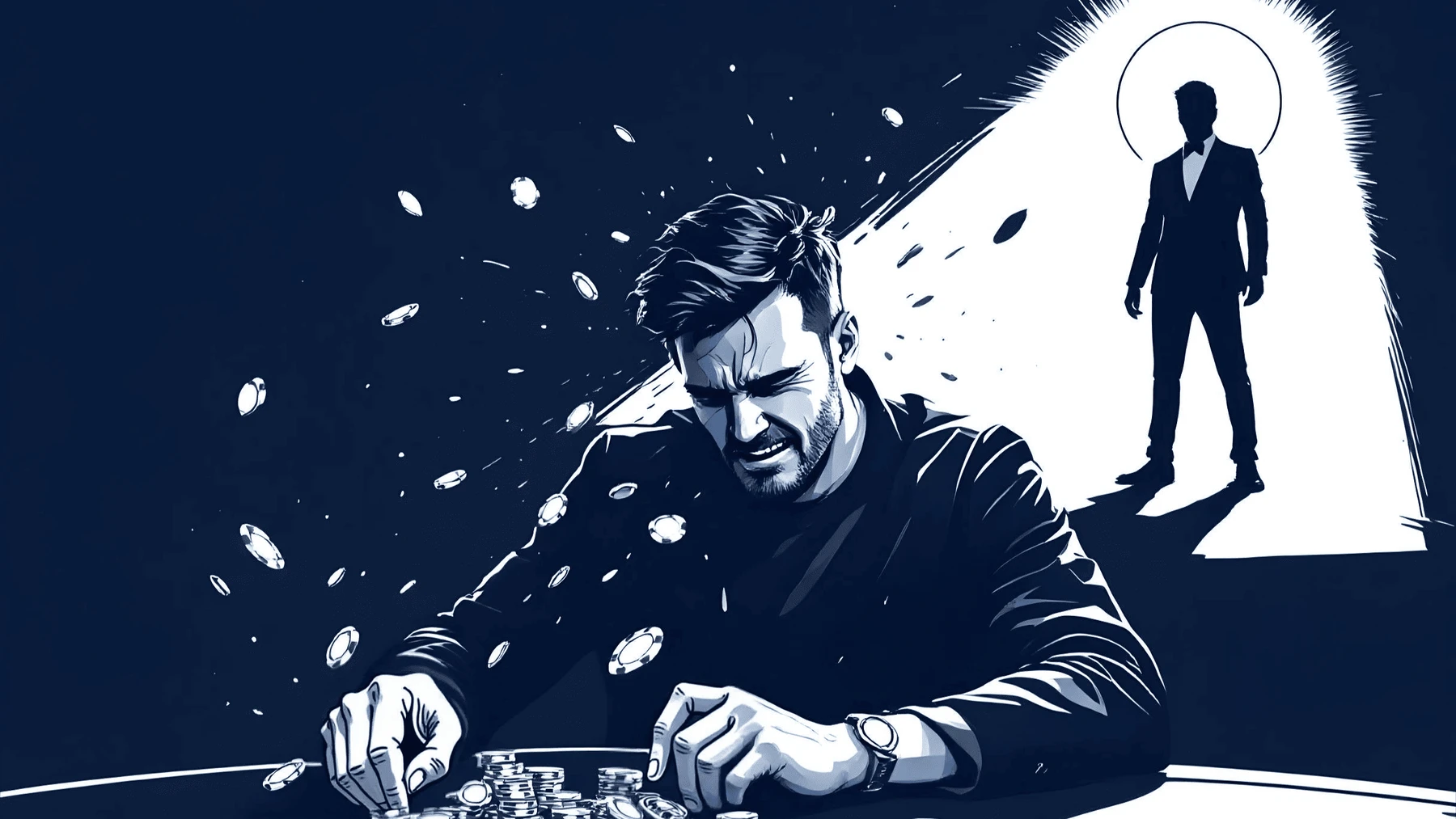
What is Tilt you will feel for yourself when for the first time pocket aces are moved by any garbage hand or set of twos. Suckout at the early stage of the tournament is not as offensive as at the prefinal or at the final table, when you were supposed to become a chipleader — and fight for first place. Most poker players use the word Tilt to refer to a sub-optimal state of consciousness in which emotions, feelings, or thoughts have a negative impact on the quality of the game. How to keep yourself in control and not fall into Tilt — let's talk below. In the meantime, we offer you to feel what a real storm of emotions is. Fast forward to 2014, when one of the most expensive tournaments in the World Series of Poker “The Big One for One Drop” with a buy-in of $1,000,000 took place. In it, two players were given the best starting hand — pocket aces.
Spoiler for the video below:
Play ended with not dividing the pot. How not to send poker far and for a long time after this? That's what you're about to find out
2. Types of tilt
There is a separate article on the site that discusses in detail the 7 common types of tilt in poker.
Therefore, we will list them briefly and outline the main features:
- Revenge is an emotional response to the actions of one or more specific players, which leads to a suboptimal strategy — the player begins to go beyond the Range or make impulsive decisions.
- When everything is bad - this Tilt is a companion of protracted downstrikes, when you do everything right, but you cannot achieve the desired result.
- Injustice - offensive situations at the table are introduced into it. Moving suckout pocket aces with a junk hand (or from another pair of aces) is a vivid example of a situation that can lead you into a similar Tilt.
- I hate to lose - it is impossible to win 100% of hands in poker. And some players simply do not know how to lose, starting to blame everyone around them for this. And poker doesn't owe anyone anything.
- Error - the type of tilt is widespread among professionals and reg players. When you spend a lot of time analyzing hands, there is a high probability that you will be acutely perceiving every mistake made. But we need to move away from that.
- I have to - a dangerous misconception to think that poker owes you something, because you understand the game better than others. Make the right decisions on the hands — and at a the long run you will be in the black.
- Despair - usually this type of tilt is manifested in the desire to recoup. It is often a downstream companion, encouraging players to move to higher limits, where the bankroll is successfully lost.
3. Causes of tilt
Often, players begin to immediately look for a solution to the tilt problem — how to get out of it as quickly as possible. However, this will be a short-term result (if at all). In the future, the situation may repeat itself, and its consequences may be much more deplorable. Therefore, we recommend first of all to understand the reasons that lead to tilt.
It can be:
- Losing is the most popular reason that brings poker players out of psychological equilibrium. Who would be happy to lose their own money. However, there are no victories without defeats. Treat the money you lose as a tuition fee. And do not try to do everything possible to immediately regain every cent lost.
- Winning - you will be surprised, but an upstrike (or a series of wins) also often leads to tilt. You begin to think that you know everything about poker and will easily beat any opponent in class. Therefore, you download more expensive tournaments where regulars bring you down from heaven to earth reg players. And failures at high stakes quickly lead to the loss of the bankroll.
- Fatigue - poker — not only relaxing by the sea and traveling, as beginners draw in their imagination. These are also many hours of training, as well as grueling game sessions, which MTT players can last more than ten hours. Man is not a machine. And over time, fatigue accumulates, which leads to suboptimal decisions in hands and the desire to either win or lose — and go to rest.
- Downswing - there are many people who can be knocked out of balance by just one defeat. Now imagine if such fiascoes happen one by one over the course of a day, a week, or even a month. Therefore, psychological stability is one of the key factors for turning into a profitable poker player.
- Alcohol - alcoholic beverages change the perception of the world. This applies not only to poker, but to life in general. Therefore, we categorically do not recommend sitting at the table while “under a degree”. It is better to watch a movie or spend time this evening with friends, making poker a day off.
- Problems outside of poker - we are all people who have many interests, family, hobbies, friends. Not surprisingly, a fight with your spouse or a dog's illness will have a negative psychological impact on you at the poker table. You will not be able to concentrate on the game, as thoughts will constantly return to a problem that you may not even be able to solve.
4. Signs of tilt
There is a well-known phrase that understanding and timely diagnosis of the problem is already half the way to solve it.
It is also true for tilt. In an ideal situation — you will not let the emotions gain strength so that they overwhelm you, suppressing them at the very beginning. However, if this does not work out, and the state of tilt will cover you, it is important to diagnose it as quickly as possible — and voluntarily wean yourself from poker.
We share typical signs of tilt:
- Suboptimal game
If you notice that the draws are increasingly observed strange lines that are far from optimal, there is a possibility that you are gradually losing control over yourself. The same is true for opponents. If the opponent lost several large pots in a row and began to bet all-in every hand — this is your client to increase the stack. - Strange behavior It
is often possible to observe unusual actions at the table offline, when you spend a lot of time with a person nearby and can understand what line of his behavior is considered normal. On the Internet, this is indicated by chatting, as well as too active use of emojis and various "throws". - The desire to recoup
Played several sessions in minus, and you want to start a new one at higher high stakes? Remember what bankroll management says about this. Playing at higher rates, even in optimal condition, is not recommended if your financial management system does not allow it. What can we say about situations when you are too emotional. Usually, such a desire leads to the collapse of the career, when the next morning there is no money in the accounts in the poker rooms. - Increased body temperature
Tilt is an increased amount of emotions and adrenaline in the blood, which leads to stress. It is usually accompanied by an inconstant body temperature: you are thrown into the cold, then into the heat. You can't control your condition.
5. How to overcome Tilt
It cannot be said that Tilt is an exclusively psychological problem. This is a deeper issue that requires careful study. It is desirable to work in conjunction with a classic mentor and a poker psychologist.
For those who are trying to get out of tilt on their own, we will give some basic recommendations:
- Communicate in the community. You are far from the first poker player who encountered such a problem. In the poker community (and in your immediate environment) there are many examples when people faced tilt — and yielded to the power of emotions. There will be opposite examples. In any case, you will get support and be able to speak out, which is important in such situations.
- Watch poker streams. This is not only a good learning opportunity, as an experienced streamer disassembles interesting hands during the live broadcast, but also communication. You can ask the coach or professional any questions — and get honest answers to them. For obvious reasons, all the secrets of poker will not be revealed to you, but they will share personal examples that will help you cope with tilt.
- Learning: Most of the causes that lead to tilt are related to failures during play and improper learning. Therefore, you need to work, work and once again work, improving your skills, as well as psychological stability. For example, you can learn one video poker course from Exan13.