
Translated with the help of AI. We apologize for any errors and would appreciate your help in correcting them.
Emotions are not a problem. This is the key to mastery.
Reading Tendler's book "Mind Games", I was struck by the depth of the author's thought - he was able to explain in simple words the most important topic - what emotions are and how to treat them. This is a very relevant topic for a poker player. Tendler's book perfectly describes the nature of emotions, where they come from and what their role in our psyche is. This is the main difference between this information and classical psychology. According to Tendler's materials, which I fully support in my practical experience of working with students, emotions are only symptoms of internal defects in the mind, in the perception of certain situations and processes by an individual.
- Emotions are a special mechanism of the human mind, one of the main tasks of which is to color certain areas of human perception in order for him to pay attention to them.
- Emotions are like indicator lamps for the operation of various parts in a car. If you have a motor error, there is no point in getting mad at this bulb, trying to suppress it, or disowning it. It simply notifies about the existence of a problem - no more.
In short, the point is that emotions are indicators of imperfections in the program code of the human mind. This is easy to imagine if you imagine a spiritual elder or a holy person. It is impossible to imagine him in strong destructive emotions, because his perception of the world and events is very sublime and reasonable. According to this theory, his emotions do not need to emphasize any mistakes in his beliefs and views, so he is calm and balanced. I am aware of the presence of constructive and positive emotions that do not emphasize any problem areas in the system of beliefs and views of the individual - this article is not about them.
1. How to find balance within yourself
When you stop suppressing emotions and fighting them, and begin to perceive them as indicators that emphasize the weaknesses of your psyche, you begin to work on the problem itself, and not on its symptom. By working through psychological images, you acquire mental endurance. Many people talk about it, but few work on it. But the achievement of equilibrium is the acquisition of the real power of the mind. It's not easy, but Tendler's book is entirely devoted to it. I have analyzed this in great detail in my coaching practice for many students, and this path really leads to success.
2. What is a failure in the mind
Emotions can strike at the mind, and temporarily disable it or lead to poor functioning. At this point, they have a strong influence on the actions and decisions taken by the individual. These decisions and actions are a reflection of logical imperfections in the cross-section of a person's beliefs and views - they have nothing to do with his emotions, and therefore there is no need to hide behind emotions for self-justification - it is necessary to find the true cause and correct it. This is not about the fact that a person is somehow bad or unreasonable, since he has some imperfections in the section of beliefs.
This is a consequence of the general influence of the social environment in which we grow, the educational system and other factors, the change of which we can influence only consciously in a mature state, and then it is not easy. The most important thing that I recommend to start dealing with the state of your psyche is the study of childhood, mom and dad - why was this your childhood and how was the upbringing of your parents? This is just one of a wide range of issues in the field of psychology, consciously considering which, you help yourself achieve your highest potential of personality.

When the level of emotions in consciousness exceeds a certain level, the functions of the mind begin to fail. Your logical brain structures can no longer function optimally and decisions at the gaming table can lose decent quality. A whole range of different defective states of mind can occur.
3. The power of emotions
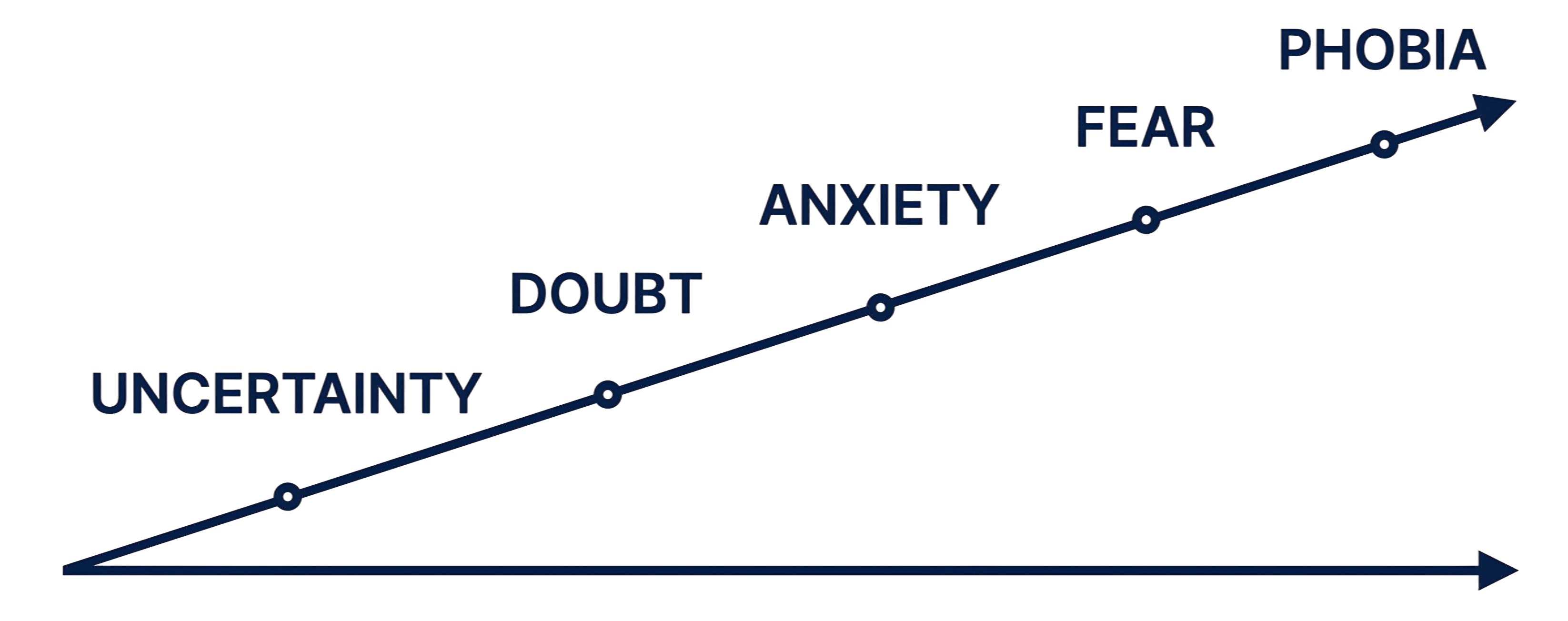
All emotions have a scale on which to measure their strength:
- Anger begins with the usual disappointment and ends with a terrible tilt;
- Motivation: from laziness to energy, inspiration and enjoyment of the game;
- Fear: from doubt to stupor;
- Confidence: from deep self-doubt to overconfidence and a sense of total superiority.
Emotions tend to accumulate gradually, and then explode sharply and come out, clouding the mind. Therefore, if you keep in mind the general origin of emotions within the spectrum, it will be easier for you to stop and think about them in the early stages of accumulation.
4. Lack of some emotions - a mistake
The book describes the Yerkes-Dodson law, which explains that the lack of certain emotions, such as motivation, confidence, the will to win, etc., also negatively affects your game, as well as Tilt - excessive emotions. In other words, you need to find a middle ground in some states, not turn them off completely. Be confident, but don't think of yourself as the God of poker. Motivation to play and show a good result is definitely needed, but if it turns into mania, an insatiable desire, then this negatively affects the game. If you have such a strong will to win that you are ready to break all the rules and norms for its sake, go over your heads, break the rules of growth by limits - you will definitely sooner or later sit in a puddle! Everything is a good measure!