

Translated with the help of AI. We apologize for any errors and would appreciate your help in correcting them.
During the course of a poker tournament or cash session, players may follow different strategies. To do this, they choose various strategic techniques on preflop. Today we will analyze some of them to explain to novice players which actions are profitable and which are unprofitable, which means they should be avoided.
1. Why limp should not be used in preflop strategy
Limp (limp)
bet sized 1 blind on the preflop. It is done both in a situation when there were no bet in front of us, and in the case when someone in front of us has already made a limp.
Novice players, as well as amateurs (so-called recreational players, people who play for their own pleasure, and not for earnings), really want to collect a “beautiful” combination, so they often enter the pot with weak and sometimes frankly bad hands pot. And since their hand is weak, they make a limp, i.e. simply invest one blind in the bank.
This is a bad strategy. However, strong hands of such players often play through the limp. This is due to their fear of getting confused in the subsequent game or the desire to confuse opponents. This is also a bad strategy. Our main task in poker is to win opponents' chips, so the main argument against using the limp on the preflop will be this: the limp will never allow you to immediately win the pot.
Exceptions
There are exceptions to any rule, so sometimes playing through a limp on a preflop can be justified. For example, a limp will sometimes be a good strategy if you play the small blind (SB) position against the big blind (BB). The key word here is “sometimes”, and situations when the limp is better than the raise should be clearly understood.
Raise (raise) raise
the bet. On preflop, the raise will be the first raise in the hand, and on postflop – the raise after the opponent's bet (bet). Limp can sometimes be made with a very strong hand with which you plan to make a check-raise, or with a medium strength hand that you do not want to throw away after an opponent's fold.
Check-Raise (check-raise)
Check in order to make a raise after the opponent's bet.
3-bet
The third bet raise is in the distribution.
IMPORTANT! 3-bet is not the size of the raise, but the “serial number”. For example, on the preflop, first the BB is set, then the raise (raise), then the 3-bet raise (the size of the 3bet is not important here). An exception can also be a game in the late stage of the tournament, when there are players with a short stack at the table who can decide to go all-in. Then with a strong hand, you can play a limp to provoke players with a short stack to put all their chips in the pot.
All-in (all-in or Push)
Bet on all chips.
2. Open Raise is the main source of winrate in poker
Open-raise
Opening the game with a raise. action on the pre-flop, when the player, before which there were no raises, makes a raise (puts more than 1 BB).
Winrate
It is usually measured in BB (big blinds) per 100 hands and reflects how much BB the player wins or loses on average per 100 hands played.
It is clear that the more BB a player wins, the better. And, as mentioned above, it is the open-raise in most cases that is our first step to winning the pot, because if we open the game with a raise, and all players at the table throw their cards into the fold, then we win the pot immediately. Immediately! Therefore, the best strategy on preflop will be an active game. Playing through the open-raise.
Opening range from different positions
Range (range, range)
The estimated number of starting hands a player can have.
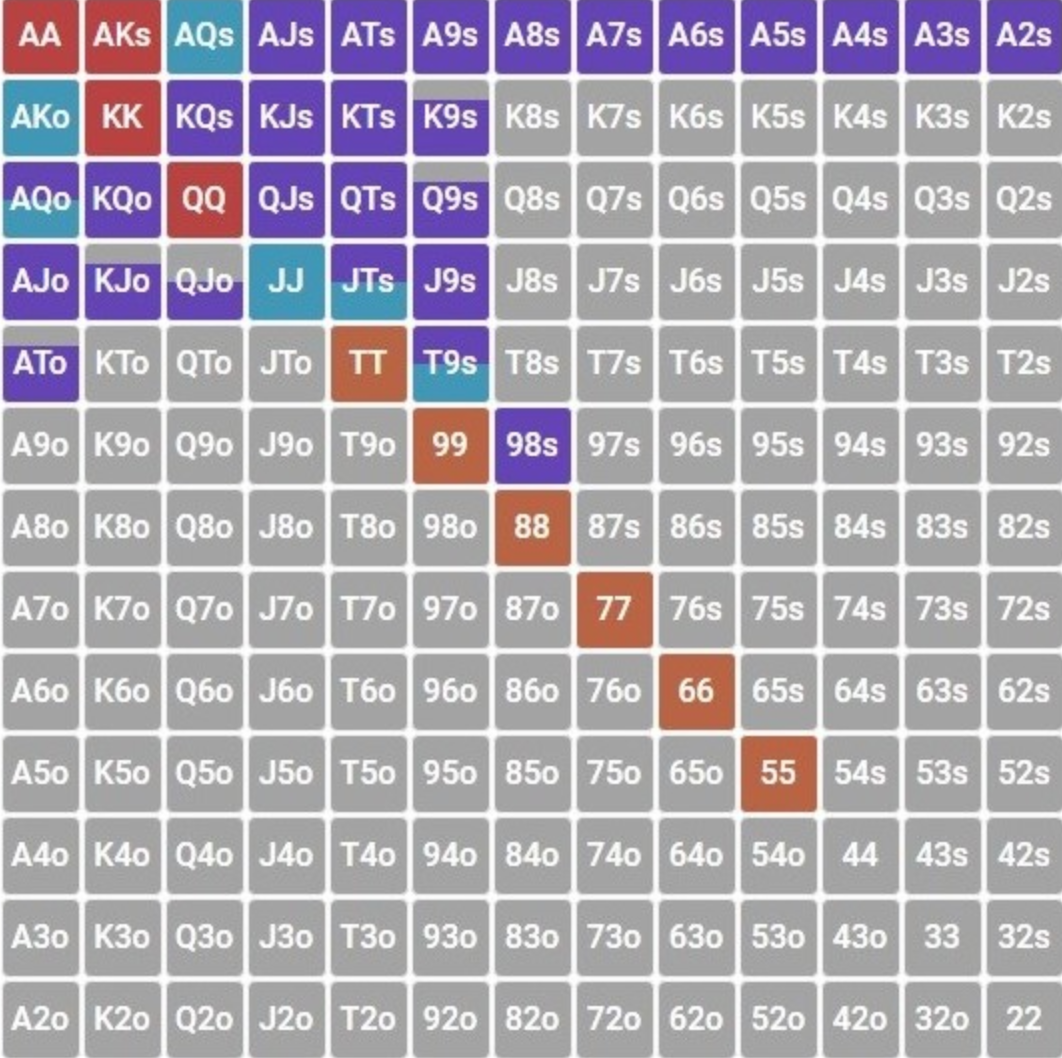
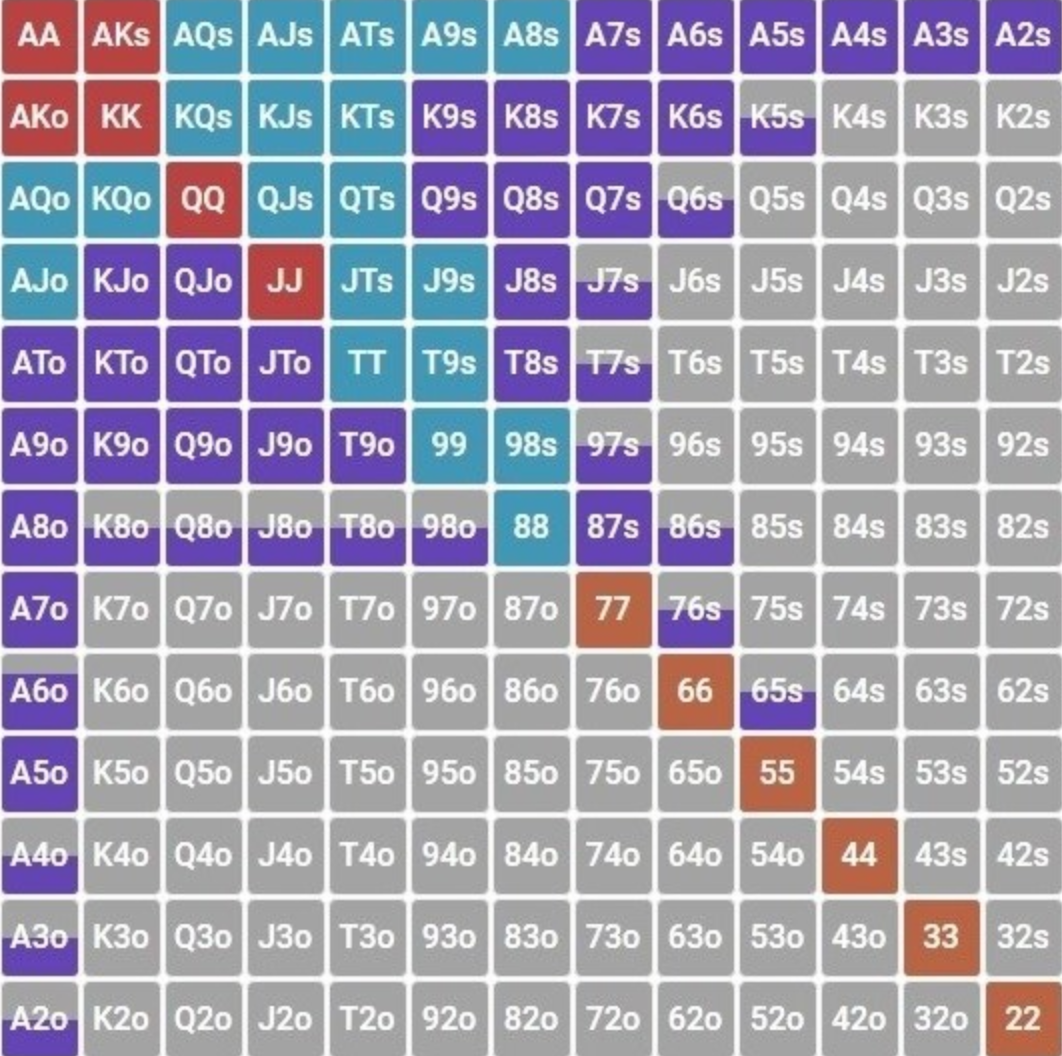
Of course, the open-raise will not be a profitable action with any cards and at any position at the table. To become a successful player, you need to have a good understanding of the open-raise with which cards and from what position will be a profitable preflop action. The position of the player at the table plays an important and sometimes decisive role in making a decision on the pre-flop.
As you know, the player in the position just behind the big blind (BB) has the first word in preflop trading. This earliest position is called UTG (Under The Gun). And although no one is actually pointing weapons at this player, he has to make the most difficult decision on preflop, since he has no information about the strength of the other players' hands. Following the player on the UTG, all other players take turns making decisions.
The more players after you will make a decision on preflop, the less starting hands you will be able to play with profit.
Therefore, the range of starting hands in a balanced preflop strategy will be quite narrow in the early positions (UTG) and will expand as we approach the late ones (BU /button/ and CO /cut-off/).

Further realize the initiative
The player who opened the open-raise trade is called the pre-flop aggressor and usually it is he who takes the initiative in this distribution, and also decides on its further development on the post-flop, that is, on subsequent trading circles or “streets” (flop, turn and river).
When making a decision on post-flop, the pre-flop aggressor must take into account many factors:
- the strength of our hand (the stronger it is, the more willingly we put chips into the pot ourselves, and the more we want our rivals' chips to be there);
- your position at the table and the positions of other players who invested money in the pot (the later our position is, the more advantageous we are);
- the size of the pot pot and its relation to the stack sizes of other players (the larger the stack, the more options a post-flop player will have);
- the number of players remaining in the pot on the post-flop (the more players in the pot, the fewer opportunities for bluff remain);
- outgoing cards on the flop, turn and river (sometimes issued cards can radically change the situation in the hand, it is always necessary to clearly understand!);
- actions of other players.
Protection against 3bet
Sometimes the preflop aggressor immediately faces opposition from other players making a decision after him. This happens when the player making his decision after the preflop aggressor once again raises (raises the bet), that is, makes a 3-bet. It should be noted that such an action can be done both with a strong hand, and - in a suitable situation - and not very strong (that is, as a bluff).
Definition: A bluff is a situation where a player portrays a strong combination with a not-so-strong hand.
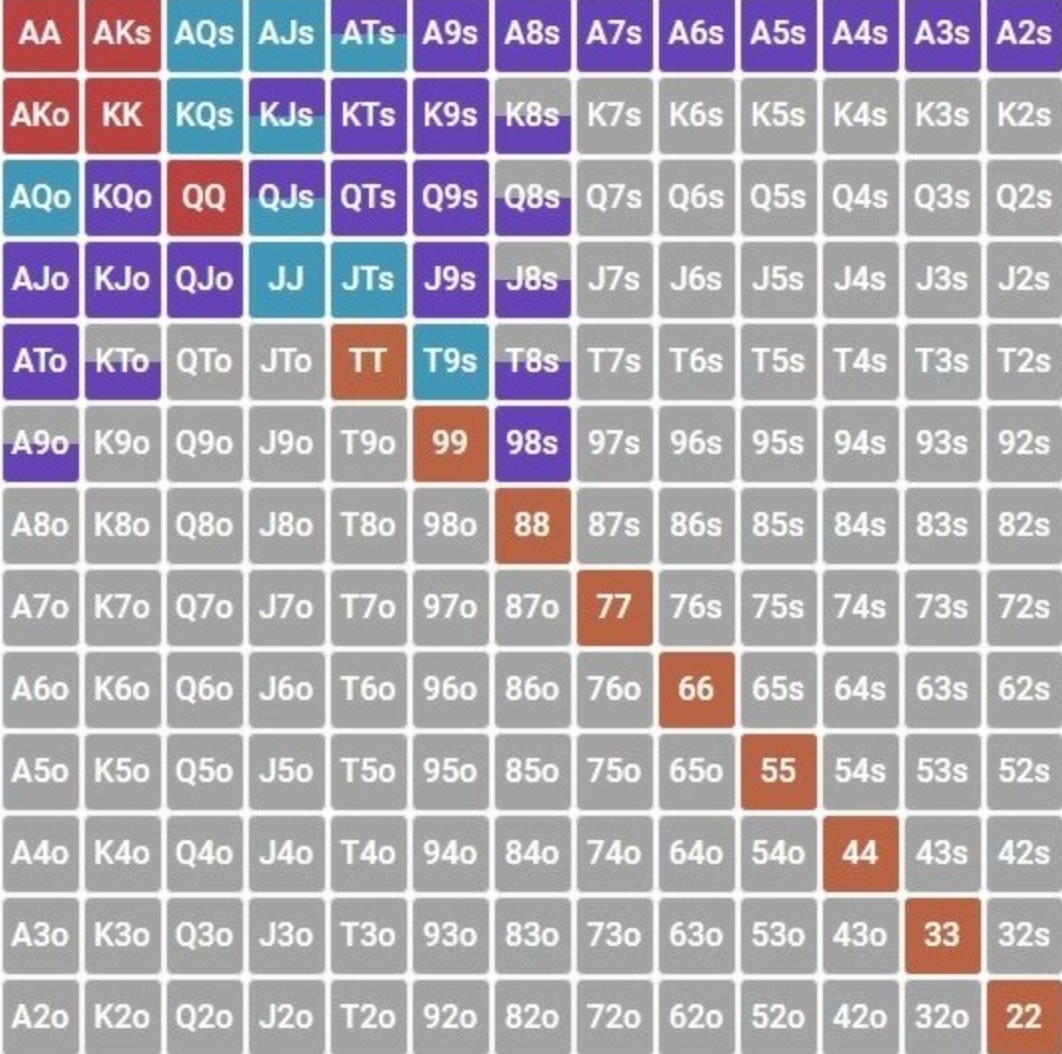
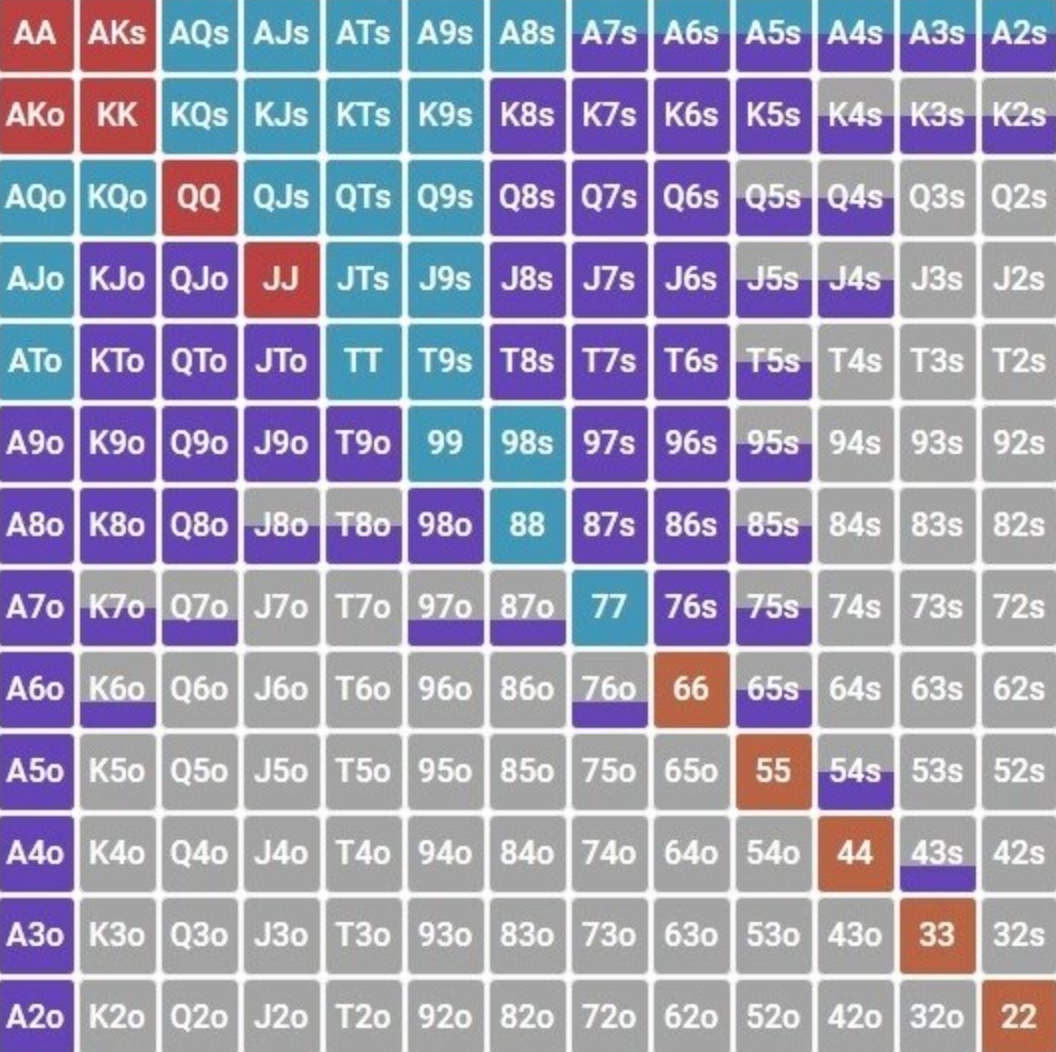
Since usually the range of the preflop aggressor is quite wide (that is, it contains many different starting hands), some not very strong hands immediately after 3bet will have to fold into the fold. Other, more suitable hands, the preflop aggressor will have to protect. In this case, the protection can be both passive (through the call 3bet) and active (then the preflop aggressor/or another player/once again raises the bet, that is, announces 4-bet).
Definition: 4-bet (four-bet) is the fourth bet raise in the game, made after 3bet.
The situation when one pre-flop player announced 3-bet, and the other only called (and raise the bet again), after which the flop cards were opened and the hand switched to post-flop, is called “3-bet pot”. A similar situation is when one pre-flop player announced 4-bet, and the other only called - “4-bet pot”.
Cold-call is an important part of pre-flop strategy
If someone opened a trade before you, that is, announced an open-raise, and it was your turn to make a decision, you have several options:
- If you have a weak hand, the right decision is to fold the cards into the fold. Alas, this will happen in most cases.
- If you have a strong hand, you can raise the bet by announcing a 3-bet.
- If you have a medium strength hand, you can simply call it to look at the further development of events. This situation is called cold-call or “cold call”.
Definition: Cold call - to equalize the previous player's raise on the preflop. That is, until the call, we did not invest chips in the pot.
Cold-call is a responsible action, and a lot of mistakes are found here for both beginners and experienced players. Do not make such mistakes, use proven charts!
Cold call range in free positions
In this case, positions in which players have not yet invested chips in the pot are considered free.
When deciding on a cold call, it is necessary to take into account not only the strength of your hand, but also other factors:
- the size of the open-raise preflop aggressor (usually an increased bet size/sizing/ indicates big power of the racer's hand);
- our position and the position of the pre-flop aggressor (it is more profitable to be in a position for the opponent, that is, to make a decision on each street after it);
- our image and the image of the preflop aggressor at the table (the more active our opponent is, the more starting hands he opens with a raise, the wider our cold call range can be);
- stack sizes (the smaller the stack, the less profitable the cold-call strategy becomes);
- and others.
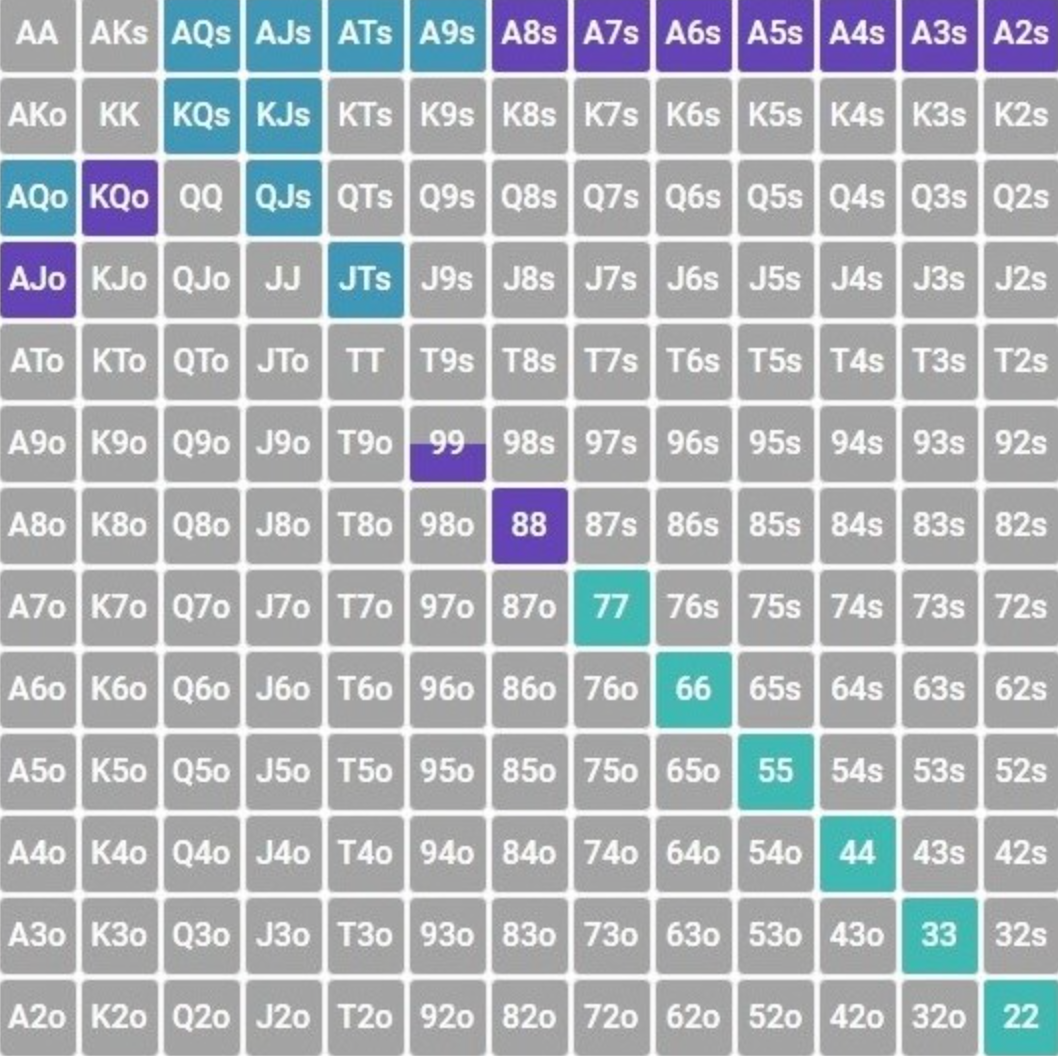
Blinds protection
Cold call range at the positions of the small blind (SB) and the big blind (BB), i.e. protection of blinds, will be significantly different from cold call ranges from free positions, because players on the small and big blind have already put blinds, that is, invested some of their chips in the pot. This makes their participation in the hand more profitable from a mathematical point of view than entering the players' pot from free positions.
How to use 3-bet in poker
In modern poker, which is becoming more aggressive as more players understand the advantage of active play and capturing initiative, 3-bet is a powerful weapon against preflop aggressors.
Remember: using 3-bet with the right starting hands and in profitable situations is a winning, profitable strategy!
Main objective of 3bet
3-bet on pre-flop allows you to seize the initiative, put the open-raiser in the position of the defending side, and sometimes forces him to immediately refuse to participate in the distribution and give the pot.
Filling the 3bet range
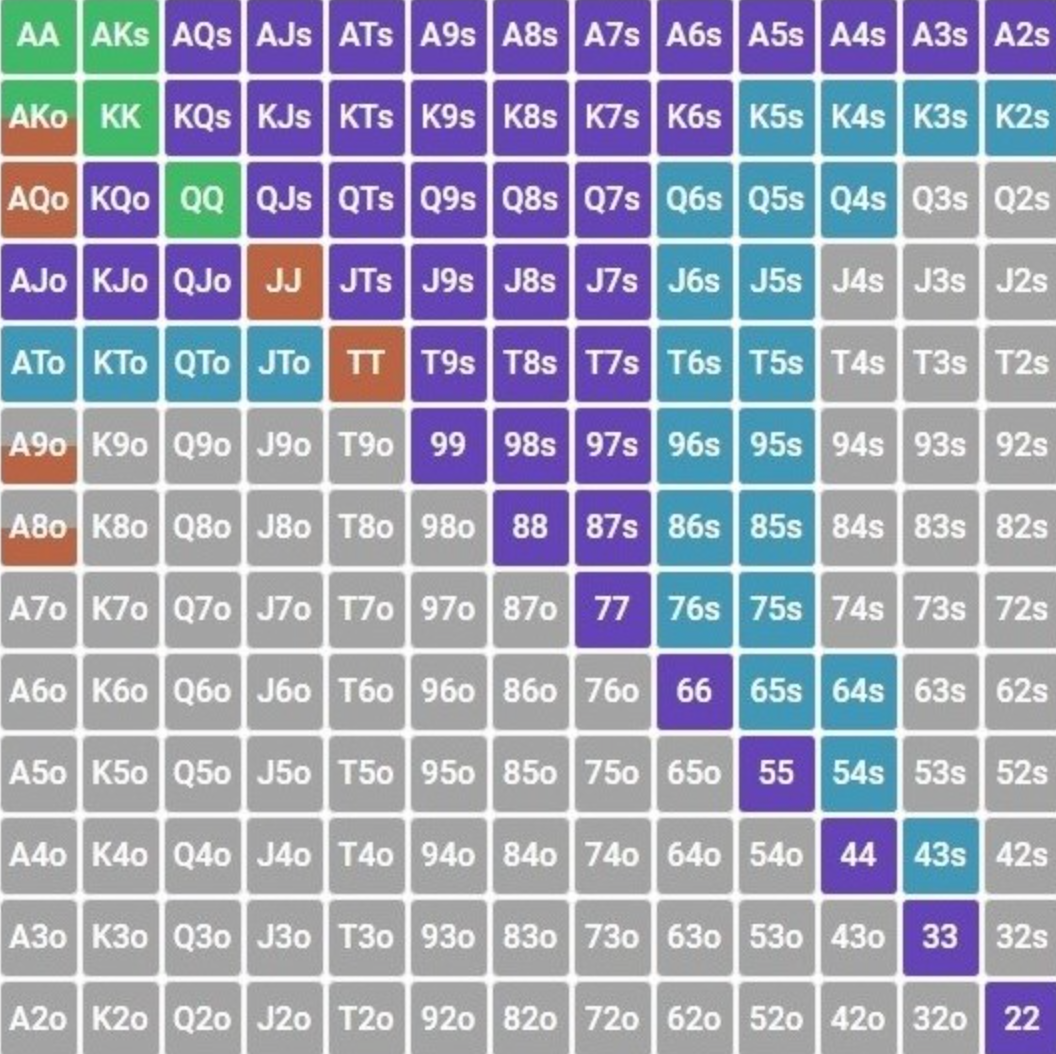
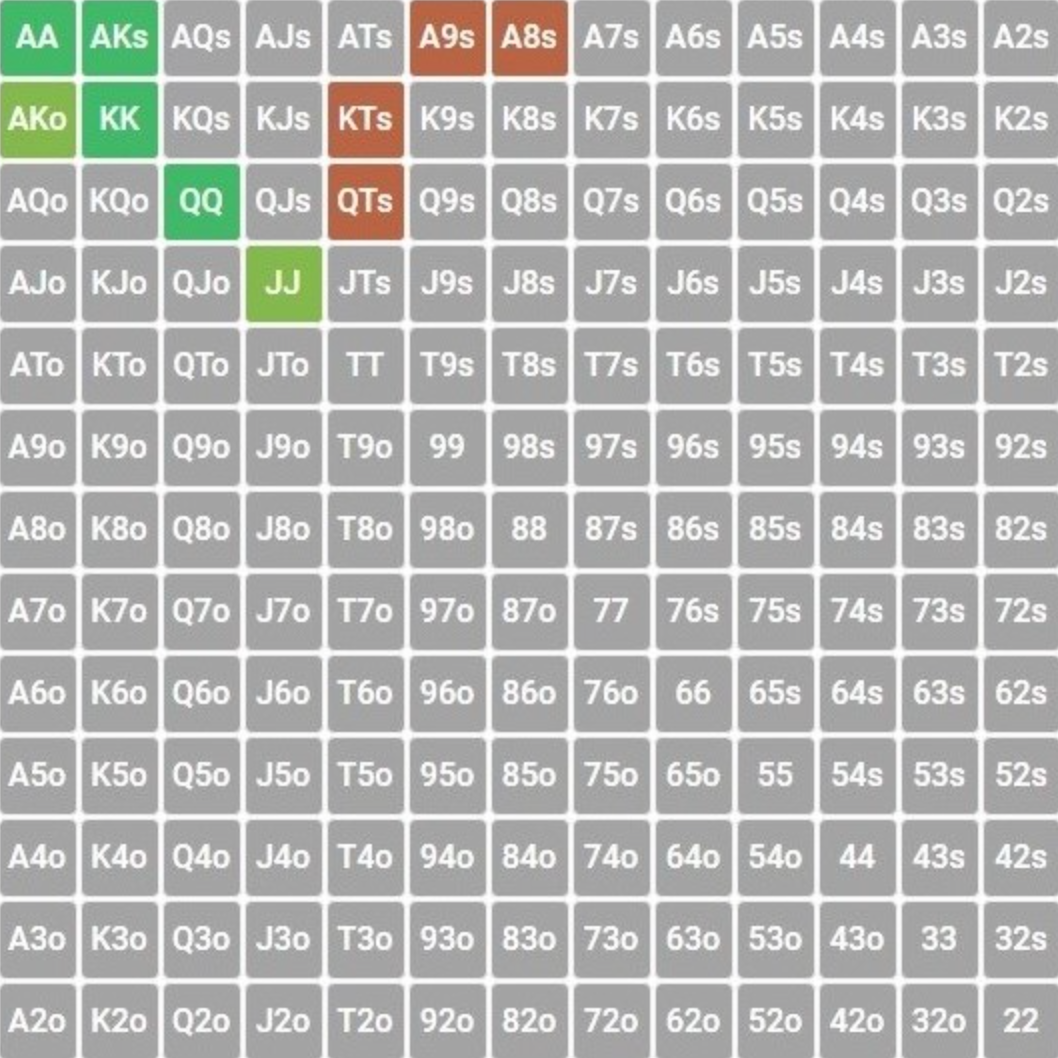
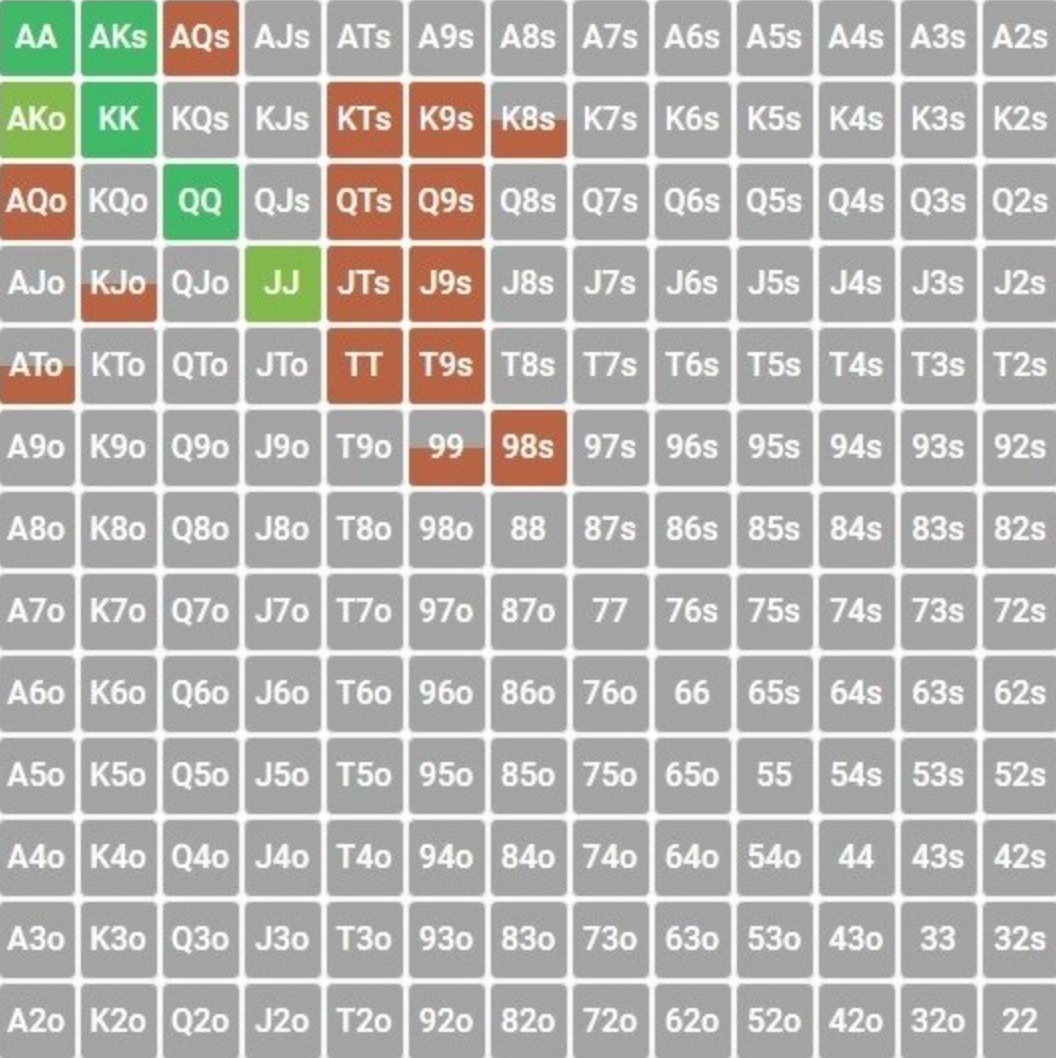
As we mentioned earlier, 3-bet can be done not only with very strong starting hands (premium hands), but also with weaker combinations. The most important condition when deciding on a 3-bet will be our position at the table and how clearly we imagine the range of our opponent's opening. (see the article “Thinking in ranges is a key skill of successful poker players”). Based on these factors, we will form our “3bet range”, that is, a group of hands with which we want to make a 3-bet.
How to continue on postflop
Suppose that one of the players in the position in front of us opened a raise trade, we announced 3-bet and the opponent called. Thus, a 3-bet pot was formed, and the hand moved to the next stage - post-flop. Usually, the winning strategy for 3-bettor on the preflop will be the continuation of the active game on the postflop as well. To do this, you need to make an extended bet of 30% to 50% of the pot in almost any opened flop cards. Further decisions are made depending on the strength of our hand, the issued cards and the actions of the opponent (opponents) on the post-flop.
How does Squeeze differ from 3bet in poker
Definition: Squeeze (English Squeeze, "squeeze out") - another raise of the bet on the preflop after the previous increase and call (or several calls).
As can be seen from the definition, Squeeze is an increase in the bet after a raise and a call (or several calls). Squeeze is done in order to exert maximum pressure not only on the open racer, but also on other players who have already entered the pot (callers). Important! Squeeze, like 3-bet, can be done both with a strong hand and in a bluff (in a suitable situation).
How to play Squeeze from free positions
When deciding on a squeeze from a free position, several aspects will determine:
- the strength of our hand (of course, the stronger our hand is, the more happy we are to put chips in the pot!);
- the position of the open-raiser and collier (callers) (the later the position of the open-raiser, the wider the range of both it and the callers will usually be);
- image and opening range of the open-raiser (the more active the open-raiser, the wider its range of starting hands, the more vulnerable it is to squeeze);
- the image and range of the collar (or callers) call (the wider the range of the collar, the more vulnerable it is to squirting);
- our image at the table (the more solid the game we showed earlier, the more opponents will believe that we are making a Squeeze with a strong hand);
- stack sizes (sometimes Squeeze will be too expensive and will not justify the costs, especially if we do Squeeze as a bluff).
How to play Squeeze with Blinds
Similarly, Squeeze from blinds is played. It should be borne in mind that we will often do Squeeze to protect against styling, which can be done with a very wide range. Therefore, Squeeze from blinds becomes more profitable, and it is imperative to learn how to use this technique.
Definition: stealing (English: “steal”, “theft”) is a raise from late positions in order to steal blinds.
Using an Insulating Raise in Poker
As we have already found out, such a passive action as the limp on the preflop, in most cases indicates the weakness of the player's hand. Therefore, it will be quite natural for players in positions after the limper to exert immediate pressure on him in order to take the pot. Thus, an insulating (insulating) raise or “isolate” appears in the preflop strategy.
Definition: Isolating raise (isolate) - an action on the preflop, in which the raise bet occurs after one or more players have just entered the limp (equalized the size of the big blind).
Against free positions
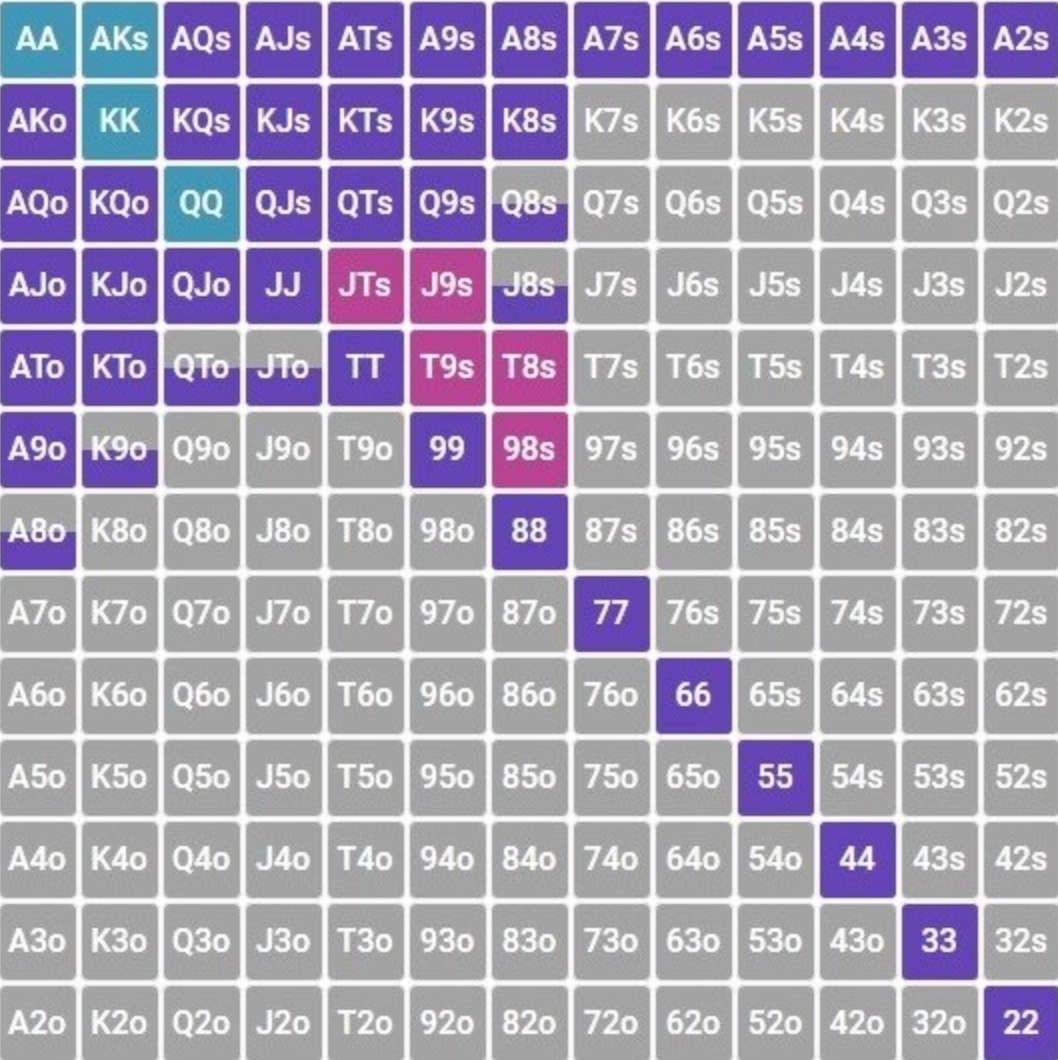
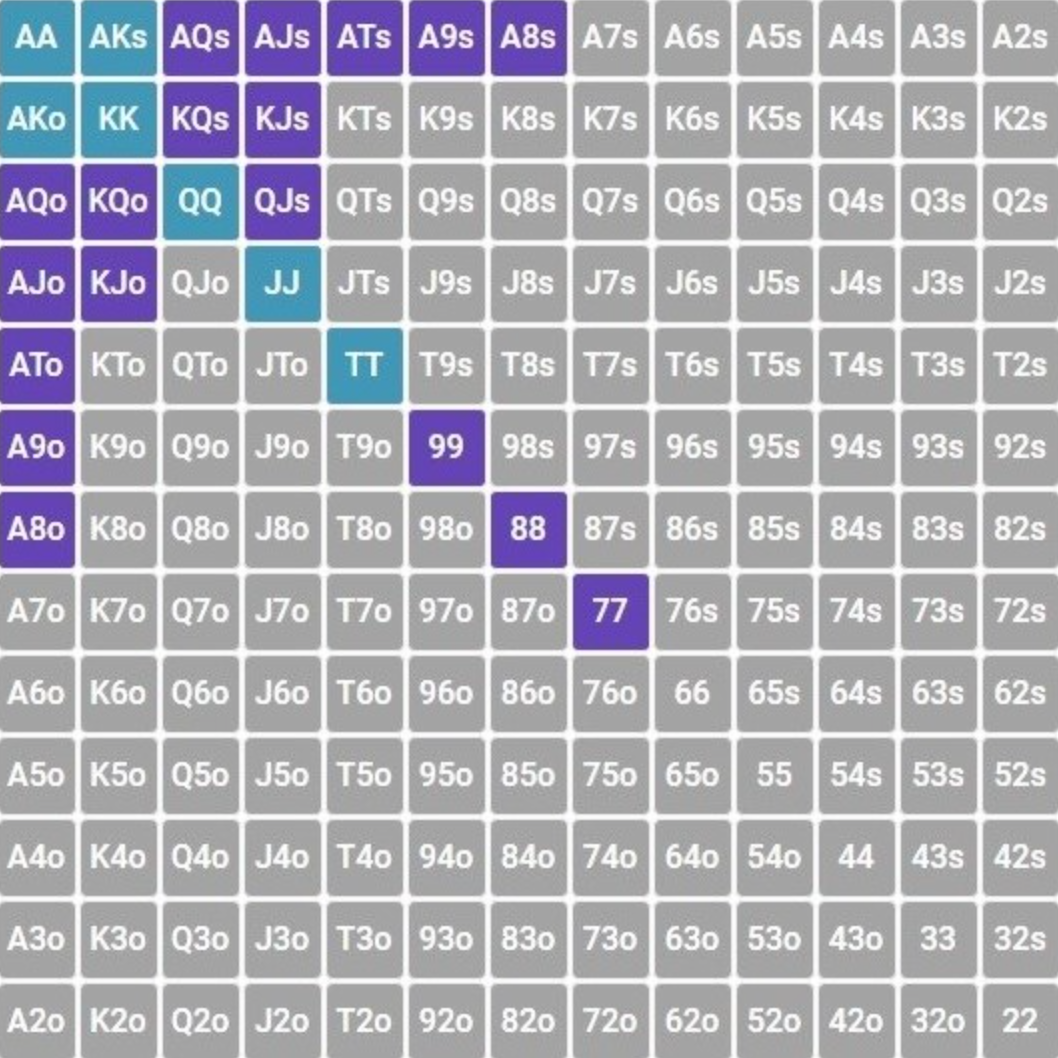
The range of hands with which it is advantageous to make an insulating raise against a limper in a free position usually consists of strong hands or middle hands with good playability. The latter include broadway hands (usually suited), as well as high suited connectors (8-9, 9-10).
Definition: broadway hands (broadway) - starting combinations of cards from ace to ten. Broadway can be either single-masted or mixed-masted.
Definition: Connectors are a player's starting hand consisting of cards below 9 that follow rank one after another (e.g. 8-9 or 4-5). Connectors can be either suited or offsuited.
Against the small blind
A little differently, the player's range is built on the big blind (BB), making an insulating raise against the limper located on the small blind. Here it will be profitable to raise both with strong hands (to increase the pot) and with very weak, “junk” hands (in order to immediately force the opponent to quit the game). With medium strength hands, you can take a return check on the preflop and transfer the moment of making more complex decisions to the postflop. Important! An isolating raise against a small blind (SB) limper will never be a serious mistake, so novice players are better off doing it in every similar situation.
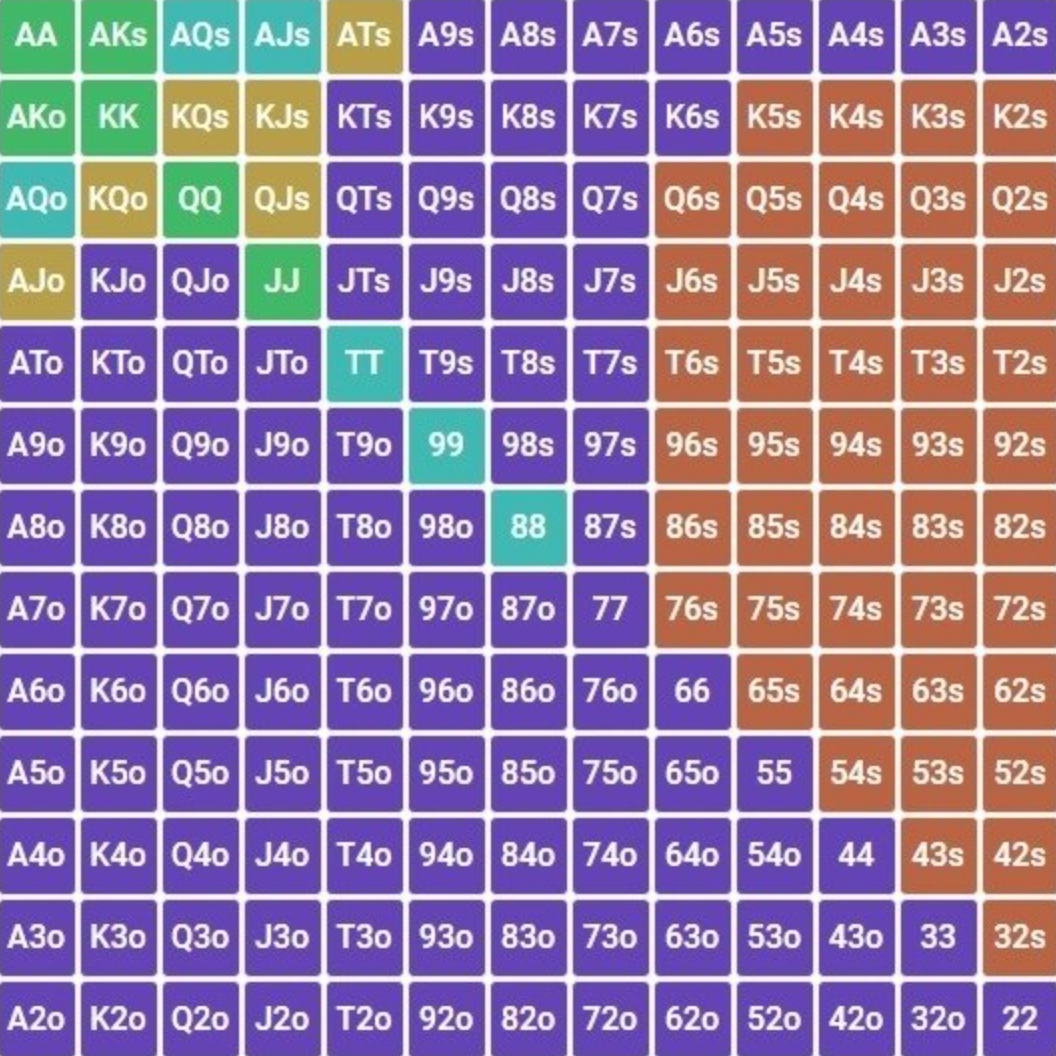
Preflop in short stacks
When the player's stack size drops to 20 bb and below, often the best solution on preflop is either to fold the cards in the fold, or simply deposit all your remaining chips in the pot, that is, go all-in. This strategy is called “push-fold”, and the tournament stage, when most players have short stacks, is called the push-fold stage.
Open-pushes in different stacks
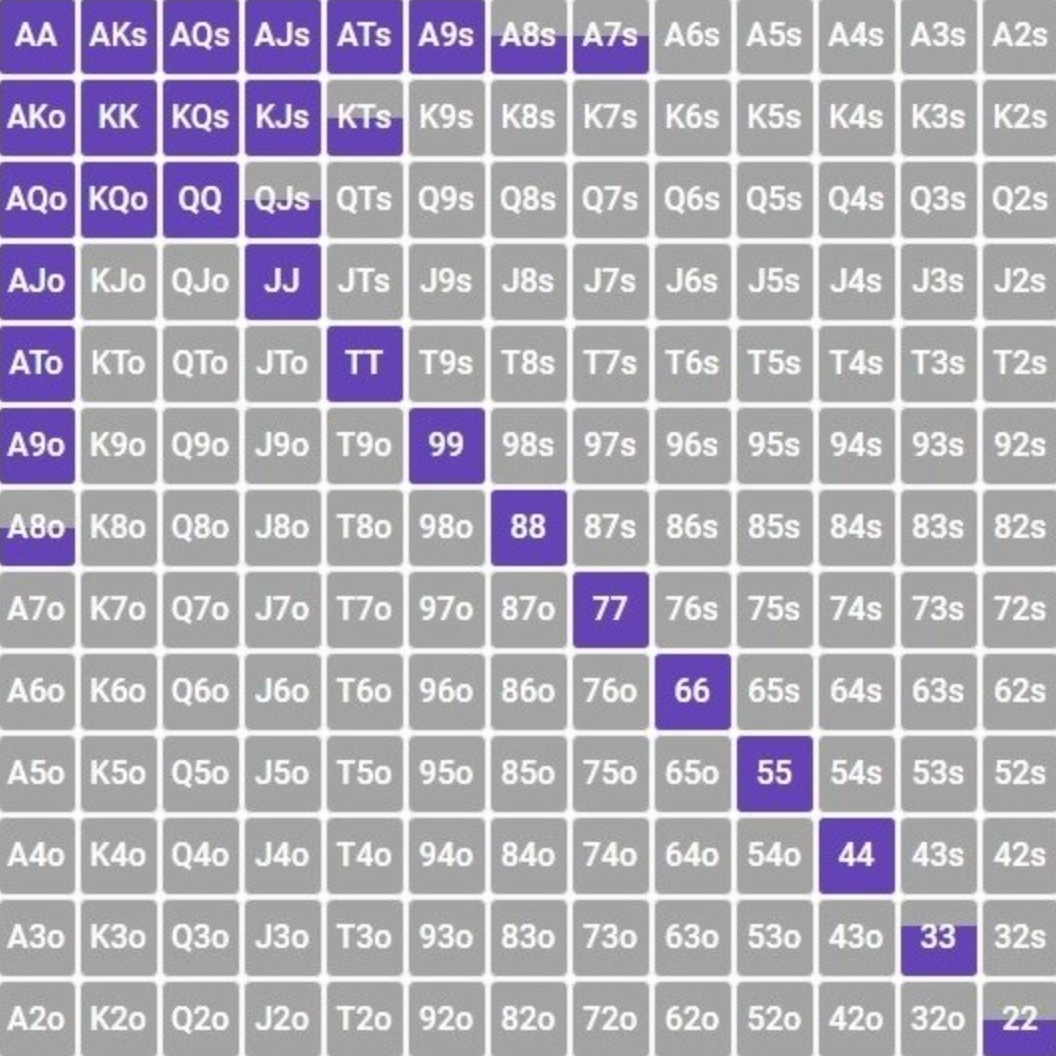
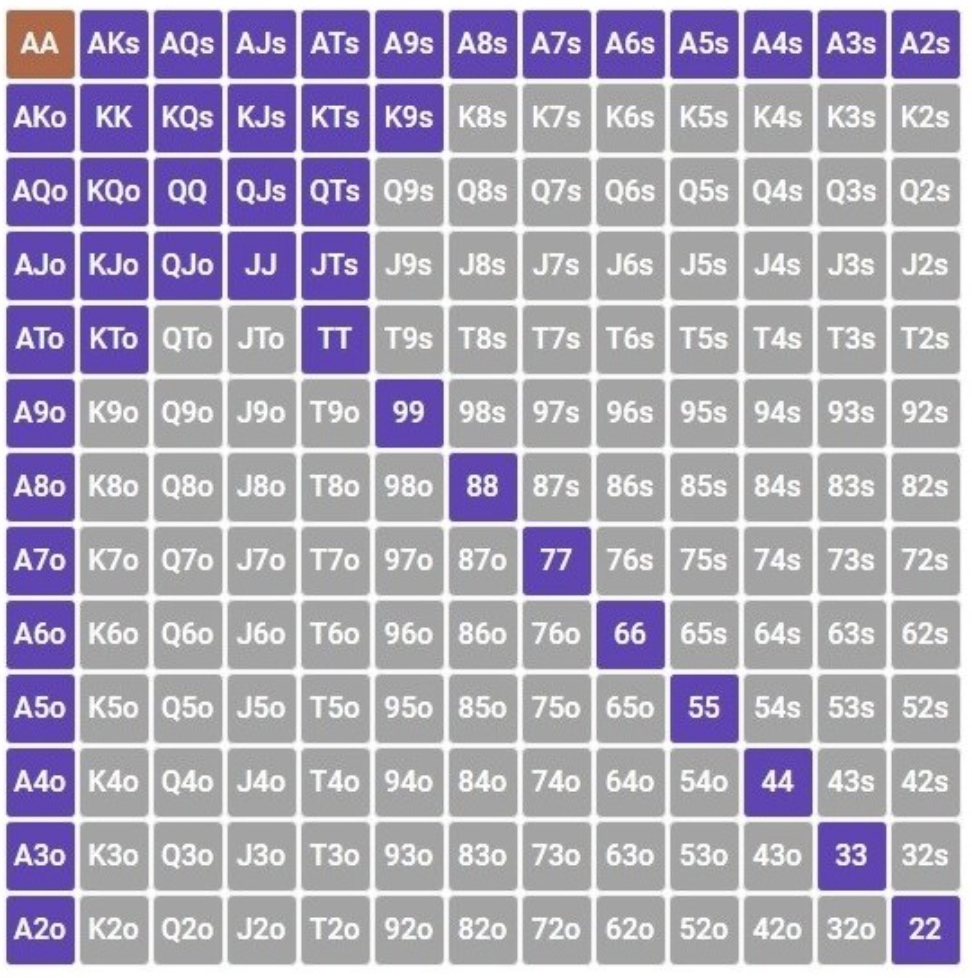
In order to make the right decisions in the push-fold stage, it is necessary to study the preflop open-push charts from different positions. This will save the player from very costly mistakes, since each “extra” entry into the game can lead to relegation from the tournament. Important! In a situation where there are several people left before entering the ITM (prize zone) (the so-called “pre-bubble”), you need to fold everything - even the strongest! - hands into the fold. In such a situation, the most important task is not to increase the stack, but to enter the prize zone in any way and get even the smallest prize, which will provide a return on investment from the tournament fee.
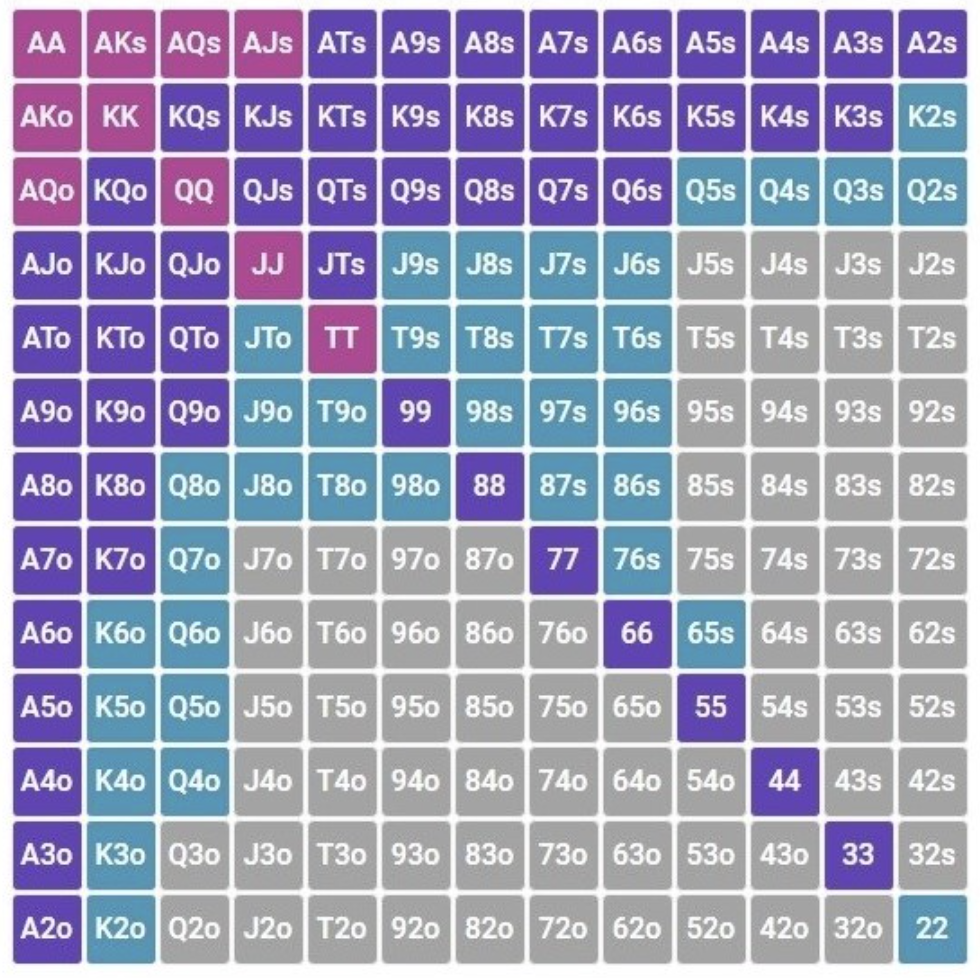
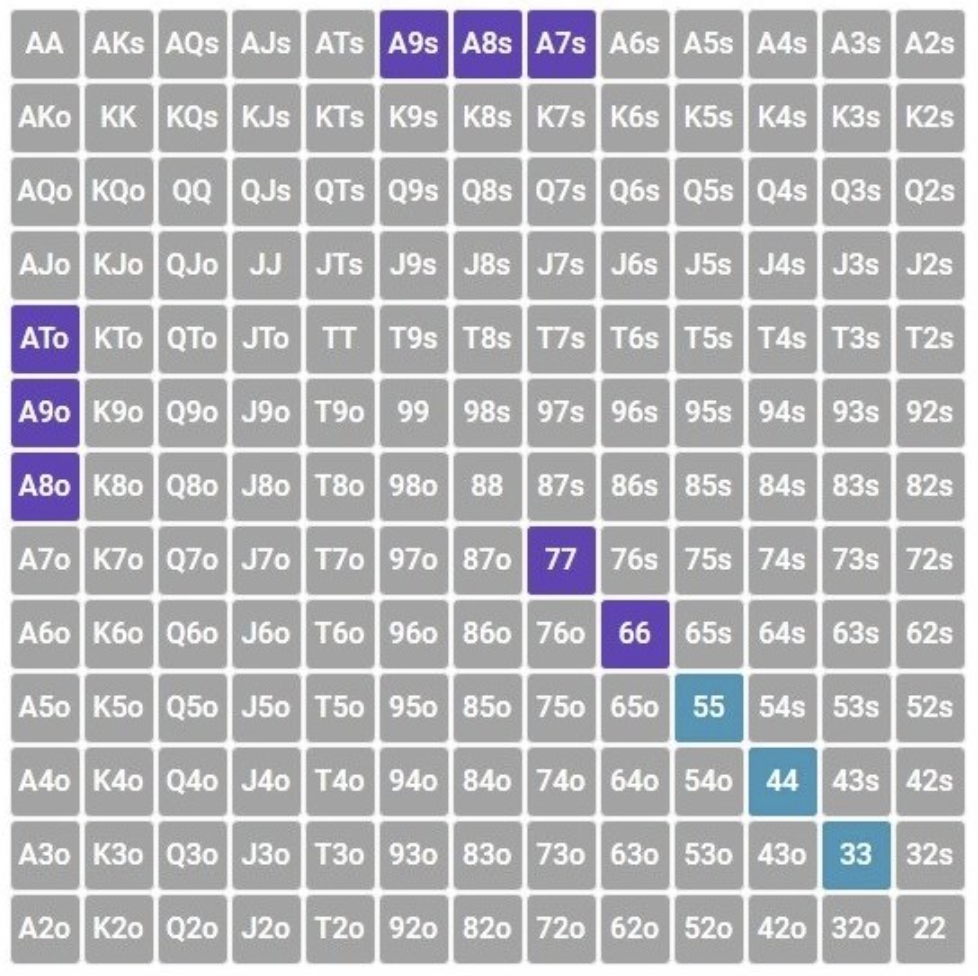
3-bet push or restyles
When we have a short (push-fold) stack, but we already have an opening with a raise from an early or late (stealing) position, we also start to make a decision on the preflop primarily from the strength of our hand. Detailed charts of 3-bet-push and restyle from different positions, included in the charts of starting hands, created on the basis of a study of large databases of players' hands of various limits and recommended by our school, will also help you not to make gross and costly mistakes.