

Translated with the help of AI. We apologize for any errors and would appreciate your help in correcting them.
Translated by order of the educational portal university.poker
Original source: GTO Wizard

By “board coverage” we mean the certainty that all of our range (whether open-raise, protection, or 3-bet) can potentially fall into any type of board board. We want to be able to get these ranges into different flops, for example

 ,
, 

 or
or

 . If we miss (or even hit) too often, we leave ourselves open to exploitation. One of the best features of modern solvers is the ability to change the preflop ranges for playing on the postflop. Thanks to this feature, we can appreciate the importance of covering the board in poker by visually seeing what happens when the range has an imbalance in the interaction with the board.
1. How important is board coverage in poker?
Let's move on to an example to clarify what is meant. This is a pre-calculated spot from the Solver solution library. Depth 40bb, UTG vs. BB, single raise pot.
This is what the UTG opening range looks like:
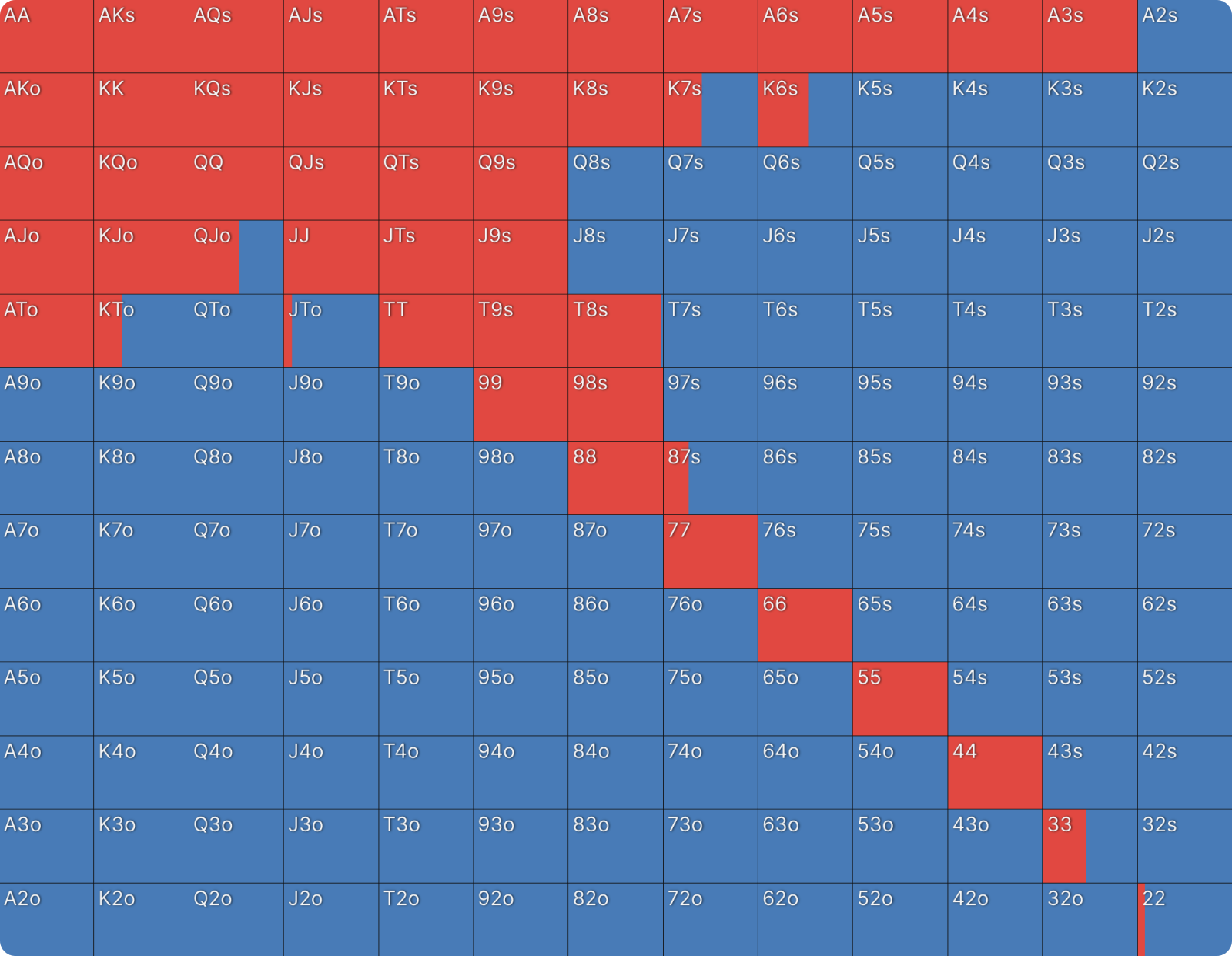

UTG has a Tight Linear range of only 19.1% hands, but despite the Tight range, it technically covers the entire board. This range covers the high board, also falls well into the middle, including possible straights. He can also potentially hit the low board. Can collect any set, because it has all pocket pair, and can also collect the “wheel” (straight from A to 5) on the flop due to the presence of low master hands Ah.
This is BB's reaction to the discovery of UTG:
The BB call range
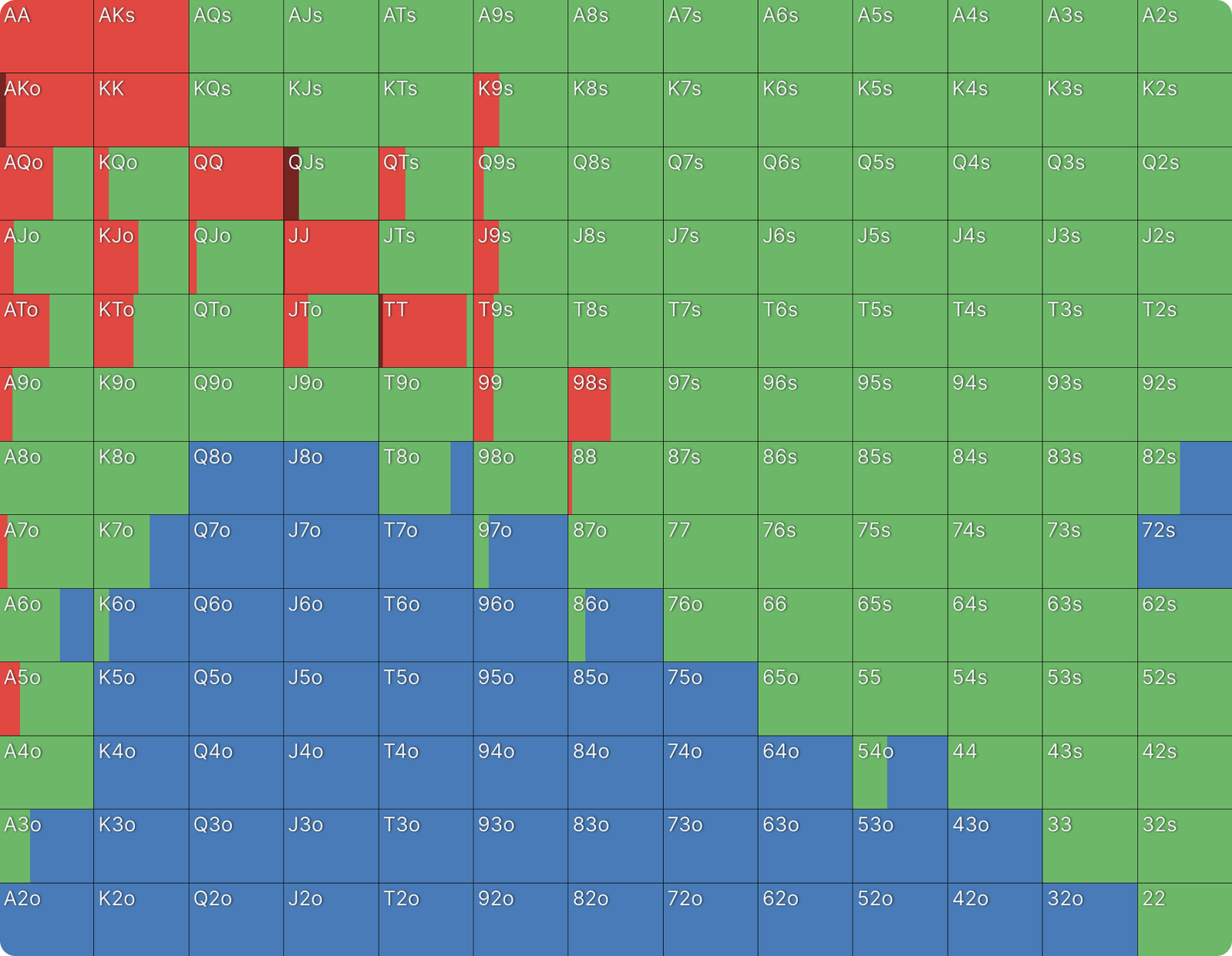

obviously covers much more low and middle flops, especially well it covers low board, unlike UTG. This range has much better coverage of boards, but it is so wide that in big part of cases it will not fall into most flops. This is a capped range as there are no premium hands on the preflop.
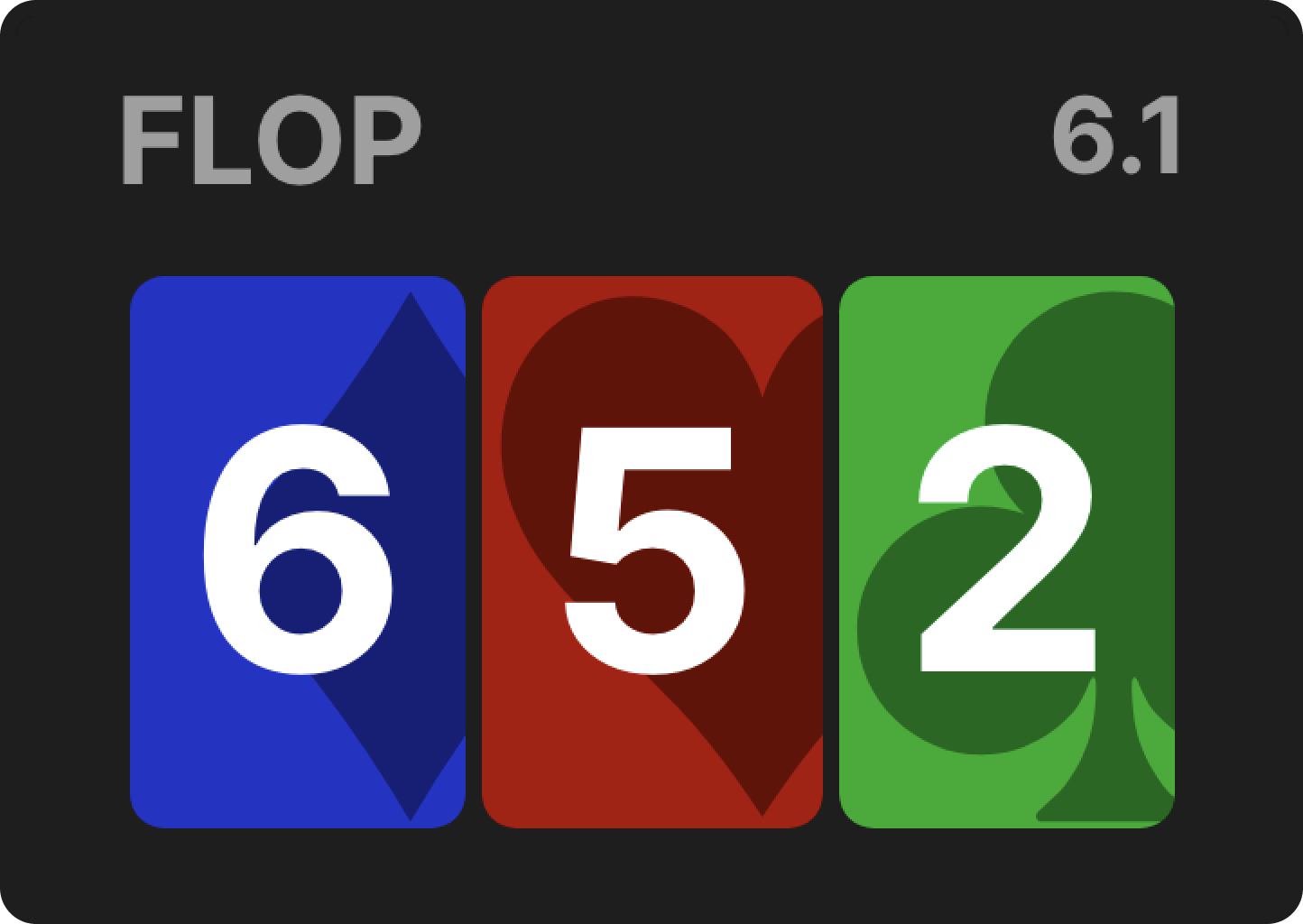
Let's look at the flop
 . It's a good board for BB. We know that it has all sets, all two pair, all pair, straights and a lot of good combo draws.BB just as often does not fall into this board. UTG doesn't have a lot of nut hands, but he has a lot of strong hands. It has all overpairs, sets, oesd at 78 with backdoor flush draw, as well as A-6 and A-5 (pair with backdoor flush draw). On this board, UTG has the edge advantage in the range, and BB may have the nuts' edge advantage (although they are roughly the same). UTG has 55.1% total equity and its EV is 3.6bb compared to 2.5bb for the Big Blind. He also has a positional edge.
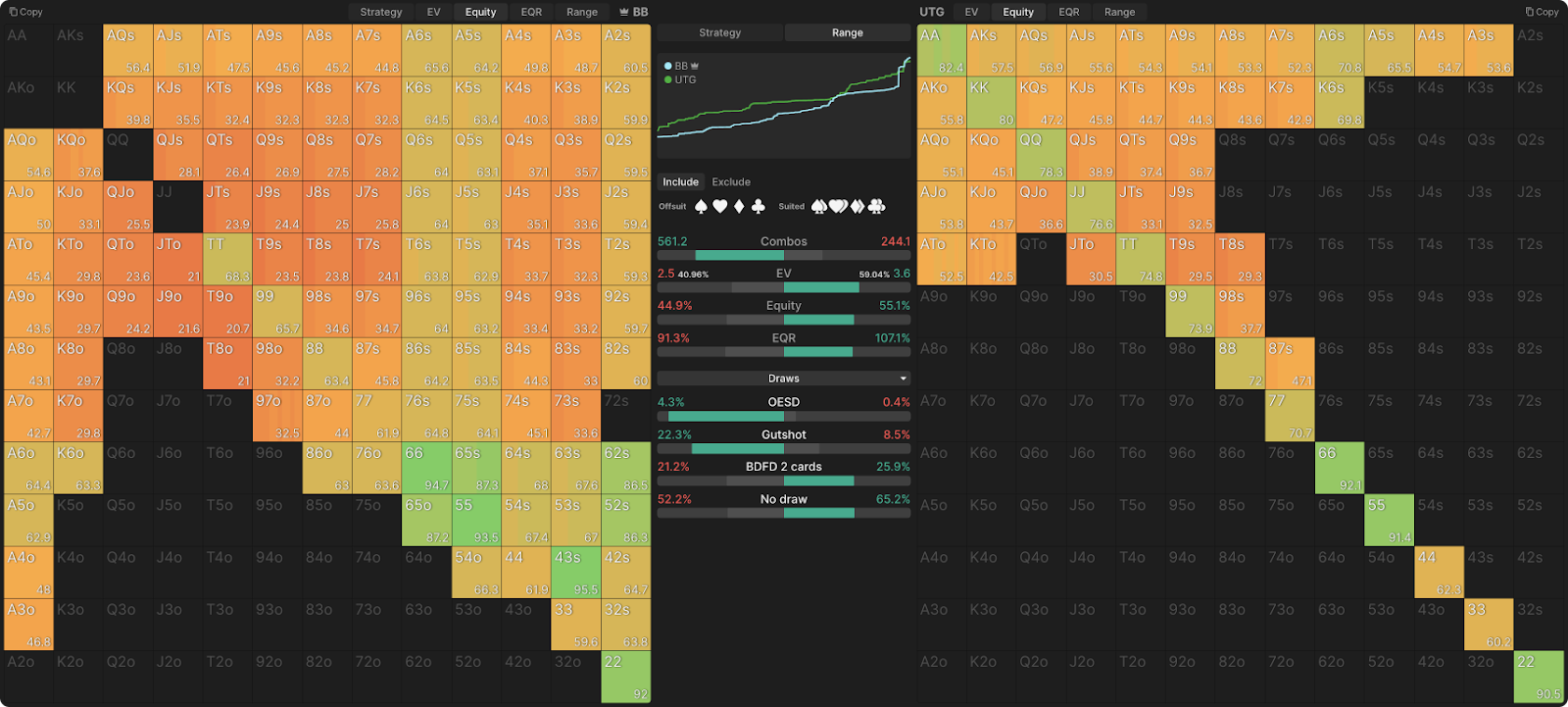
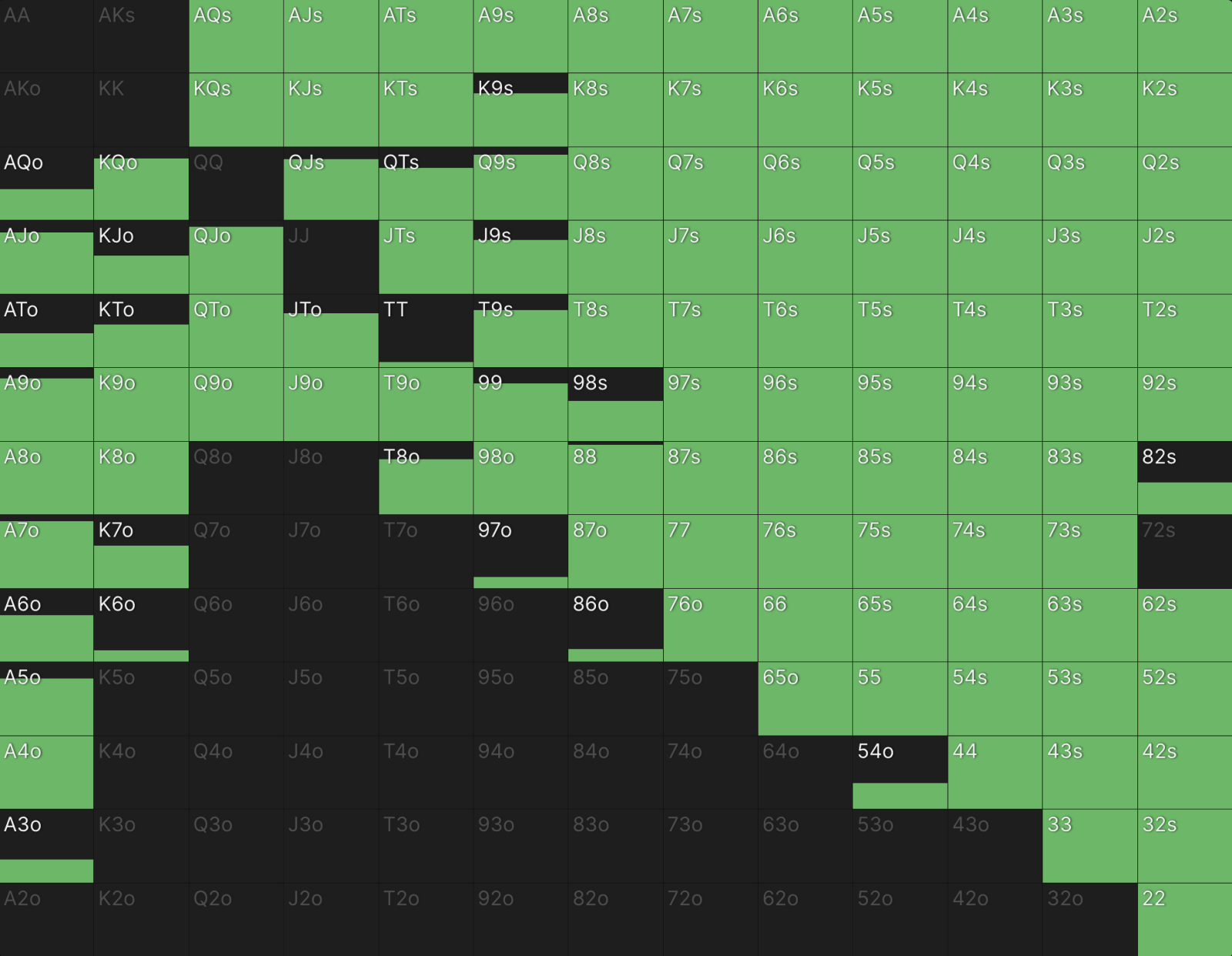
Considering all this, despite the large number of nut hands (in absolute terms), BB checks in 100% of cases (in part due to the fact that he has almost three times less “Best Hands” in relative terms):

In response, here is the UTG strategy:
UTG
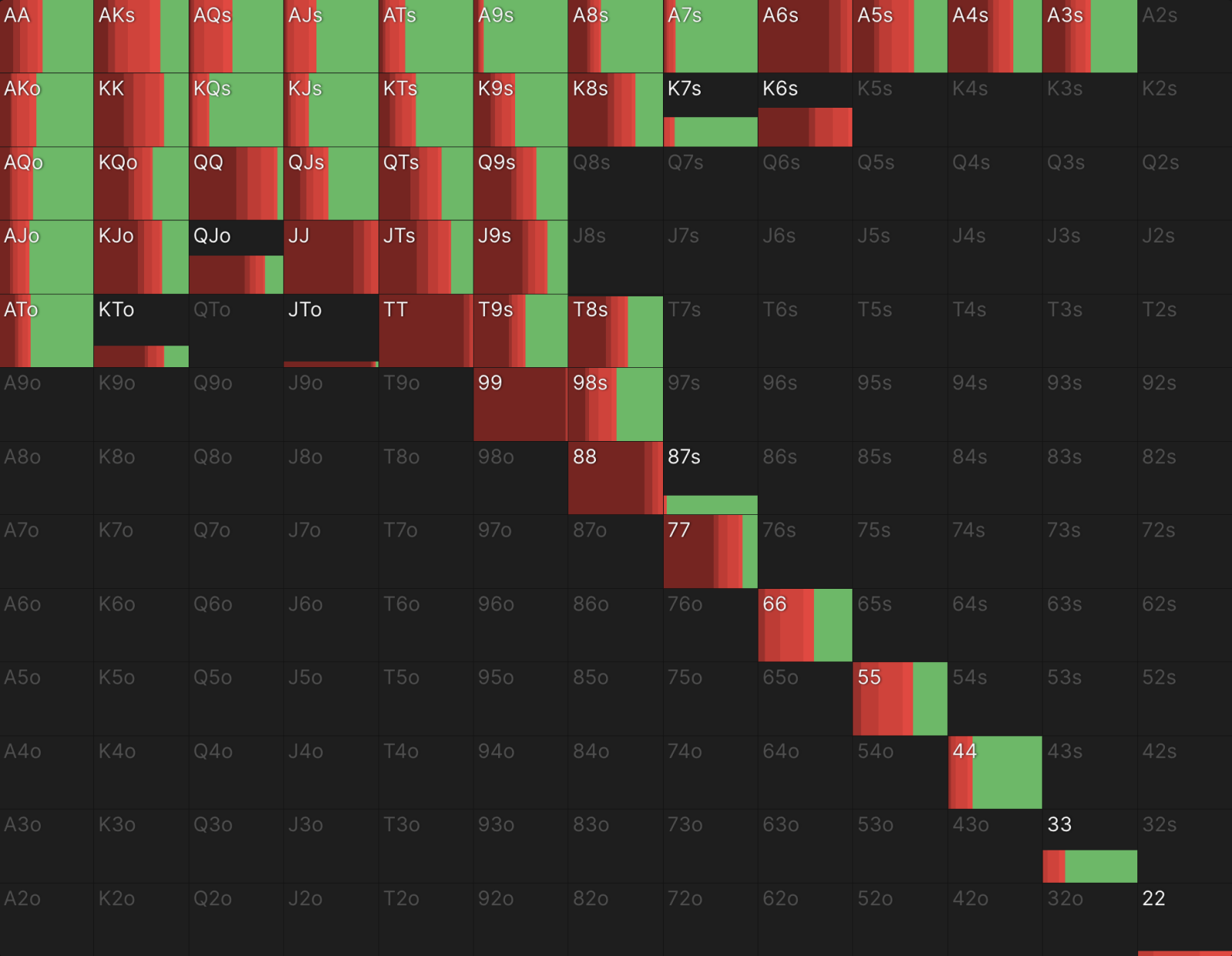

has a edge in the range, but it is not so significant that it can bet 100% of the time. BB still has a lot of nut hands, and UTG often does not fall into this board. Thus, UTG applies a polarized betting strategy consisting mainly in an overbet on this flop with a sized rate of 125% of the pot. Most hands alternate bet and check, but hands that always overbet are vulnerable overpairs like QQ–77. This is a dynamic flop, and there are many cards on the turn that these hands do not like: a Paired board, a ready straight or any card older than J is bad news for these hands.
Bluff with overbet are all hands with high cards that can beat the BB pair with which he colluded the flop.
Now let's try to change the range slightly. Let's fix the bet sizes so that they are the same as in the previous example.
BB has exactly the same protection range, but we will make sure that this is the range we will set UTG:
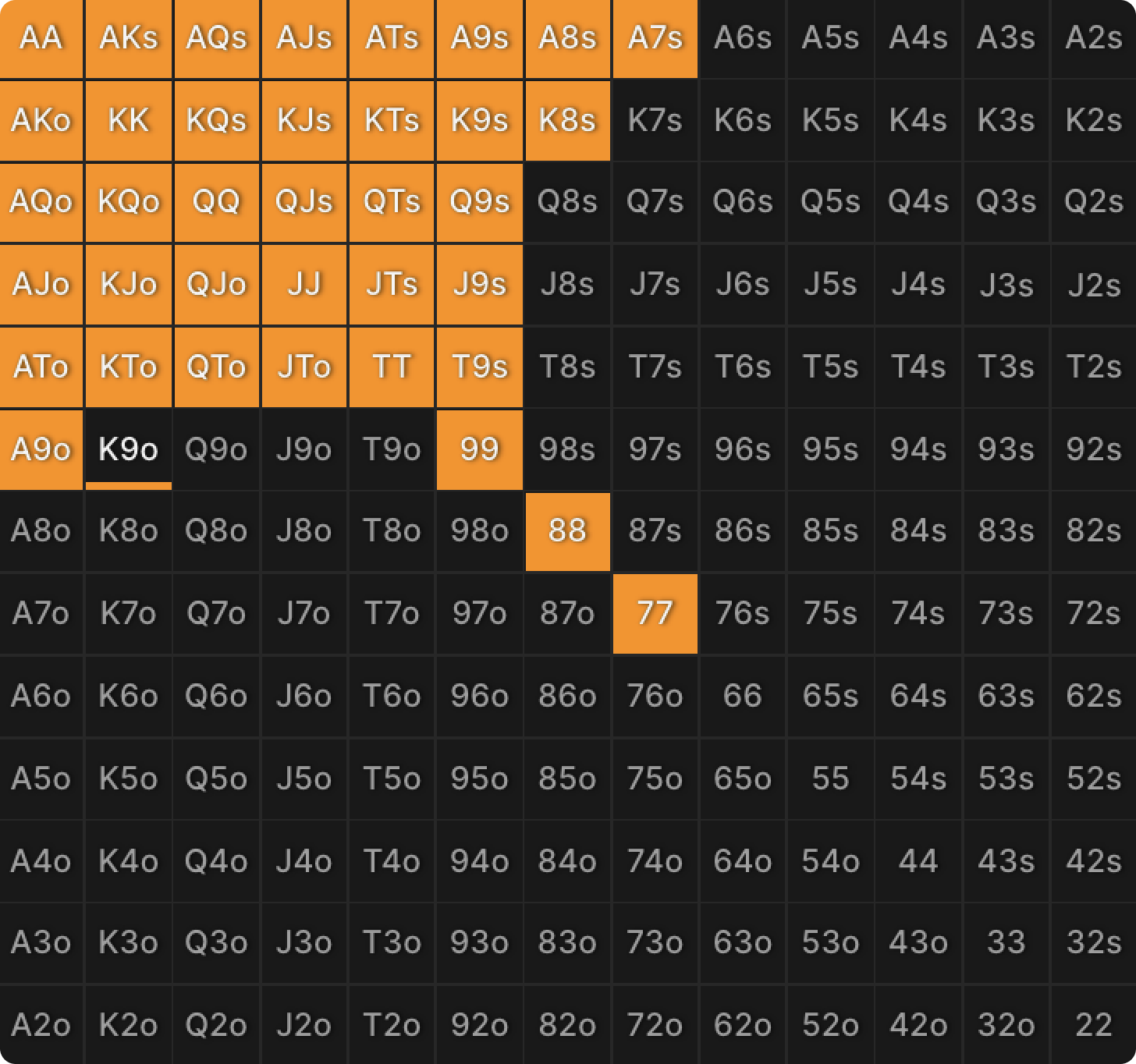

This range is the same percentage of hands, only 19.1% of hands. The difference is that we made a range centered around the higher cards as a “live old-school player”. Here, the lowest part of the range is the 7s. In reality, a live old-school player would have a much more Tight range than this, but I wanted the hand percentage to be the same for comparison purposes. The important point is that this range (although it is generally stronger on the preflop) does not cover all the board. Including the flop we just covered.
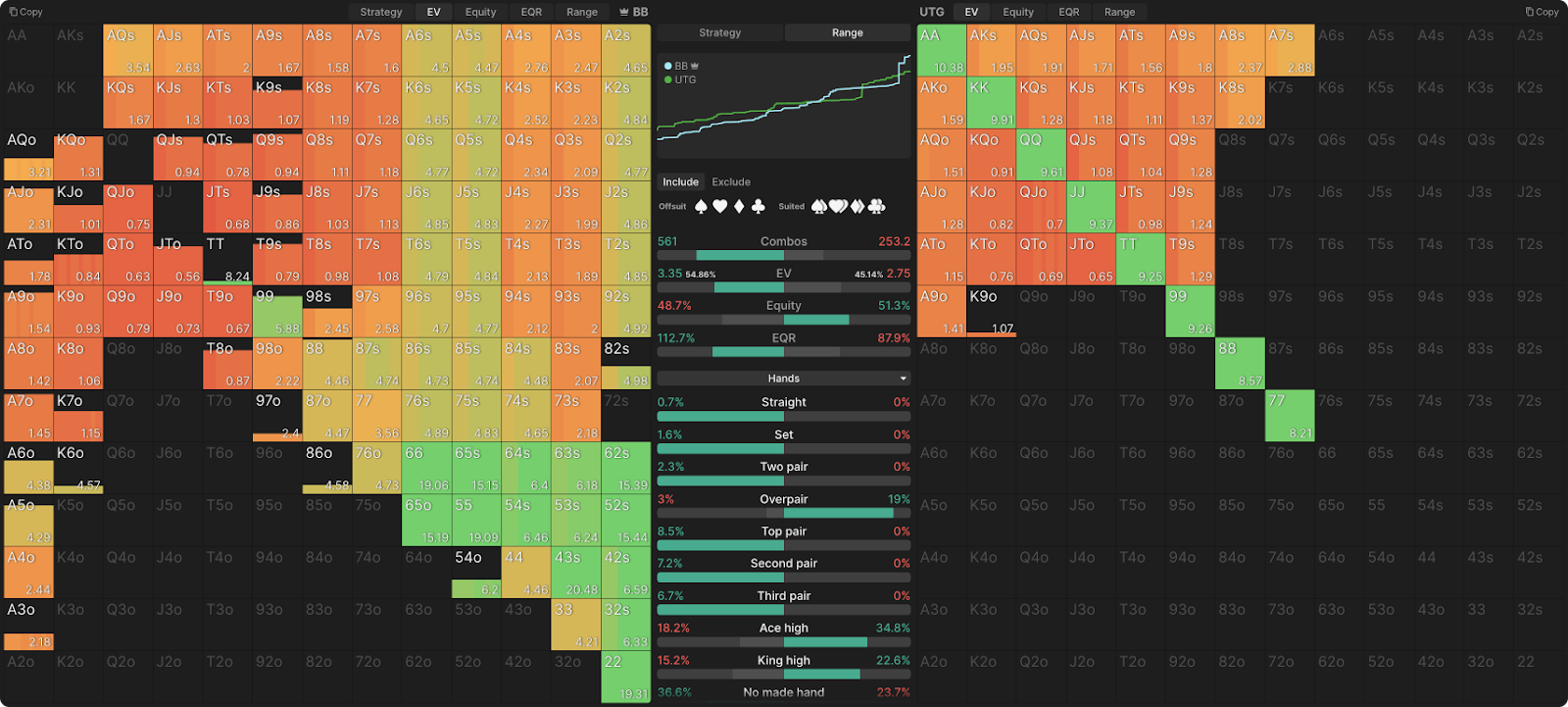
The first thing to note is that overall UTG equity has declined. It still has a slight advantage in the range, but it dropped from 55.1% in the first example to 51.3%. In the first example, the UTG has an EV of an average of 3.6 bb, whereas in this new example it is about 2.7 bb. And the EV BB (big blind) in the first example averaged 2.5 bb, and now it is already 3.3 bb. BB is at a disadvantage in terms of equity and position, but now he makes more money on average, thanks to the fact that UTG does not cover the board. The most important indicator to pay attention to is the realize of equity (EQR).
In the first example, the UTG had an EQR of 107%, which means that on average it would benefit more than the net equity of its range. In this new example, the EQR of the UTG is 88%, which means that its equity may not be implemented as well. In the first example, BB had an EQR of 91%, now it is 113%. Without covering the board, UTG, as it were, transfers the equity to BB. He will find himself in a large number of difficult situations where he will not be able to implement equity with his range. Let's delve into the strategy to understand this. In the first example, you will remember that BB checked 100% of the time because of the UTG range and its positional advantage.
However, this is how BB starts acting on the post-flop:
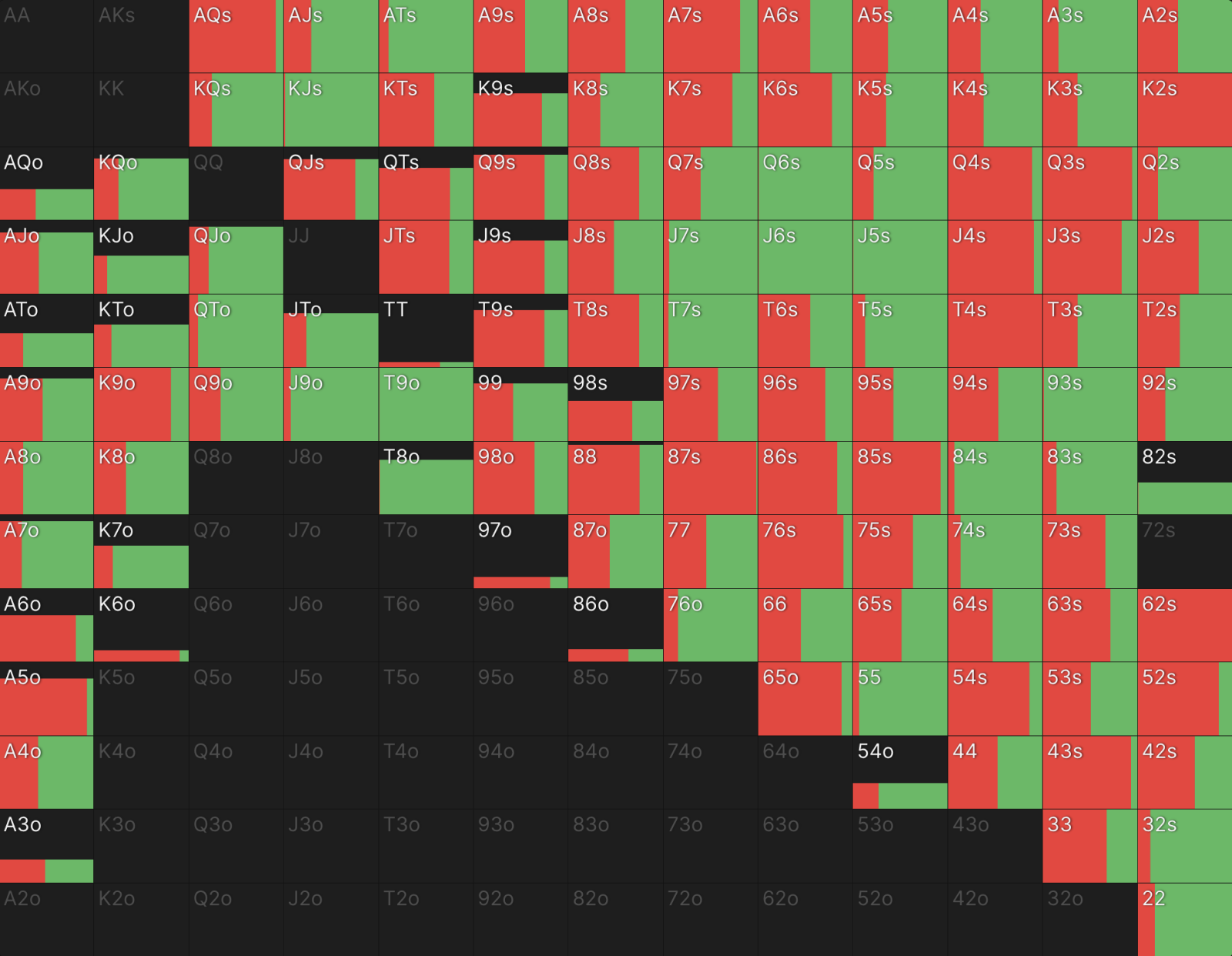

Now BB doesn't check 100%, and checks almost half of the time. This is a serious strategic adjustment. BB has the same range as before, but because he knows UTG doesn't have nut hands, he can act more aggressively. BB sometimes leads with all his nut hands, but he also manages to do this with all his weak draw, such as gatshots and backdoors, as well as with overcards.
This is how UTG responds to a lead from BB:
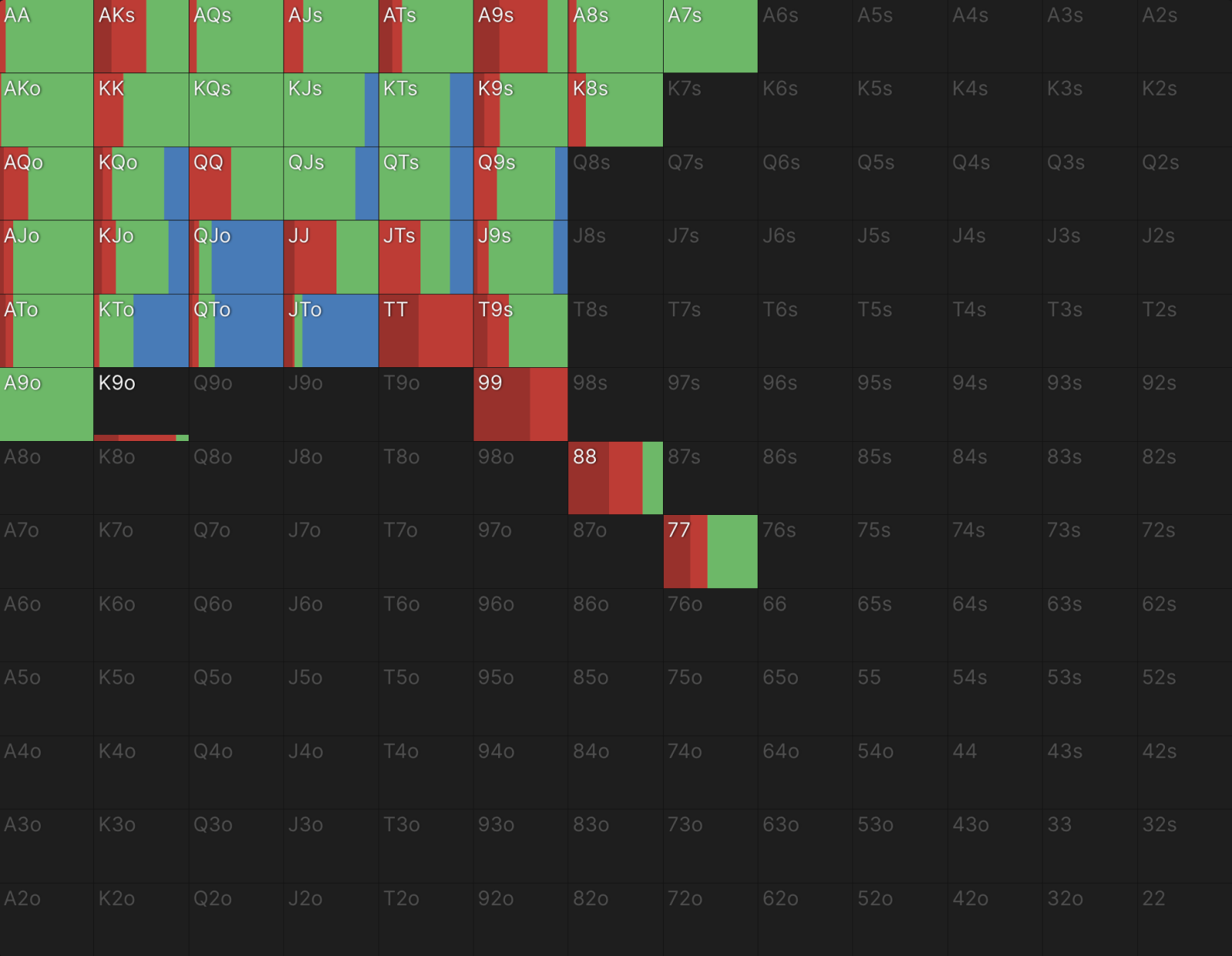

There aren't many folds because UTG still has a strong range overall. Hands that would prefer overbet in the first example make a raise because they benefit from the protection as before. However, most hands are just colloquial, including all the hands A-x and K-x, which in the first example mixed betas and checks.
When BB checks (this is almost 50% of the time), UTG does the following:
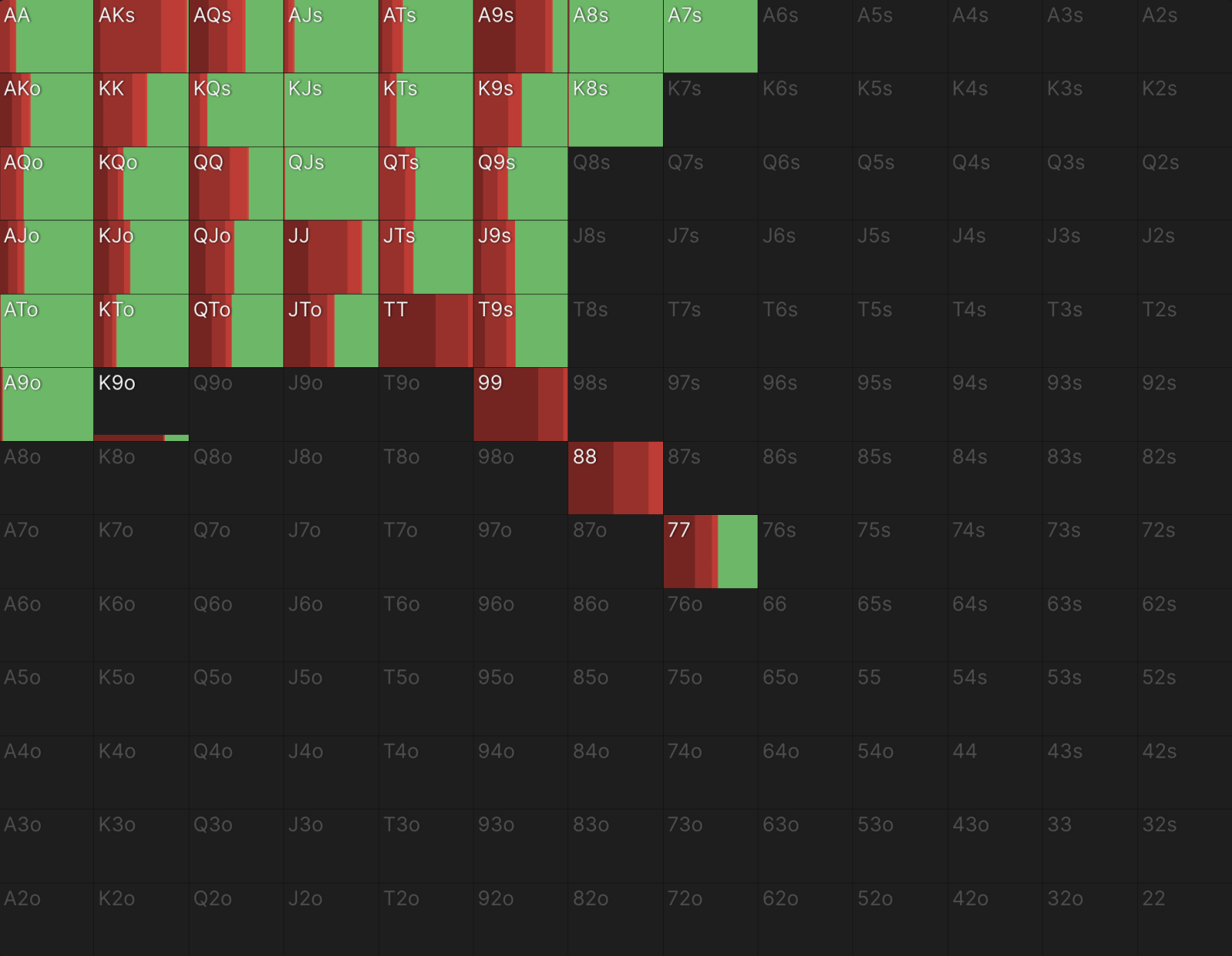

It still uses overbet, but now it is an equal combination of bet and small bet, not predominantly overbet. However, the main adjustment is to place bet less frequently. UTG checks more often, here in 61% of cases compared to 43% in the first example.
Without covering the board, UTG dropped its range. The correct adjusting with a droopy range is to play more passively.
If you use the same aggression as with the GTO range, your villain can exploit you, more often through check-raise and bluffcat. Thus, to get an EV with a captive range, you need to play passively and allow the opponent to place bet instead of you. Important warning: we must remember that in these examples both players play perfectly. UTG may have had a limited range, but armed with that knowledge, he played as well as he could. In reality, a player who has so unnecessarily limited his range will not play perfectly on the post-flop. Most likely, he will have problems on low boards (for the most part due to too many opponent's contbets), and he will give away even more EVs.
2. An easy way to achieve a board finish
In the two UTG bands listed below, 19.1% of the hands
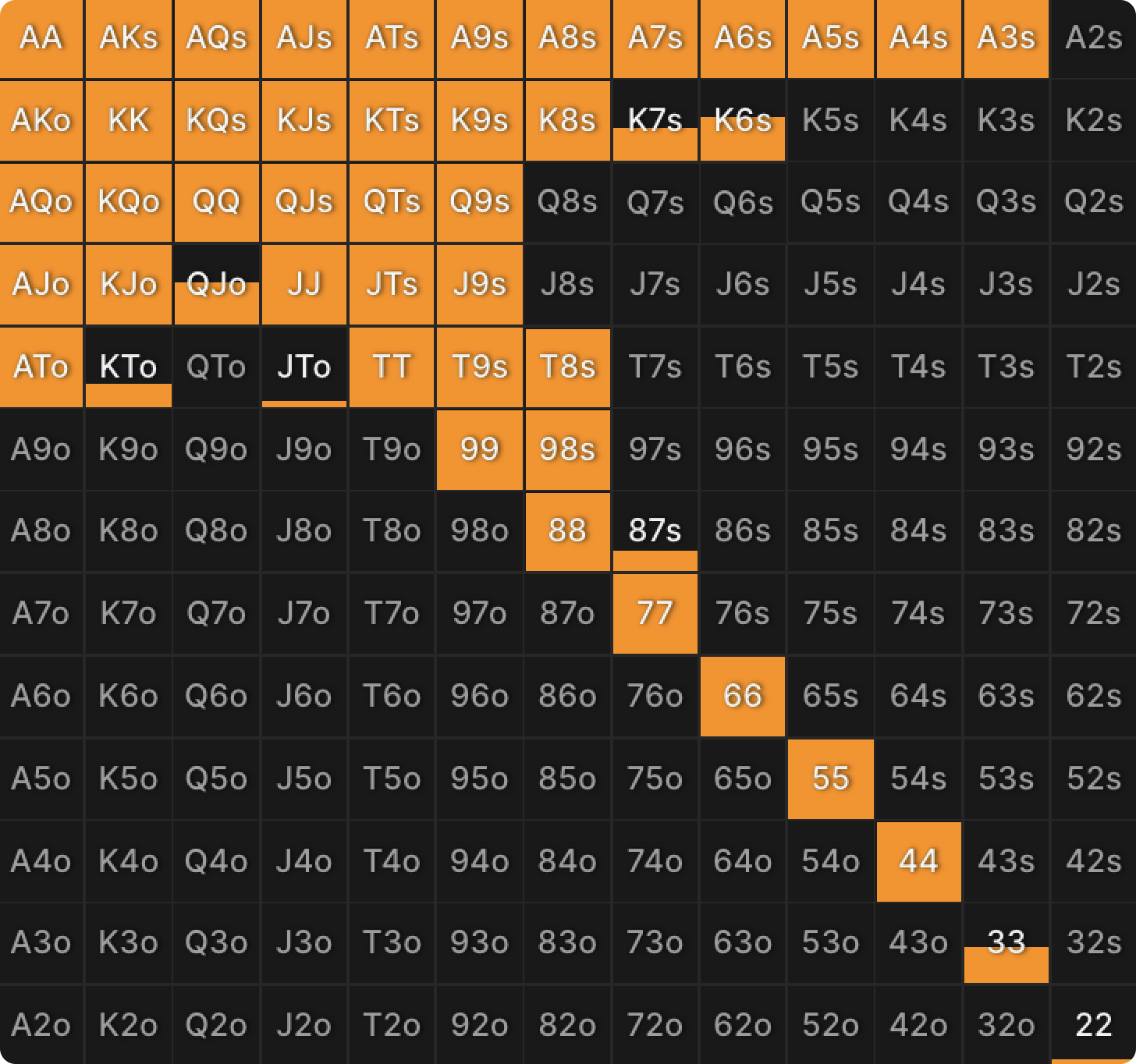
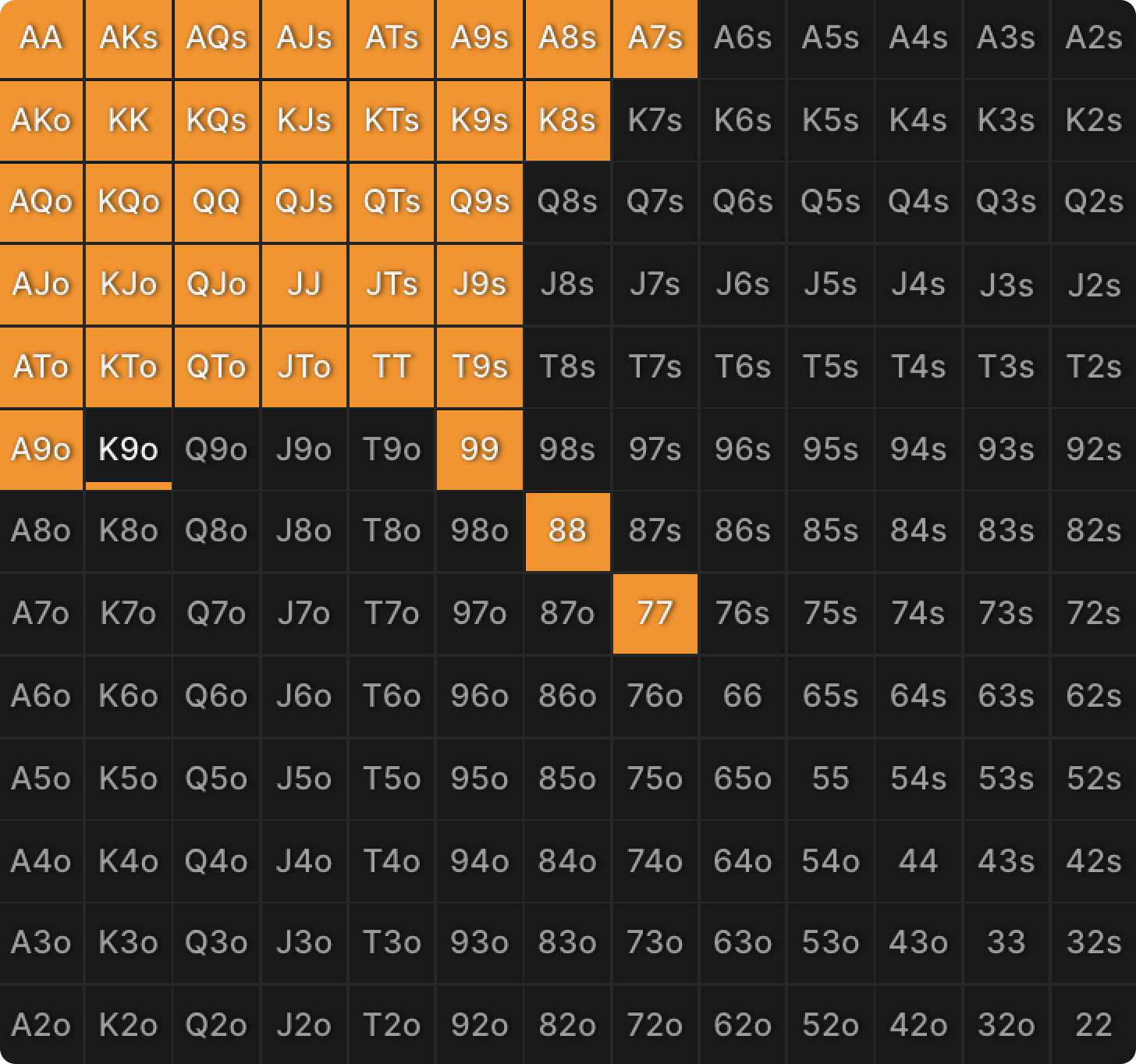
However, the first range covers much more boards. It can make a wheel (straight from A to 5), medium (two) pair, medium straight, as well as all sets. The class of hands in the first range is suited aces. They do a lot of low-cost work, and that's why they make up a significant portion of any GTO post-flop range. First of all, if they hit the ace, they will make a strong hand that will beat all other single pair. Players used to worry a lot about dominating with these hands when you put together a top pair, but that's not as much of a problem as some might think.
Secondly, you can cover any board. If on board 442 or K66, then you may well get a thrips on any of these flops trips. Low mast aces also make up straights (from A to 5) on low boards. Thus, when you collect a flush with a mast ace, you always have nuts (on unpaired boards), unless a rare straight flush is possible. When you get a flush draw with such an ace on the flop, you have a very strong hand for a semi-bluff. He can not only collect nuts when the opponent does not fold, but also get at least into the top pair.
Suited aces are more economical to add to the range.
There are only 4 combinations of each same-layered hand, with 12 combinations for offsuited hands. Therefore, if you want to achieve board coverage without increasing the percentage of hands you play, then it is better to add suited hands.
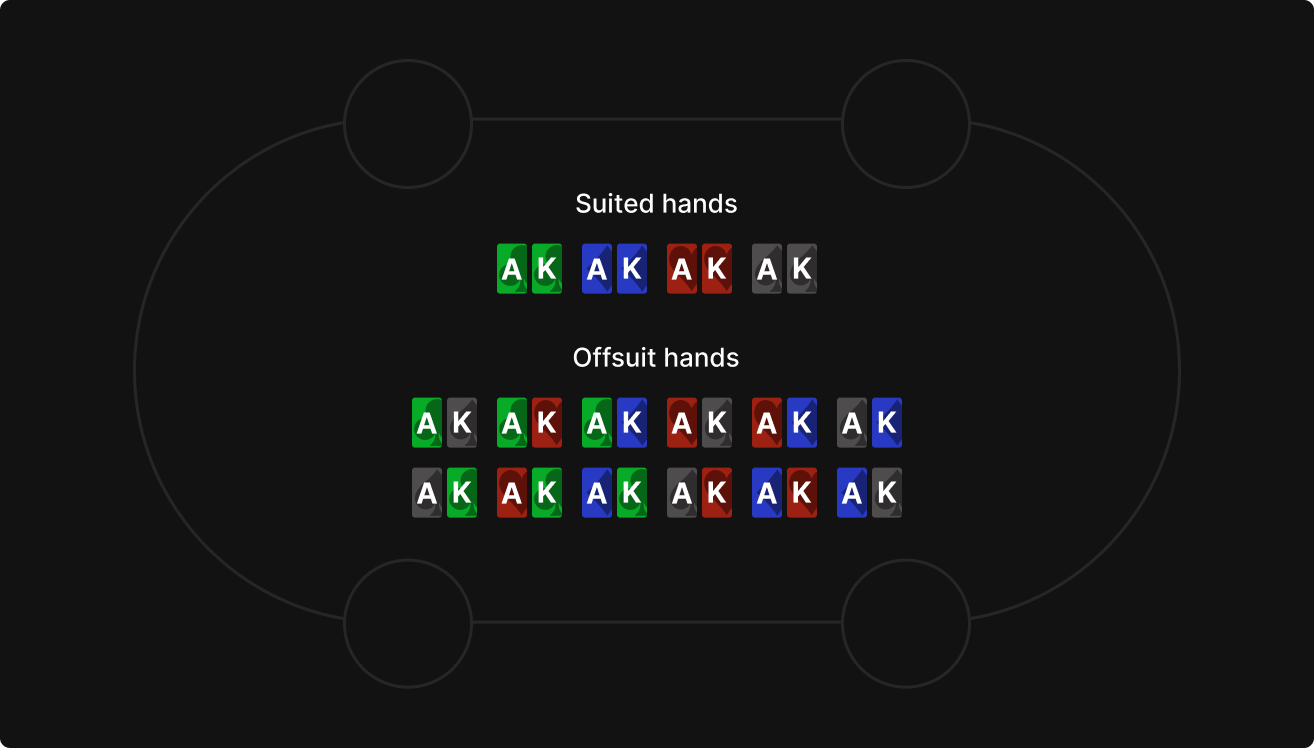
It is in this magical way that the narrow range of early positions can remain narrow while maintaining the coverage of the boards.
3. Conclusion
There are times in poker when you have to play with a cap ranges. However, you do not need to intentionally limit it so that you do not close the board. This is very important because you want to get into flops at a reasonable frequency so that your opponents can't read you. If you do not cover the board, you will become vulnerable to exploitation. When a player drops, you can exploit him by attacking the board, which he misses too often. He should respond with passive play, even with strong hands, to capitalize on your bluff and delicate valley value.
In reality, however, players who do not understand the essence of board coverage are likely to make matters worse by not adjusting to the boards on which they are trapped. The best way to economically cover boards is with suited hands with an ace (A-x). They can collect a top pair when they collect a flush, very often it is a nuts, and when they collect a flush draw it is a powerful half-bluff. Kicker in this case is a good way to enhance the interaction of the range with the middle and lower board cards. At the same time, for each suited A-x hand, you will have 3 of the same offsuited aces. If you want to add some A-x hand to the range, then take a suited one, it is much more economical.