


Translated with the help of AI. We apologize for any errors and would appreciate your help in correcting them.
Translated by order of the educational portal university.poker
Original source: GTO Wizard
The Heads Up (HU)

tournament game is a unique challenge for each player. Many tournament players who play kilopole MTTs only occasionally reach the one-on-one stage of the game, and therefore do not have much experience in this discipline. This article will look at three common examples of how our small blind opponents can change their pre-flop strategies during the HU game, and how we (the big blind) can take advantage of these changes.
1. Excessive fold on the small blind
Some players do not play at the bottom of the range in which they are supposed to play in the battle of the blinds. Using the preflop HU solver, we can model this deviation and develop a counterstrategy for the big blind.
- Before considering this particular example, let's set the standard for the optimal opening range of SB at a depth of 50bb. Note that the range used in this article is based on the chip EV game with an ante of 0.12 bb.
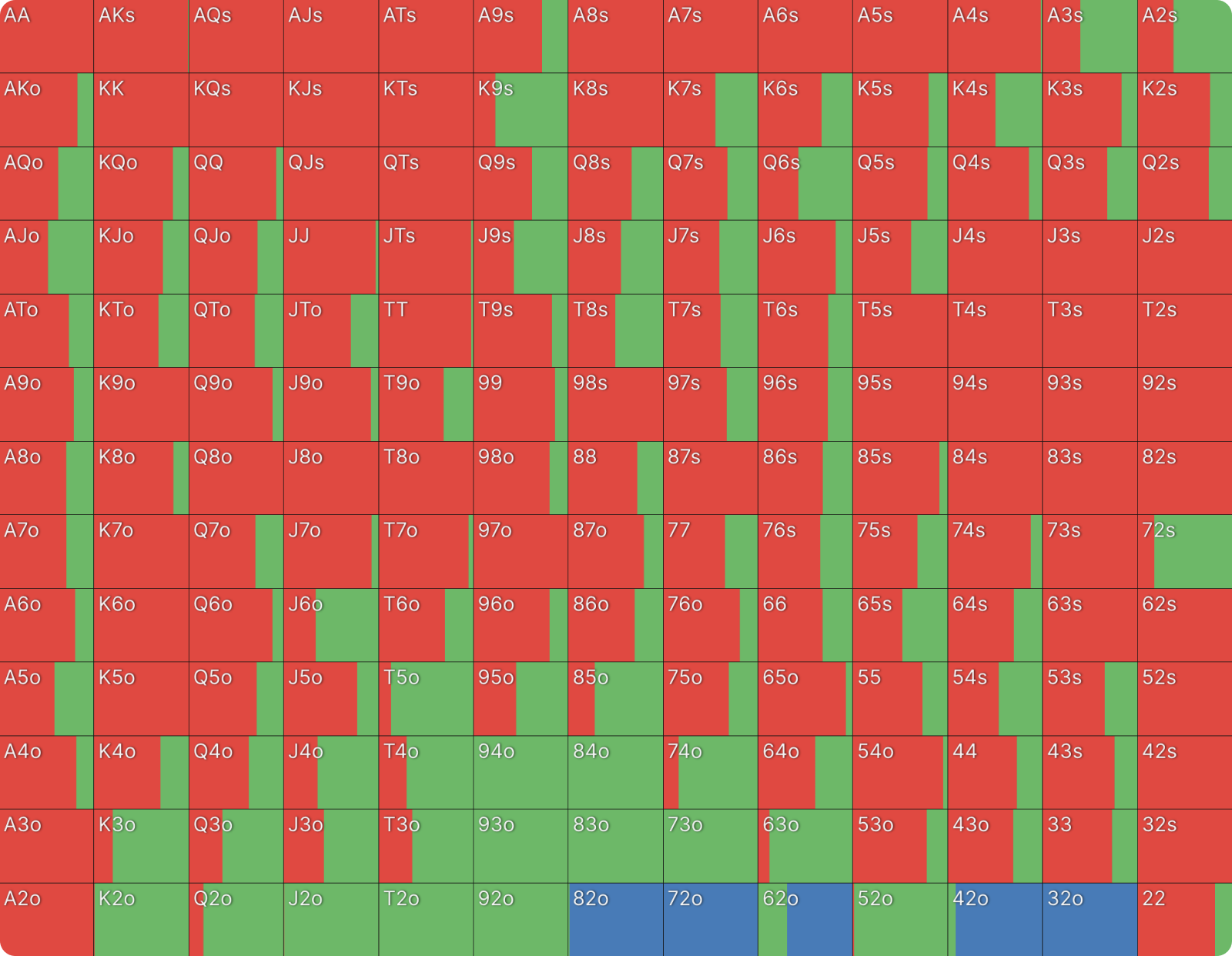
Due to the relatively high stack to bank (SPR) ratio, we can see that most hands do high frequency raises, a limp is also present to balance the lower part of the SB range. Overall, SB only dumps 4% of hands.
Given such a wide opening range, how does BB react?
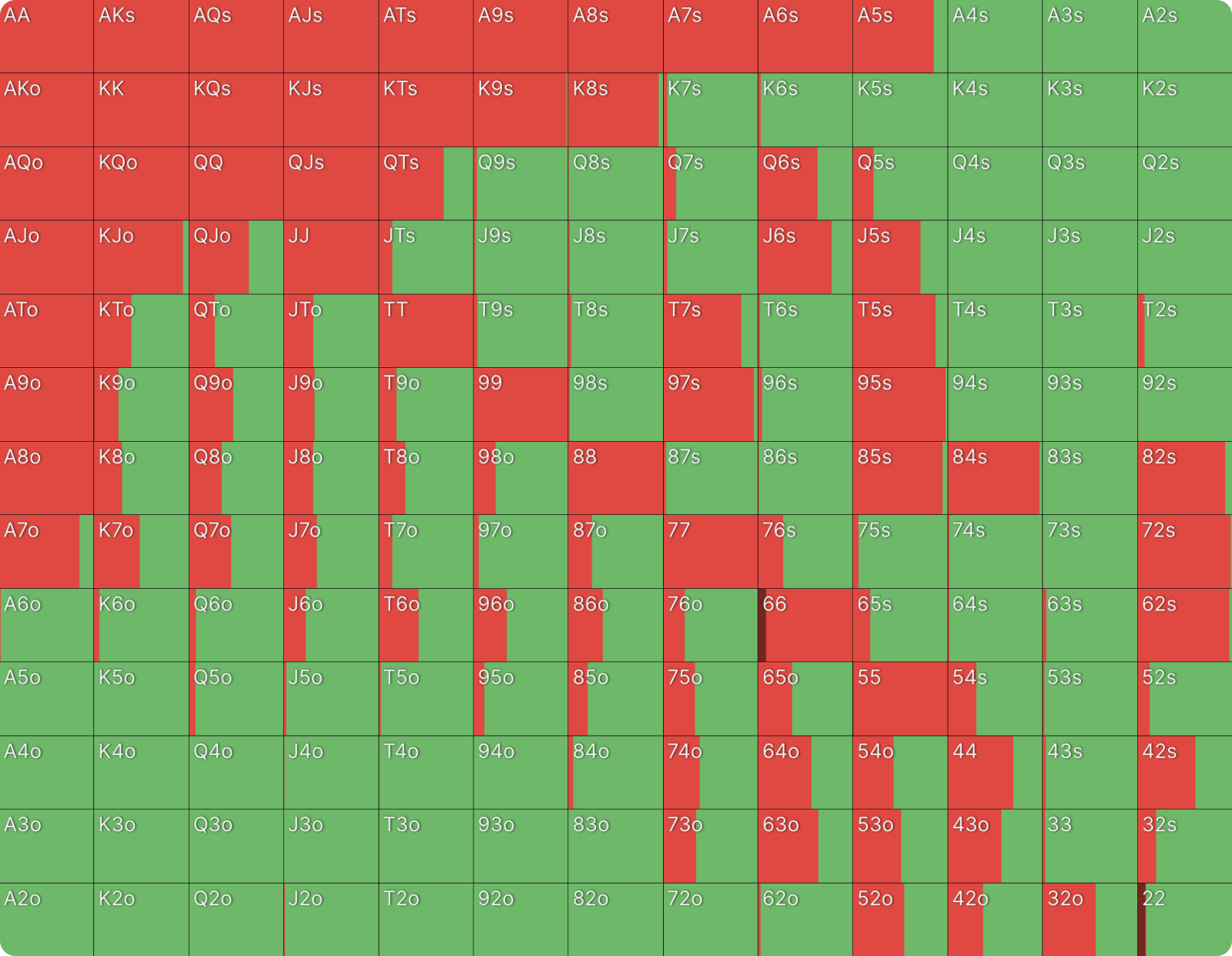
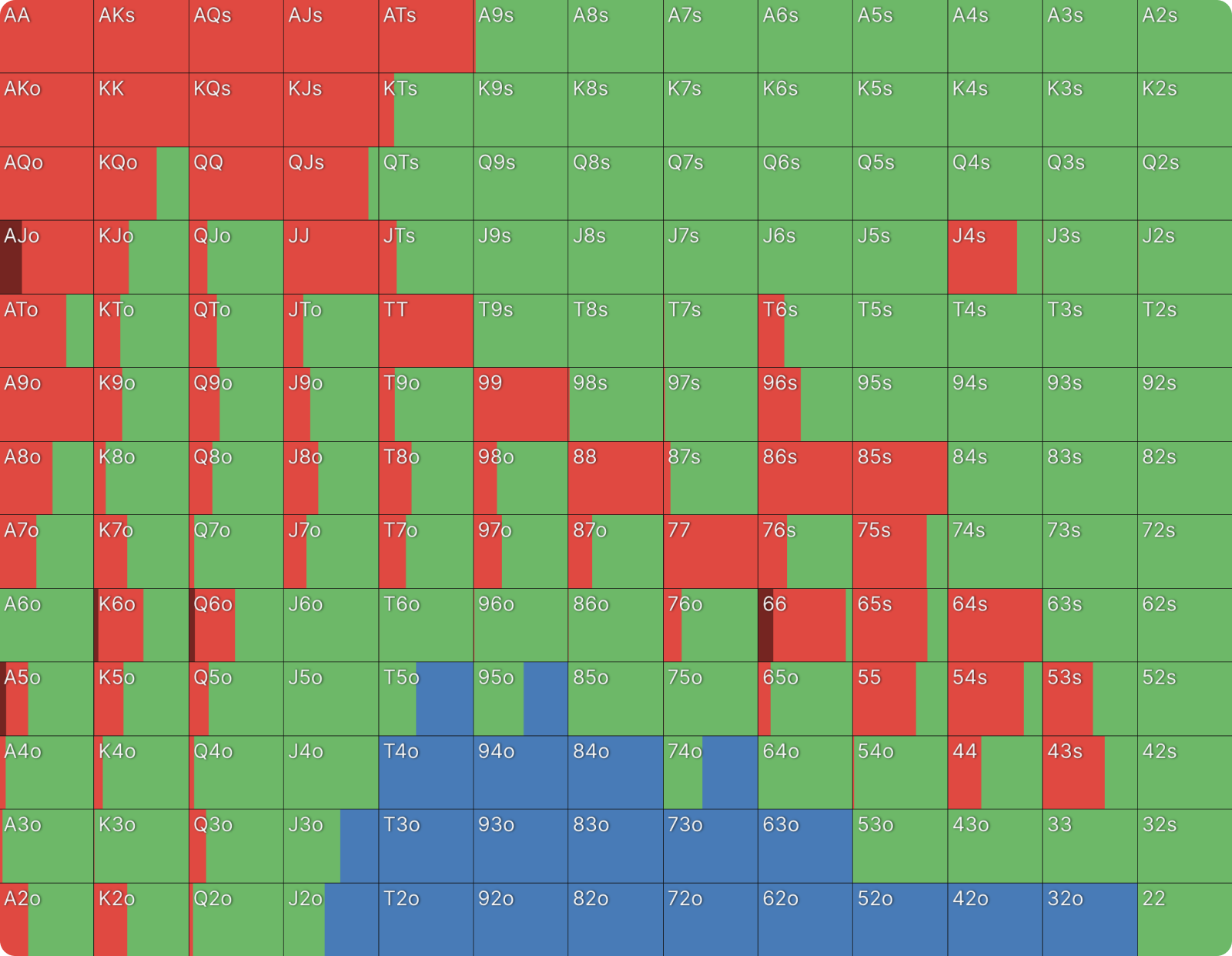

BB attacks the relatively weak SB limp range, making a raise of 34% of the range, basically balancing the bottom of its suited hands and low offsuited connectors with the strongest hands to maintain a balanced range on the postflop. Against the opening of 2,1bb BB, a stronger 3 bet range will be added, adding weaker offsuited hands with a picture that block part of the 3bet call range in SB. With this baseline in mind, what should BB do if SB deviates from this strategy? Let's look at three potential SB deviations and BB response exploits.
- As an example, let's fix the SB strategy so that it will fold preflop 2 times more often (8% instead of the initial 4%) and see how this will affect the BB strategy.
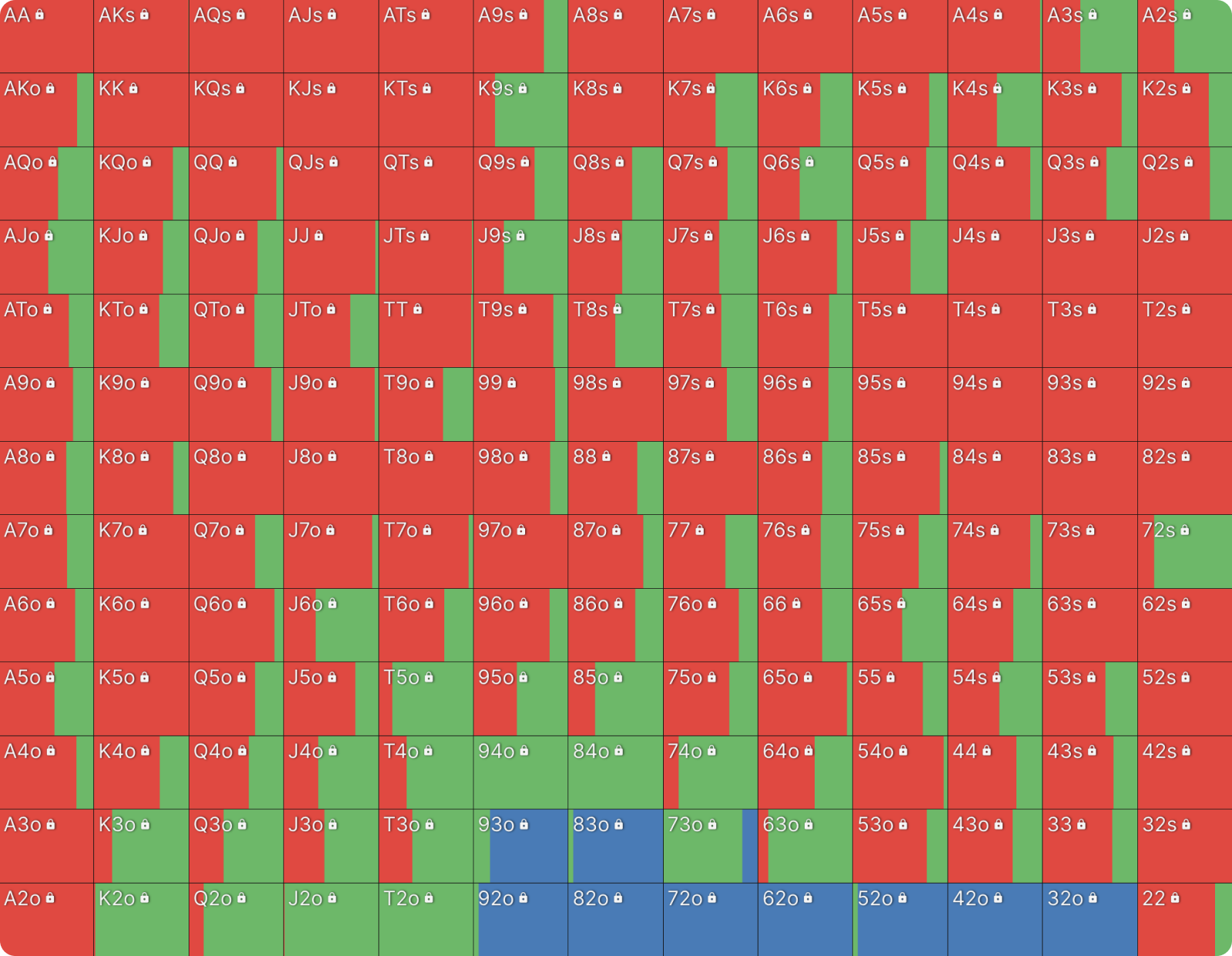
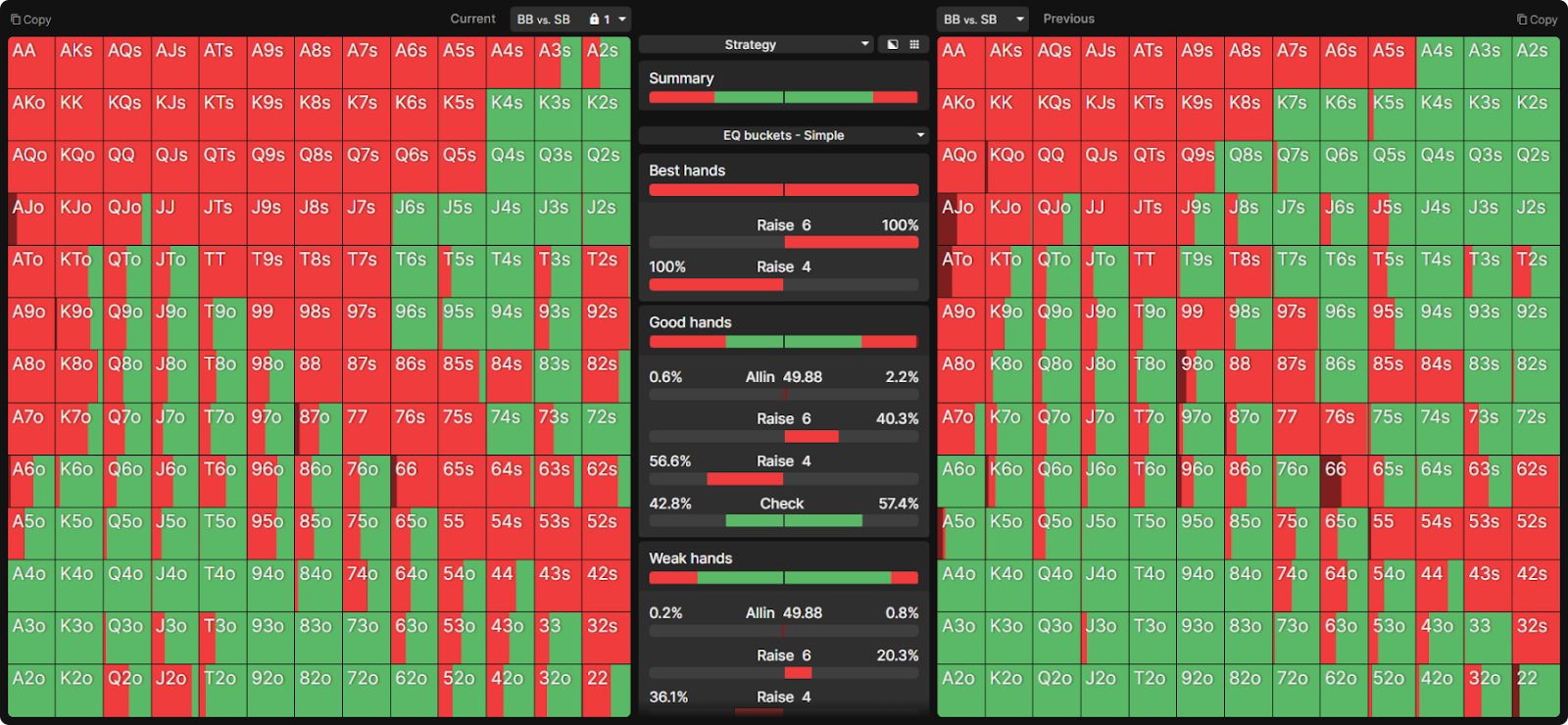
One important adjustment is that BB uses a smaller raise size, 4bb instead of 6bb, due to the stronger SB lima range. However, we also see a large increase in the range of the raise from 34% to 48% of the hands due to the smaller size of this raise. When we invest less chips in our raise, we can use a wider range, since the risk of a raise-fold is less.
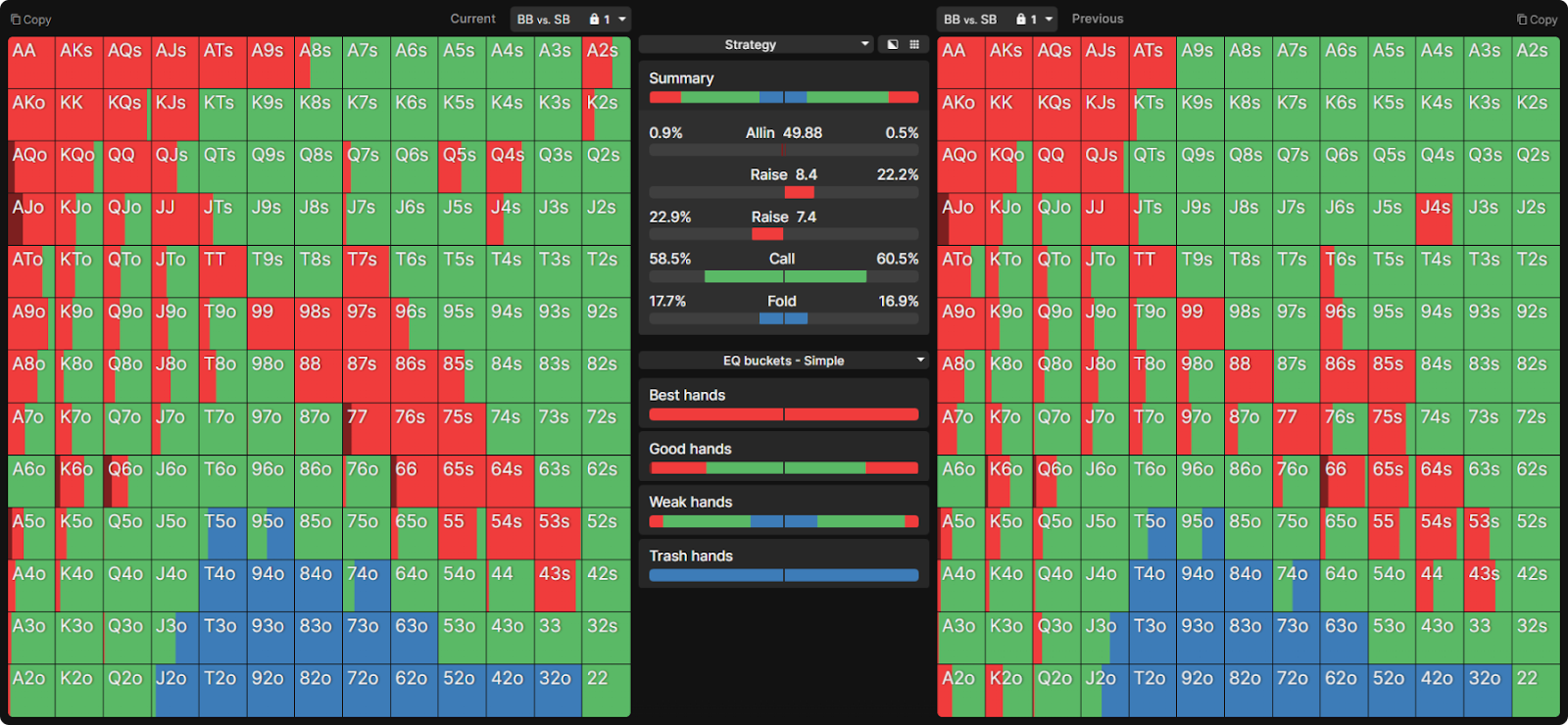
We also see that BB's response to raises changed to 3-bet 0.7% more often to 7.4bb instead of 3bet 8.4bb. The calls decreased by 2%. This is in line with our tailored response to the lima strategy, where we use a smaller raise size more often.
When our villain refloats on the small blind in deep stacks, we begin to raise and 3 bet more often, but with less sizing.
2. Small blinds that make a big open-raise
In previous examples, we have seen that SB uses an opening size of 2.5bb, but sometimes the player may prefer a larger opening size. This may be due to a perceived lack of skill, or simply a lack of experience in a one-on-one game. To model this, let's give it a larger opening size (3.5bb) and see what happens.
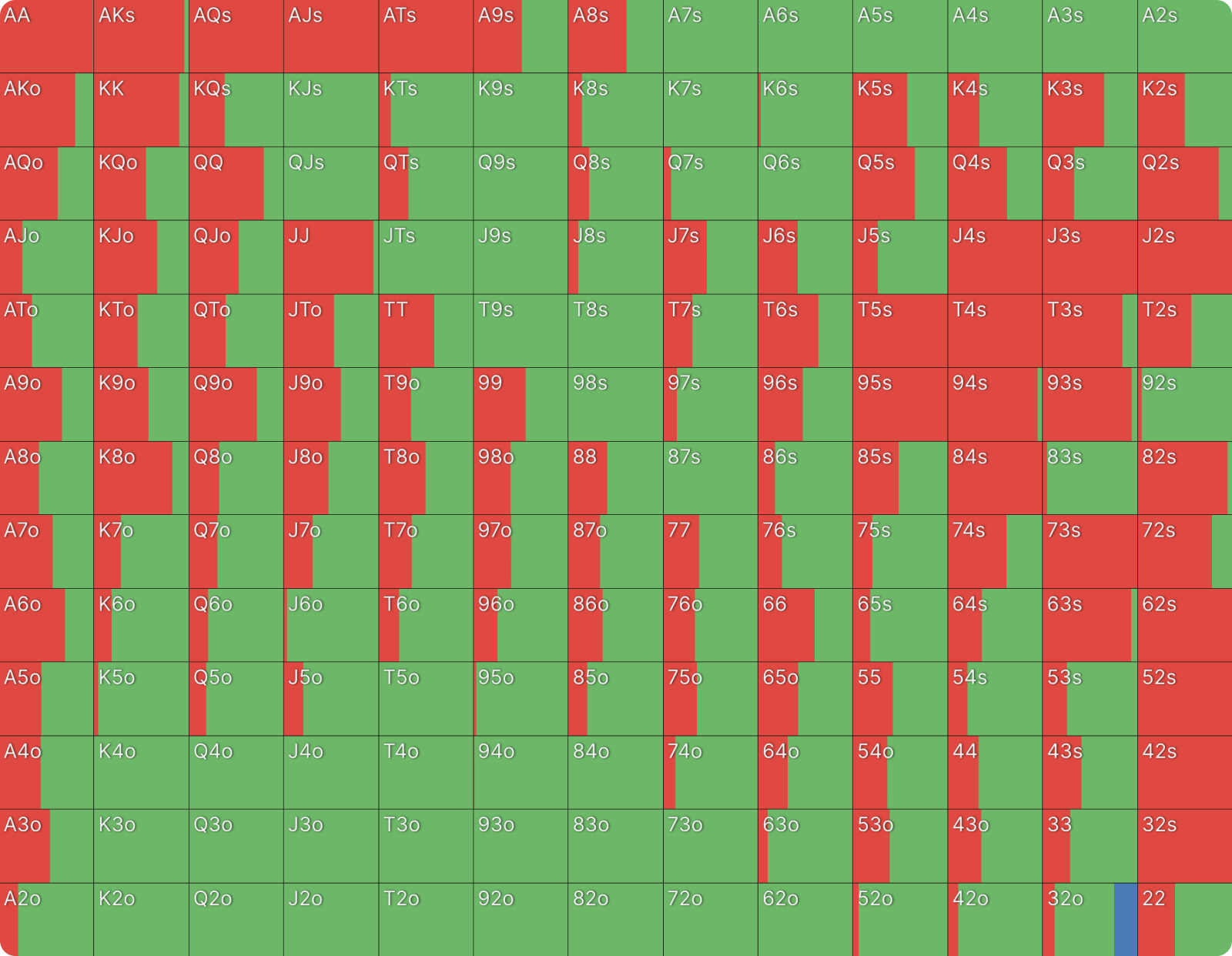
The biggest adjustment for SB is to further increase the lima range as the opening size increases. As he invests more chips, his opening range becomes much more polarized with an admixture of weaker suited and offsuited cards. This results in BB protecting a narrower range due to playing in a larger pot on a post-flop pot.
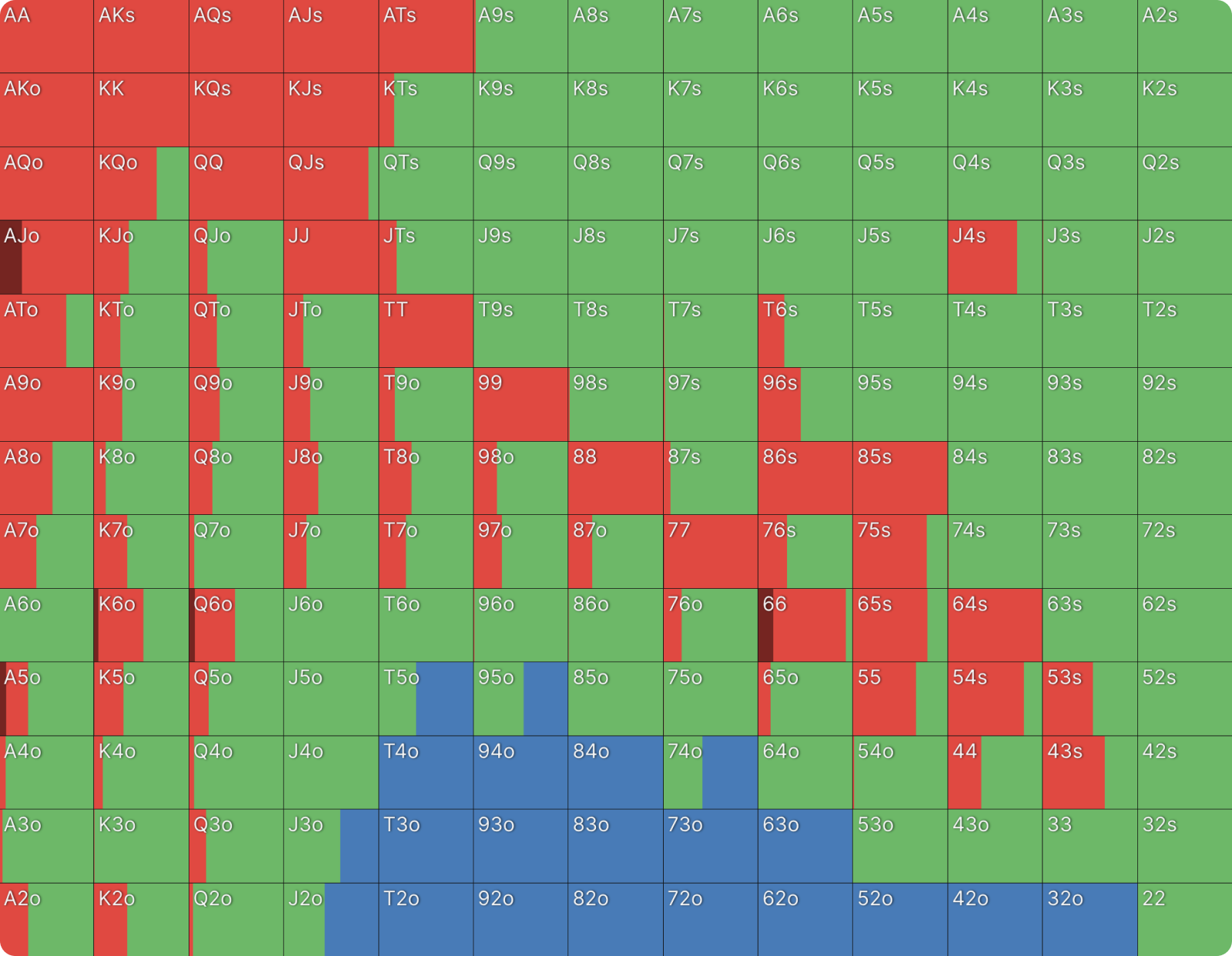
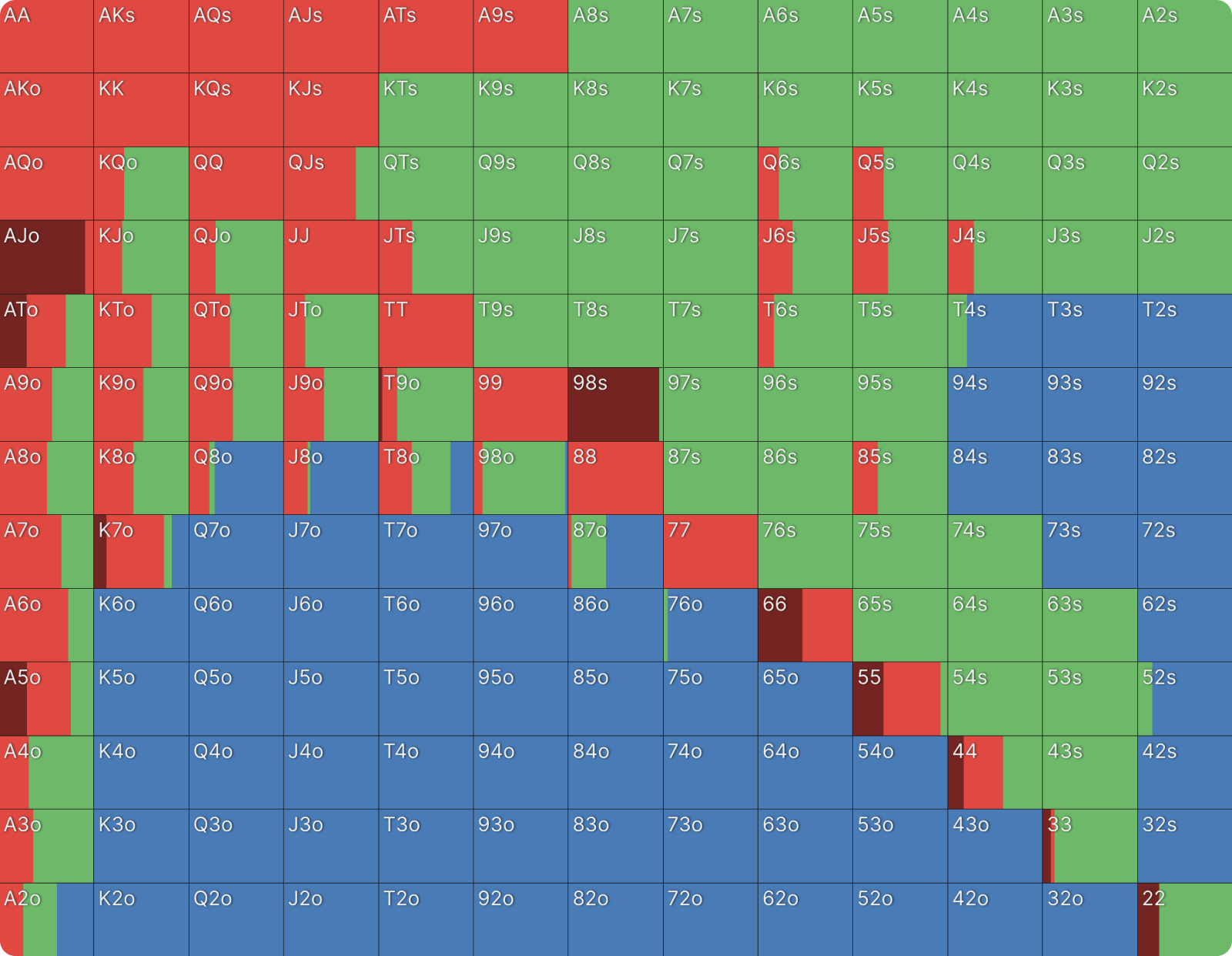
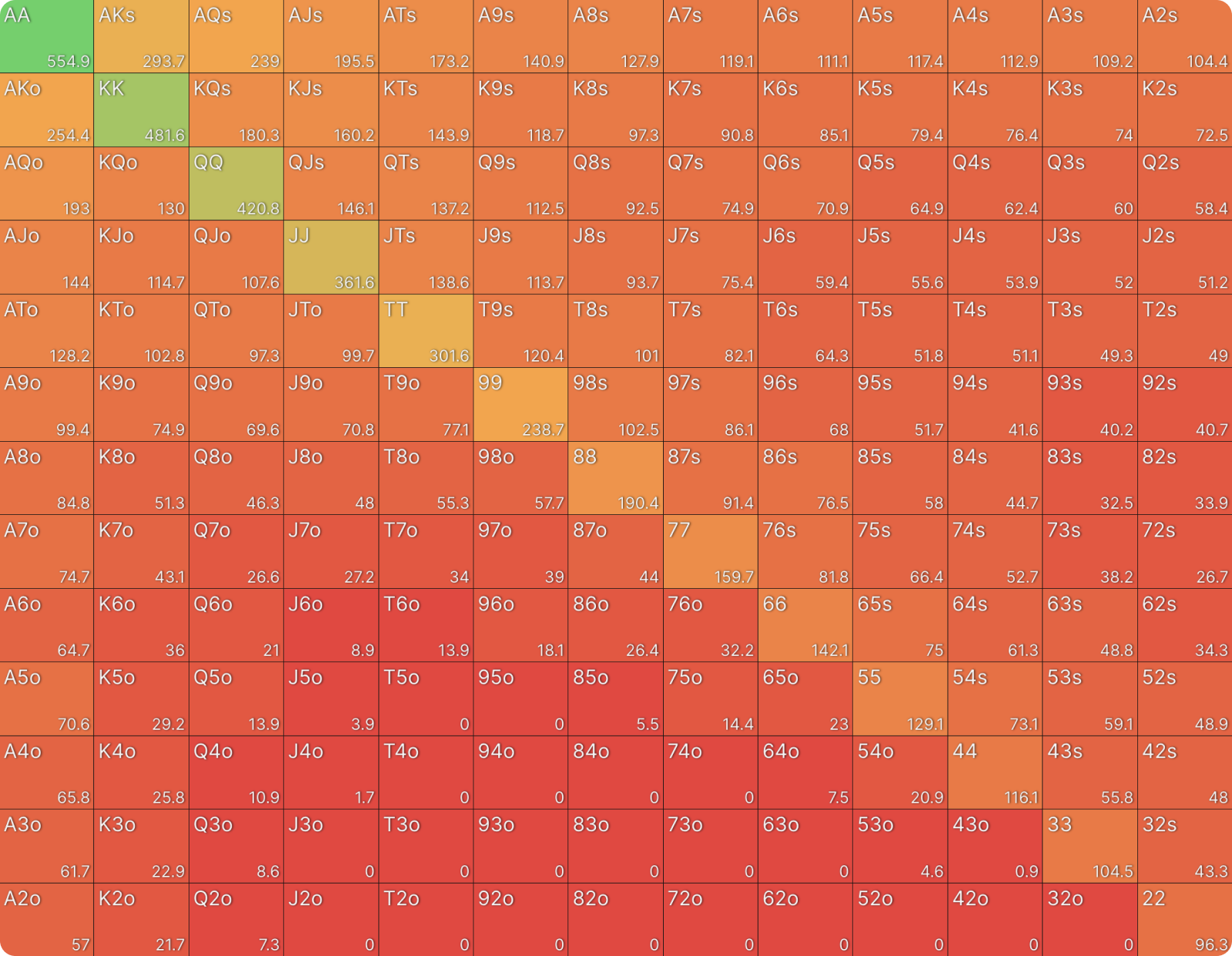
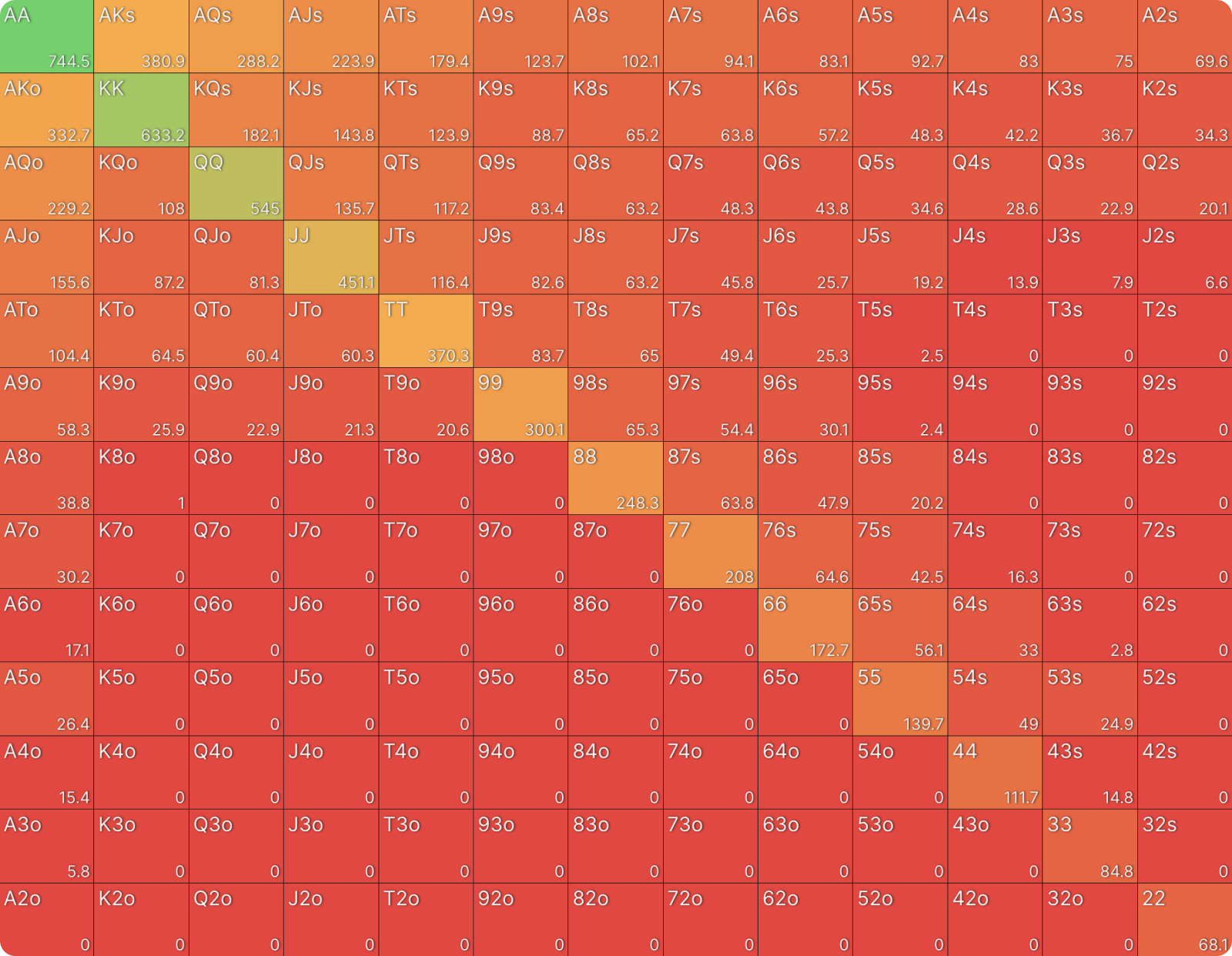
When SB increases the size of its open rate, the best adjustment for the BB range is to reset more often and 3 bet less often.
3. A small blind that opens too often
Finally, let's consider opponents who open with an even wider range than the equilibrium strategy suggests. Some players may choose to open even the worst playable hands, either to balance their full range or to take advantage of an opponent who they expect will drop their big blind too often.
- For example, let's expand the opening range of SB from 64% to 72% and see how BB reacts then:
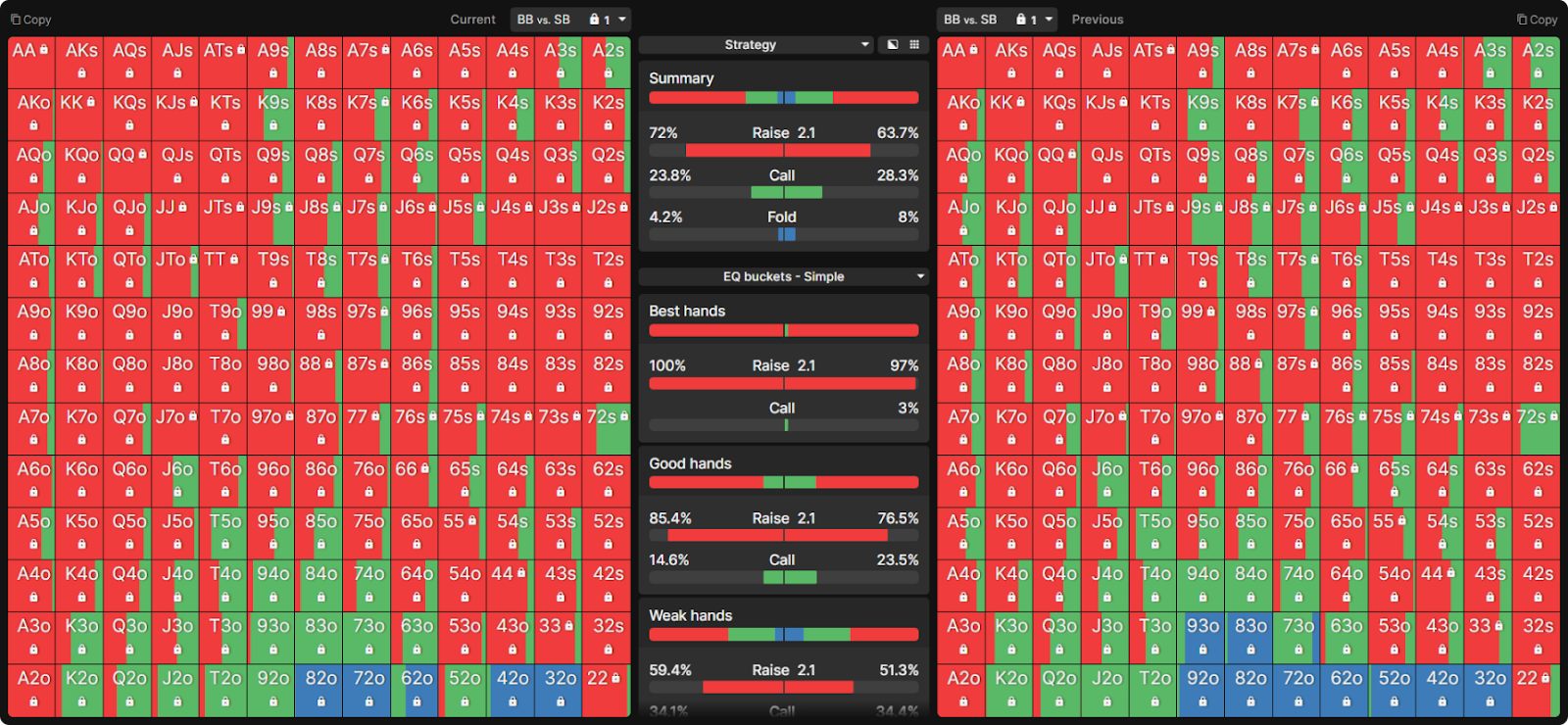
When increasing its opening range, SB prefers to do so by increasing the frequency of hand mixing, because clean limped hands benefit nothing from adding open raises. It is important to note here that SB is no longer limping any of its “best” hands (and limping less with its “good” hands).
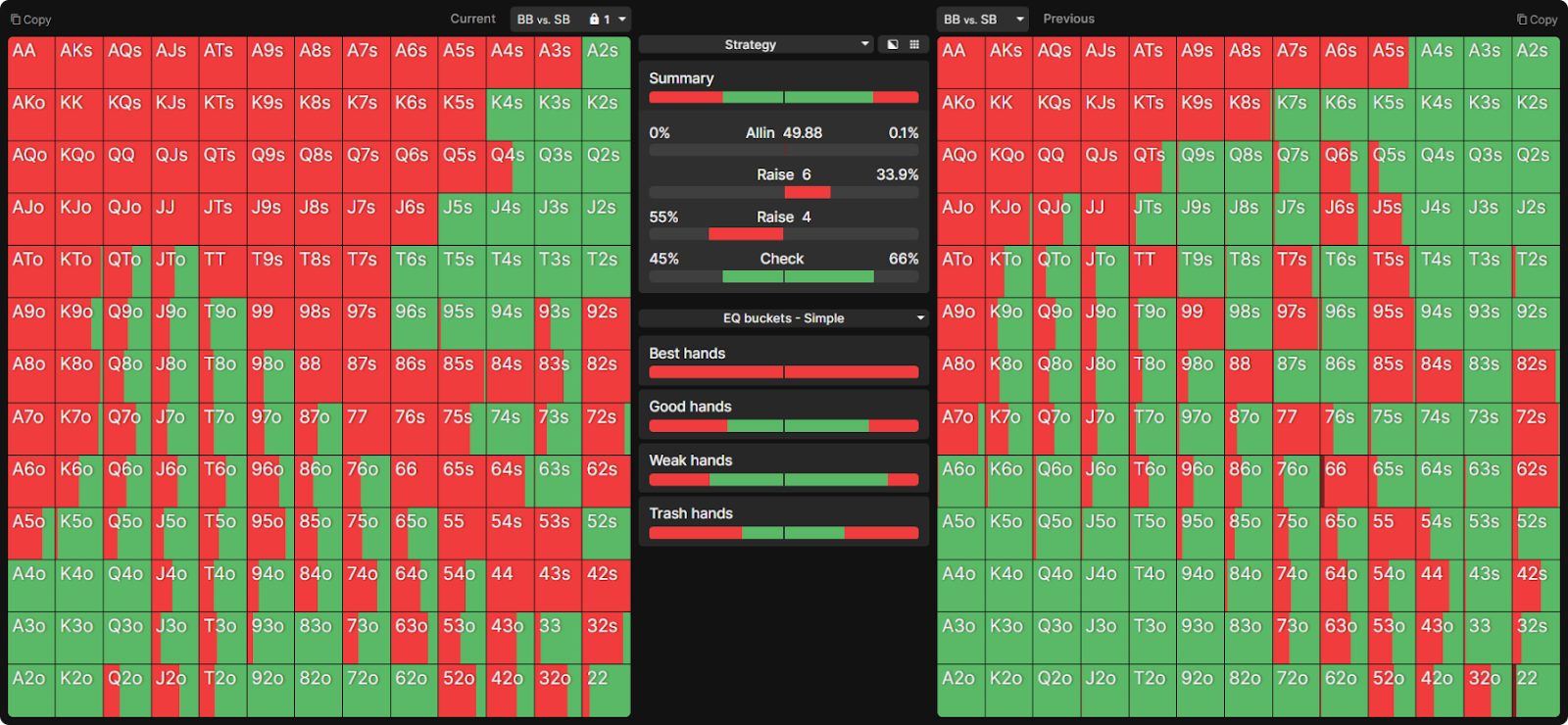
As in our overfold example, BB adjusts to the SB limp, which has a wider open-raise range, while reducing the size of its isolate (from 6bb to 4bb). In this case, SB further dripped his limp range, removing all strong hands from it, prompting BB to isolate more aggressively.
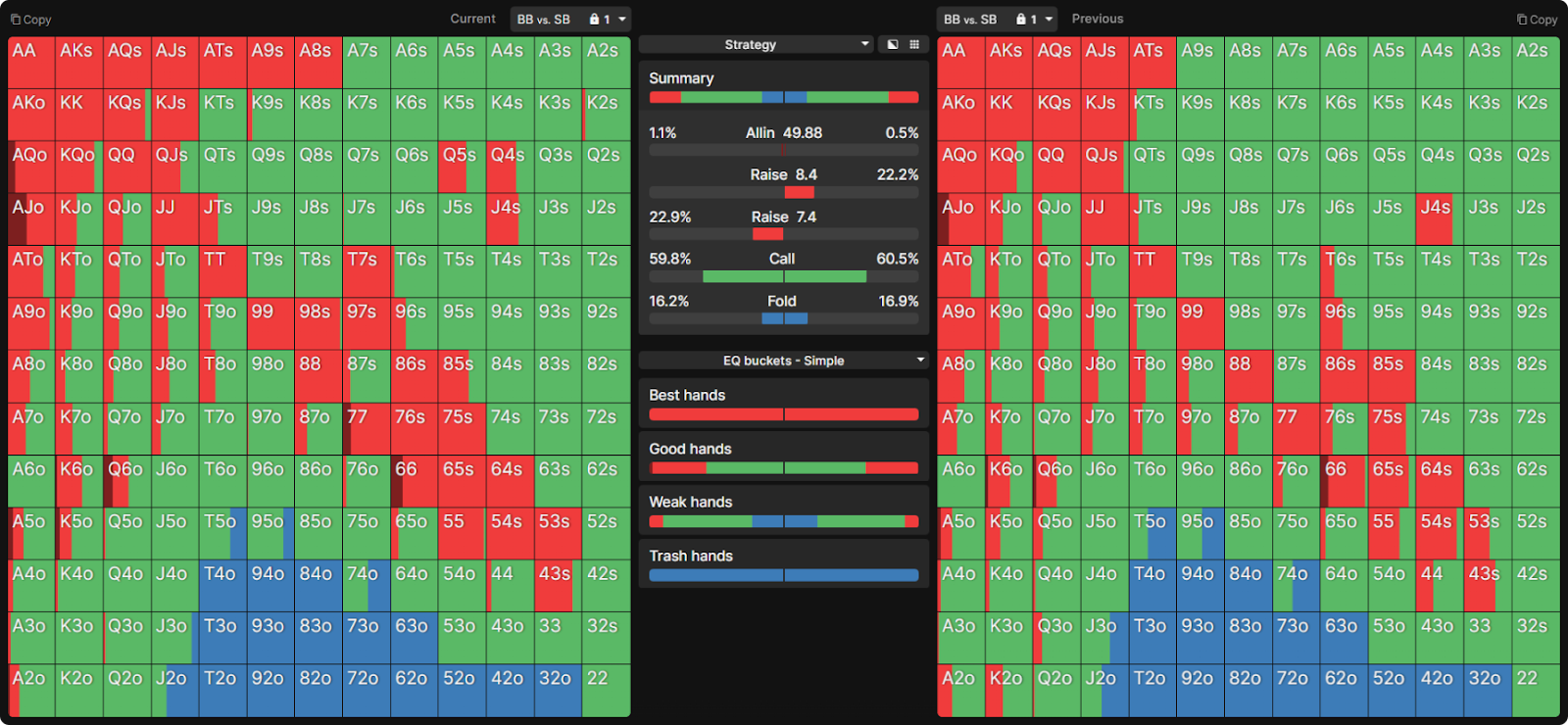
Again, we see a parallel to our first example where the BB strategy remains unchanged when SB opens the range 8% wider. Because SB simply adjusts the hand frequencies that were already in the range instead of adding new hands to its opening range, BB still collides and 3-betites an almost identical range.
When our villain begins to do open raises more often, we should isolate his (weak hands) limps more often using less sizing.
4. Conclusion
For tournament players who regularly participate in “kilopole” events, heads-up can be a situation where players deviate from the GTO strategy. While many have experience playing from the early to late stages of standard MTT, only a few have significant head-up experience. Therefore, there are often players who begin to exploit opponents in heads-up in the ways presented in this article.
Below is a summary of the three examples we reviewed:
- When SB resets or opens too often, we must adjust our strategy by isolating more often its limes with a smaller sized raise.
- If SB uses a larger opening size, we should adjust by folding more often and making 3-bets with a stronger range.