


Translated with the help of AI. We apologize for any errors and would appreciate your help in correcting them.
Translated by order of the educational portal university.poker
Original source: GTO Wizard

Small Blind (SB) cbets differ from typical out-of-position (OOP) bet in single-raiser (SRP) hands. The article discusses how and why the small Blind plays the flop differently than players in other positions.
1. Incentives on preflop
Preflop actions have a key influence on the postflop strategy, while the texture of the board is of secondary importance. Pre-flop stimuli define the range with which players enter the flop. These range, in turn, form the frequency and size of bet. The texture of the board can strengthen or soften the differences between ranges, but rarely completely eliminates them. The incentives for call to raise SB on the part of BB differ from the incentives for call against raise from other positions, say from the positions of LJ or Co. Small Blind, raising the bet, knows that he will play post-flop exclusively outside the position, offering BB the opportunity to protect a wide range and take advantage of his advantage. Therefore, its incentive to open is different from the incentive to open from other positions, such as LJ or CO.
Open Rise SB
When small Blind raises, he realizes that his raise will offer BB a profitable opportunity for a call at a discount (since 1bb already costs initially), in addition, BB will be able to use the edge of the position on the post-flop. In addition, for the Small Blind, collating is a more attractive option than for other positions, since half of the big blind is already invested in the pot. However, for the Small Blind, the raise should not just be positive, but also more profitable than the call, which will also be positive with most hands.
Cold-call in position
A player who makes a cold-call faces risks similar to those assumed by the raiser: He invests the same amount of chips in the pot without having previously invested, and faces possible overcalls or tribettes from the players behind. At the same time, the cold-color always has players behind who will not be able to pick up the pot preflop, as the raiser can do. As a result, the single-raise pot between the open raiser and the cold-colour usually includes the raiser with the nuts' advantage, the collier with the positional advantage, and neither player has a significant advantage in equity.
In the case of SRP with SB vs BB, these conditions are not met! Caller BB will see a flop with a significantly weaker range than a raiser with SB, because it starts with the extra half of the big blind already tied to the bank, and because its call (in the case of BB raise) closes the action. While BB will slouple some of its best hands at shallower stack depths, SB's open racer will have an edge in equity and nats on most flops. However, these advantages are offset by its positional disadvantage, which is a greater responsibility with deeper stacks and on more dynamic boards.
A caller with BB will see a flop with a significantly weaker range than a racer with SB.
2. Consolidated strategy
The following chart shows a summary strategy for playing the Small Blind on the flop at different stack sizes: the percentage of its range with which it checks in or makes bet of various sizes:
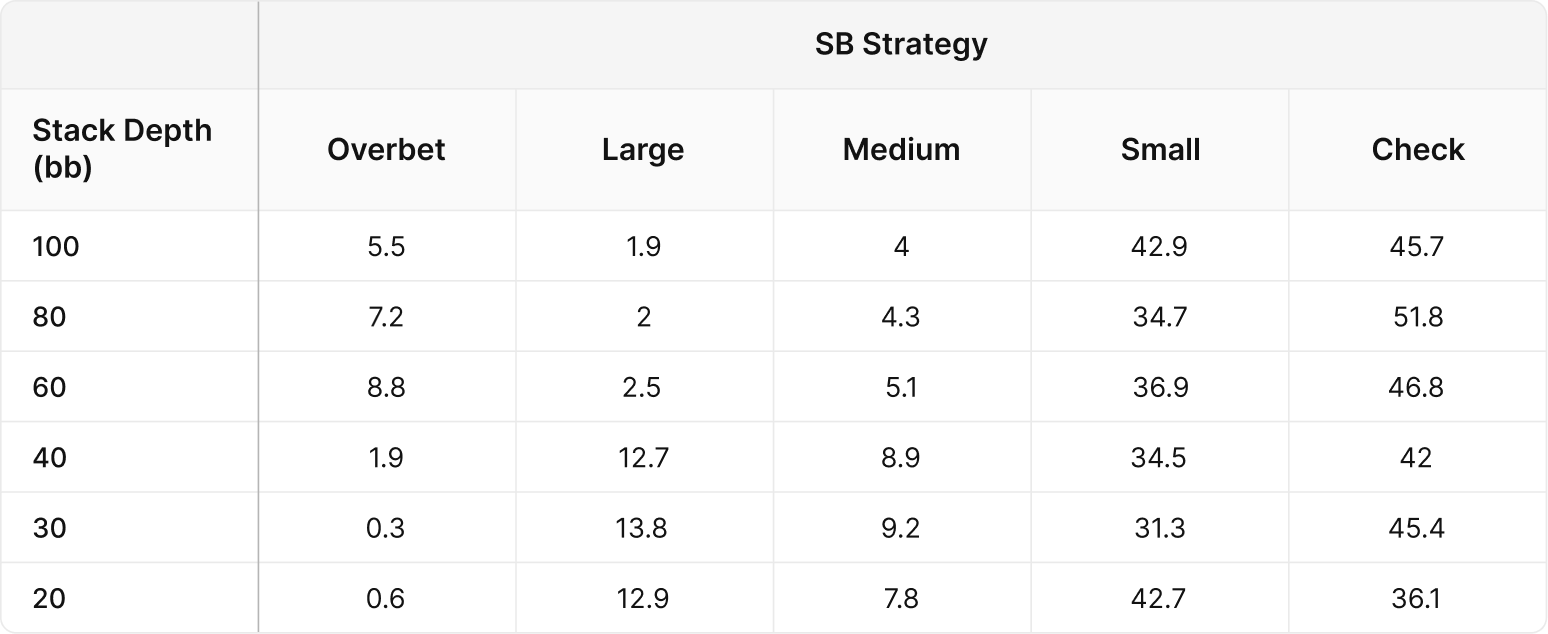
It is difficult to isolate patterns and heuristics from aggregated data because both the Small Blind's raise strategy and the Big Blind's call strategy vary greatly depending on the size of the stacks. With very deep stacks, the small Blind rarely open-raises, preferring limp-raise with hands that would play well as an open-raise with smaller stacks. This helps him either finish the hand before the flop or get a lower SPR on the flop, which reduces his positional edge.
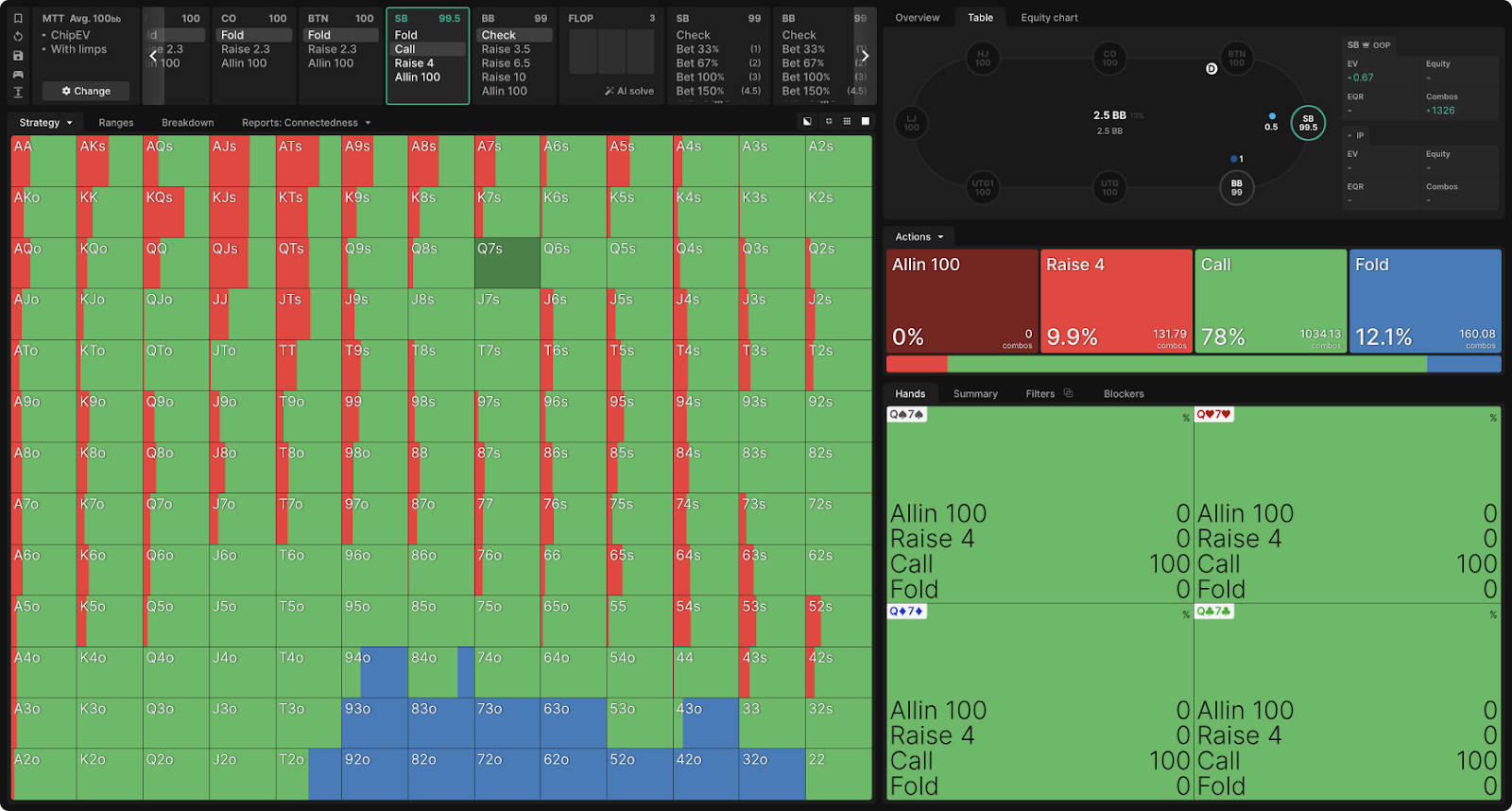
Incentives for 3-bet also vary depending on the size of the stacks. 3-bet is risky because it can lead to push-ups that will deprive them of both equity and the ability to play in a post-flop position. But when he can calmly launch himself to the opening, the 3-bet becomes more attractive, but the small Blind also has to adapt its opening range to take into account this risk.
Nevertheless, several general trends can still be distinguished:
- The check is a significant part of the Small Blind's strategy for all stack sizes. Range betting is not optimal for any stack size, except for a few very specific flops.
- Small bet is the most frequent type of bet used by the Small Blind for all stack sizes. Big Blind's incentives to see the flop with weaker hands than the Small Blind result in BB having more weak hands on all flops, which is a class of hands that the Small Blind can attack by getting cheap folds with small bet. In this sense, the bet strategy on the flop from the Small Blind resembles the strategy of a player who is in a pre-flop position against the BB.
- Large bet is a less frequent but significant component of the Small Blind strategy for all stack sizes. Both the use of large bet rates and their size depend on the stacks; with deeper stacks, overbets (often 125%) are preferred, and with smaller stacks, large bet rates (about 75% of the pot). This reflects the edge equity advantage that the small Blind can use for immediate folding on particularly favorable board, while the big Blind will often receive an average equity on the flop, such as a bottom pair or simply overcards.
3. Preflop caution
The range in a BvB game (blind vs. blind) often includes many mixed solutions and boundary situations. This means they are extremely sensitive to the opponent's strategy. For example, in the open raise range of 100bb depth presented above, the Small Blind has no net raises, and many hands combine call and raise. If the big Blind dumps on raises too often, many of these mixed hands (and even some pure limps) will become more lucrative as raises, while very strong hands like the AA will prefer the limp. If the big Blind raising against the limps too often, some weak limps will play better like folds (or perhaps limp raises), then the small Blind will probably prefer to limit their strong hands often.
BvB range is extremely sensitive to the opponent's strategy.
The range of your opponents can be very different from what we see in equilibrium, which pushes you to deviate from the optimal game to exploit these imbalances. This statement is true for any solver solution in any situation, but in blind battles it is more common, since the strategies are more complex and less intuitive. Although we will not delve into the topic of exploits in this article, they should be taken into account in the game.
Important to remember: If you change your pre-flop strategy significantly, the following post-flop tips may become irrelevant.
4. Deep stacks
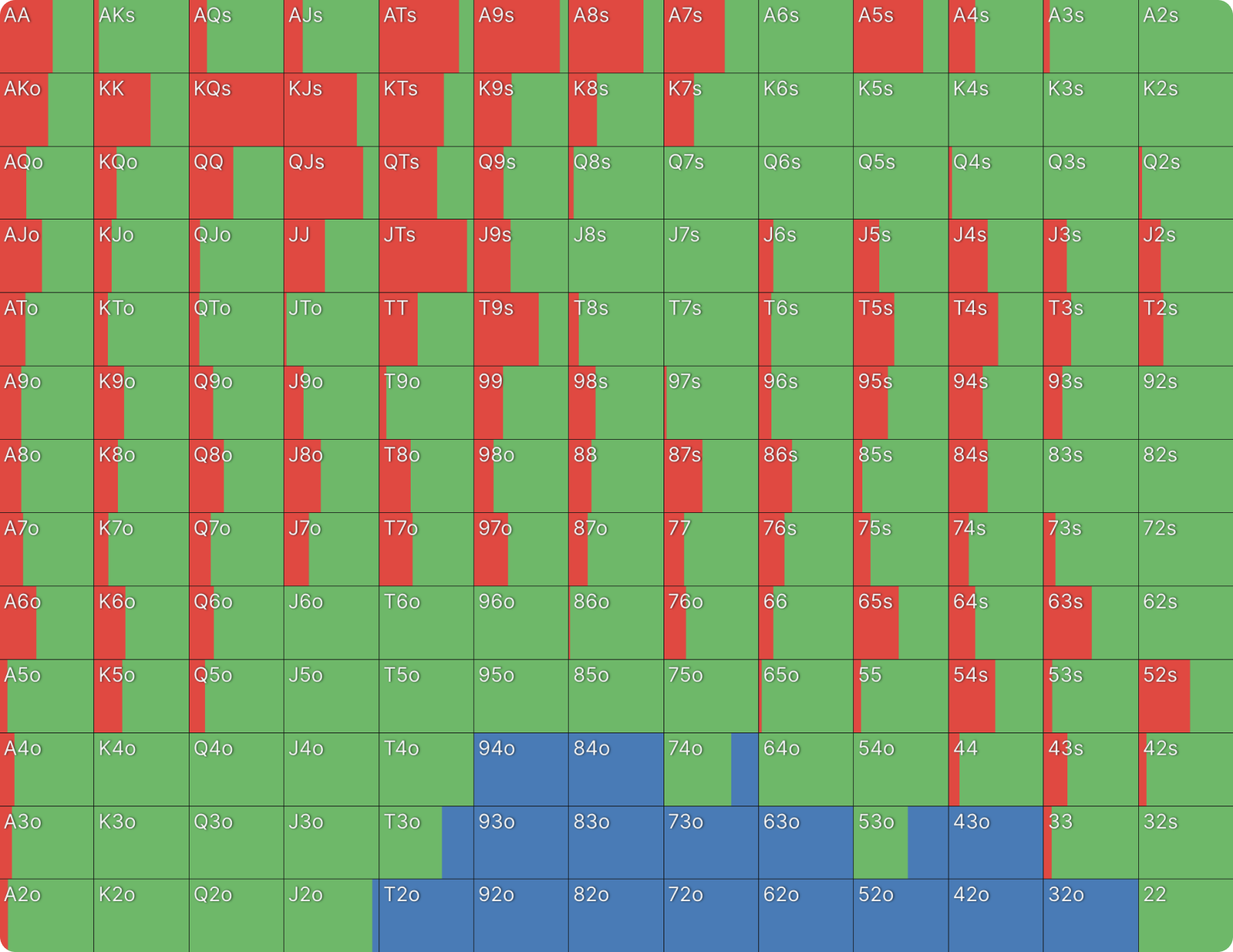
We have already seen that at the deepest stacks, the small Blind rarely makes an open-raise, so let's take the depth of the 60bb stack for analysis. At this level, the small blind opens a relatively polar range of about 16% of the hands.
The equity part of the range focuses on Broadway single-layer maps, large pocket pairs, and senior unmasted aces:
At 60bb depth, the small blind makes more large bet on the flop (including overbets) than on deeper stacks. Exceptions are specific situations, for example, on the board 222.
Thus, large bet most often appear on flops with medium cards:
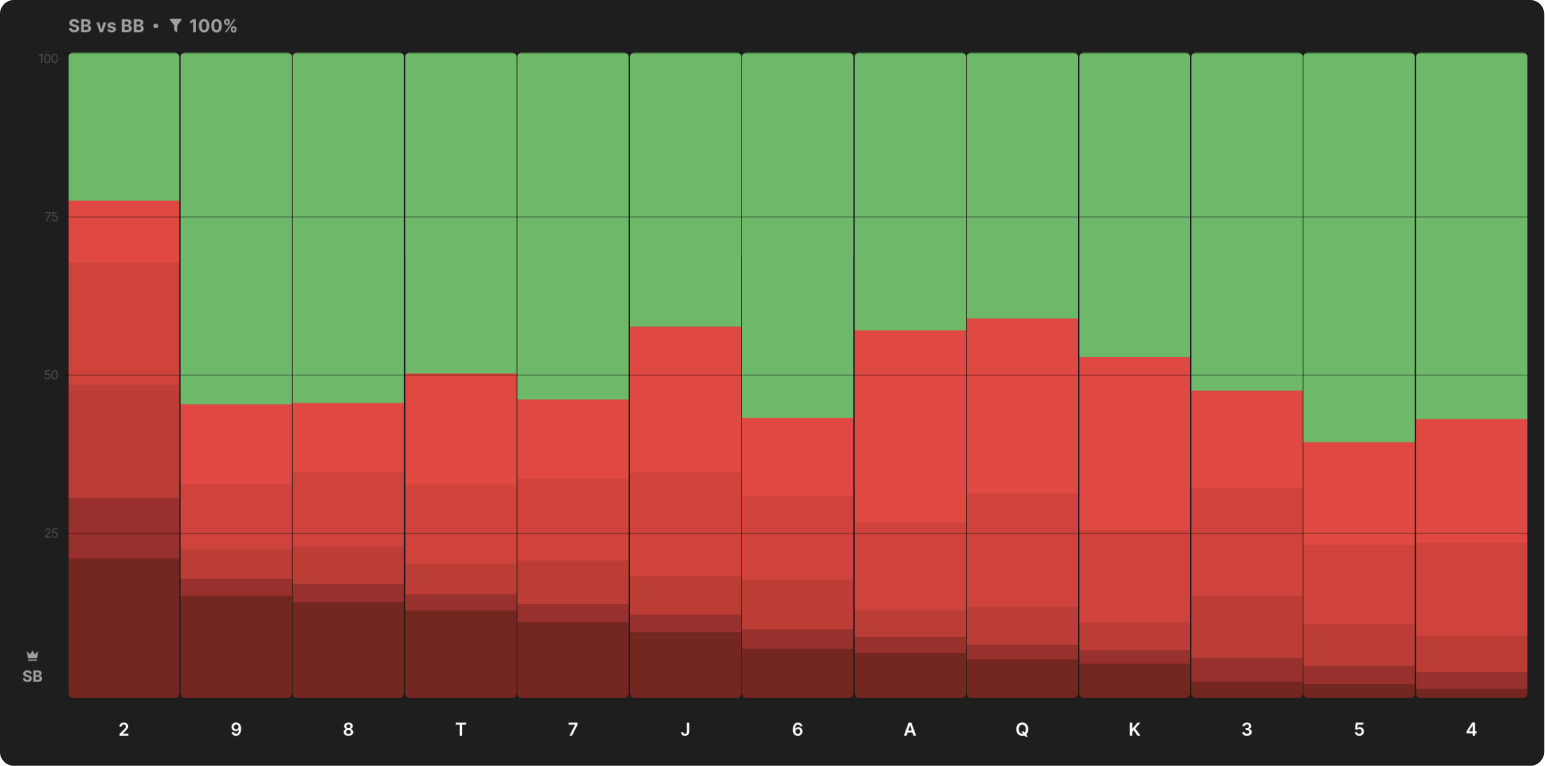
in terms of overbet frequency - the bottom of the columns, the darkest color)
Flops with medium cards are more dynamic and play into the hands of Small Blind, who more often contains large pocket pair in his range. The frequent use of large bet on bound board and their rarity on monotonous board confirms the hypothesis that the dynamic of the board affects the size of bet.
Example:
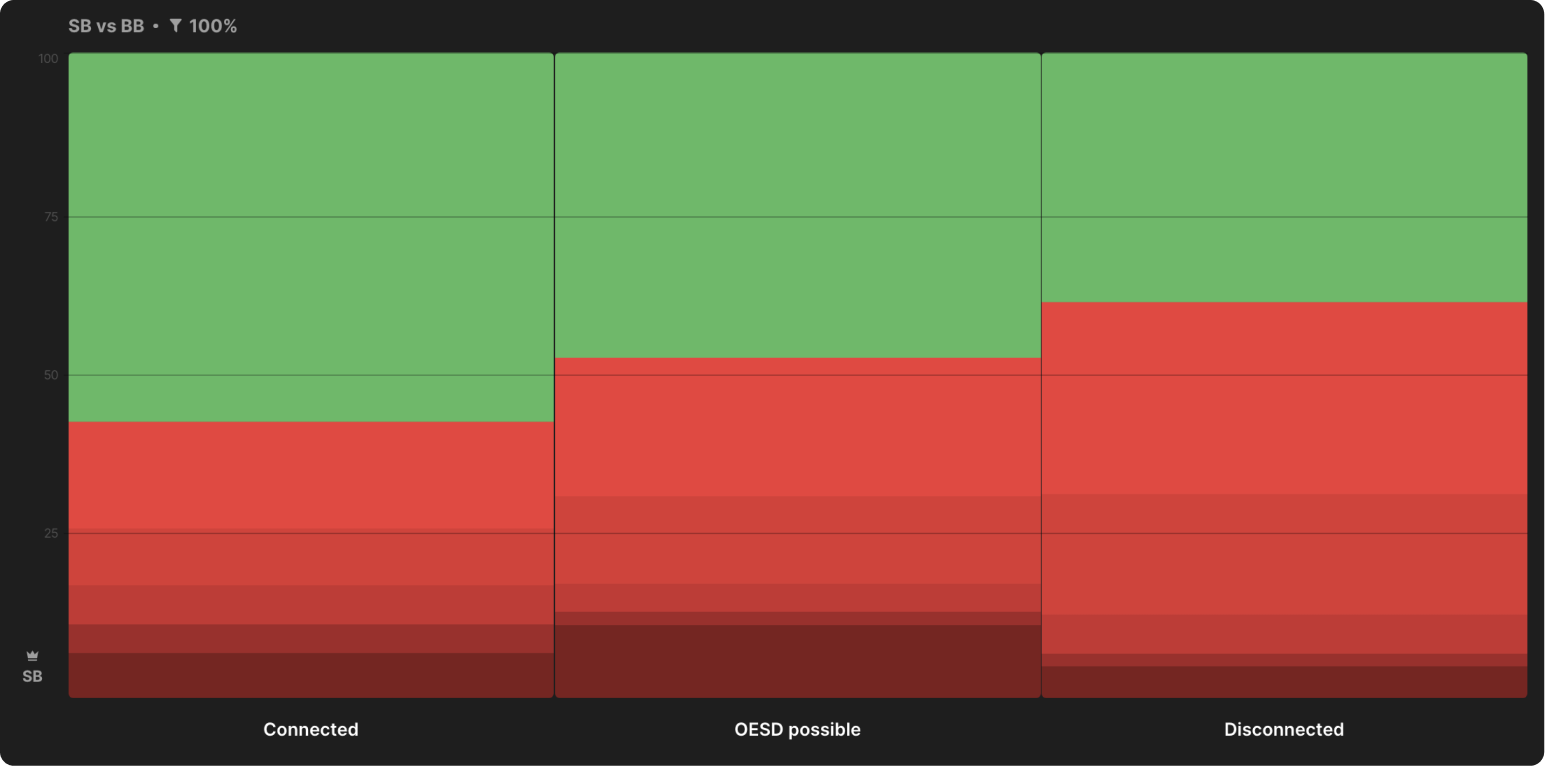
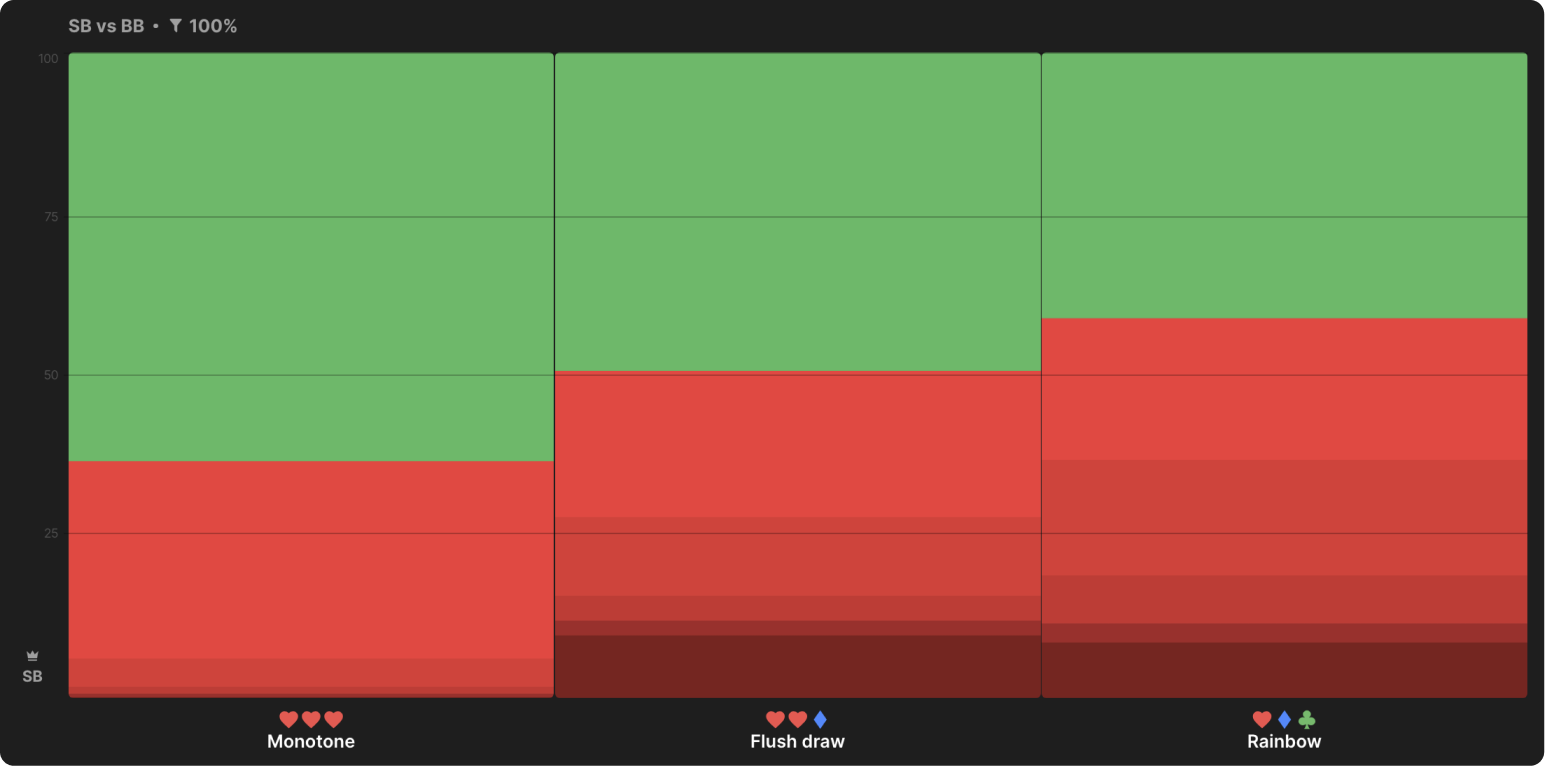
If you delve into the analysis, you can see that all the flops on which the Small Blind most often makes overbets are odd flops without ready-made strips, where the highest card is ten, nine, eight or seven:
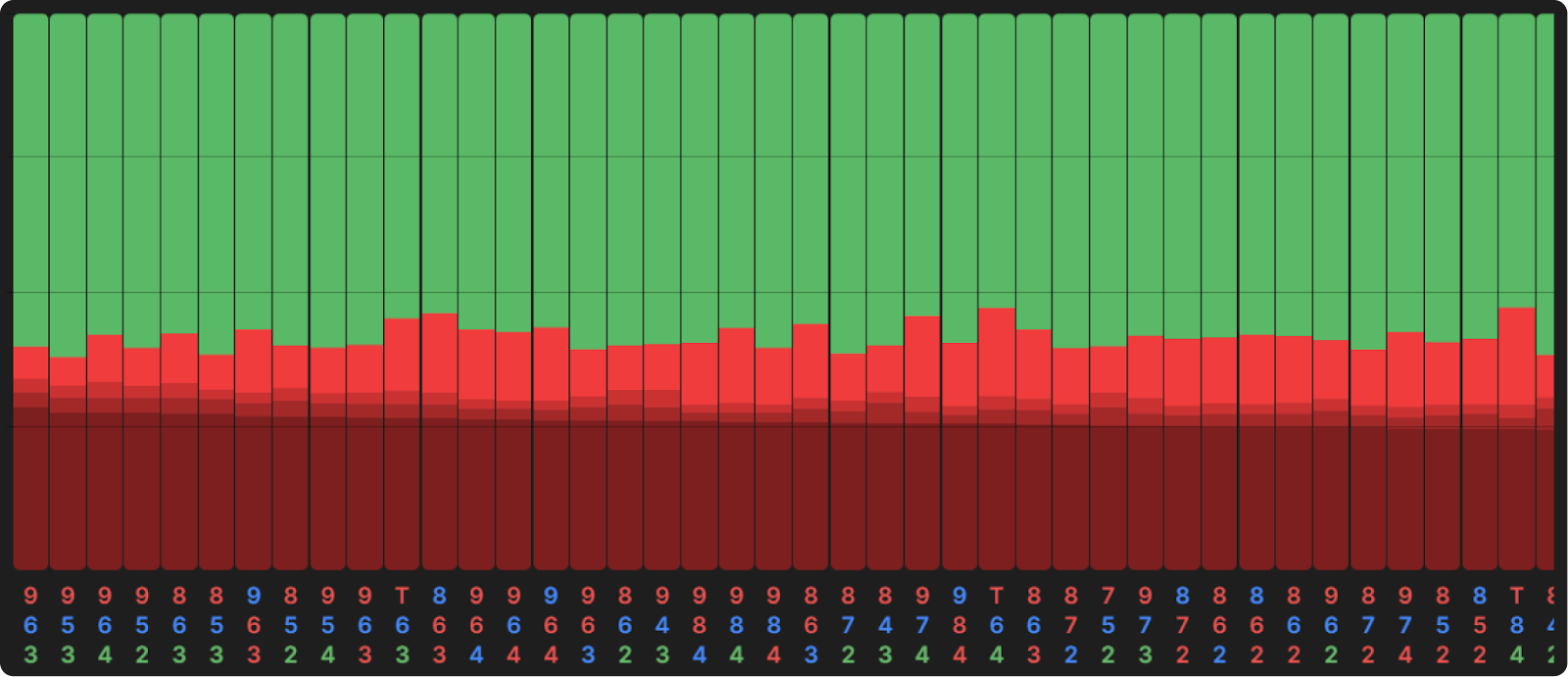
Such flops are extremely dynamic: literally any card on the turn either mates the board, or makes a straight possible, or gives an overcard. This makes the game on the following streets dangerous for the player outside the position, which is SB. Therefore, the small Blind either checks or makes an overbet. Overbets deprive the big blind not only of equity, but also of EV, as it loses the opportunity to use the edge of the position on the late streets.
At the same time, if the opponent calls, the SPR is significantly reduced, which reduces the vulnerability of the Small Blind's position. The check check minimizes Small Blind's investments and allows you to add check-raises to the arsenal, which, like overbettes, reduces the Big Blind's EV and reduces the SPR. Just because you prefer not to play on the late streets doesn't automatically mean overbet is the only strategy. You also need the edge of the nuts, and SB has a huge advantage on such flops.
On 

 the flop, on which he most often makes overbet - he has 18% of the best hands, while BB has less than 3% of them:
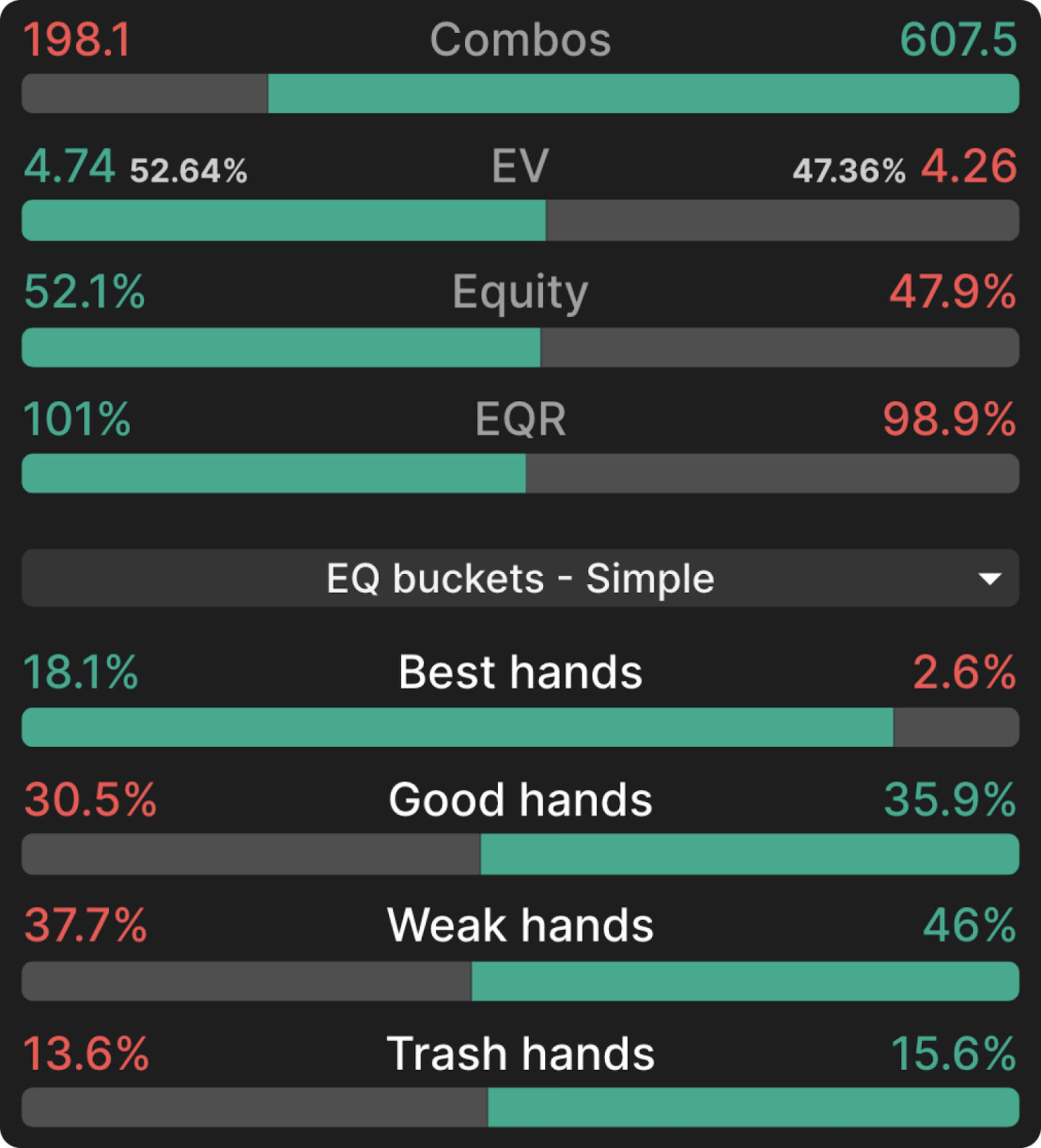
In this flop, the "better than hand" category mainly includes top pairs and overpairs, which the big blind never collates preflop at this depth. Small Blind's overbet range is geared toward these strong but vulnerable hands who want to put money into the bank as quickly as possible. They are practically nuts on the flop, but most turn cards weaken their strength.
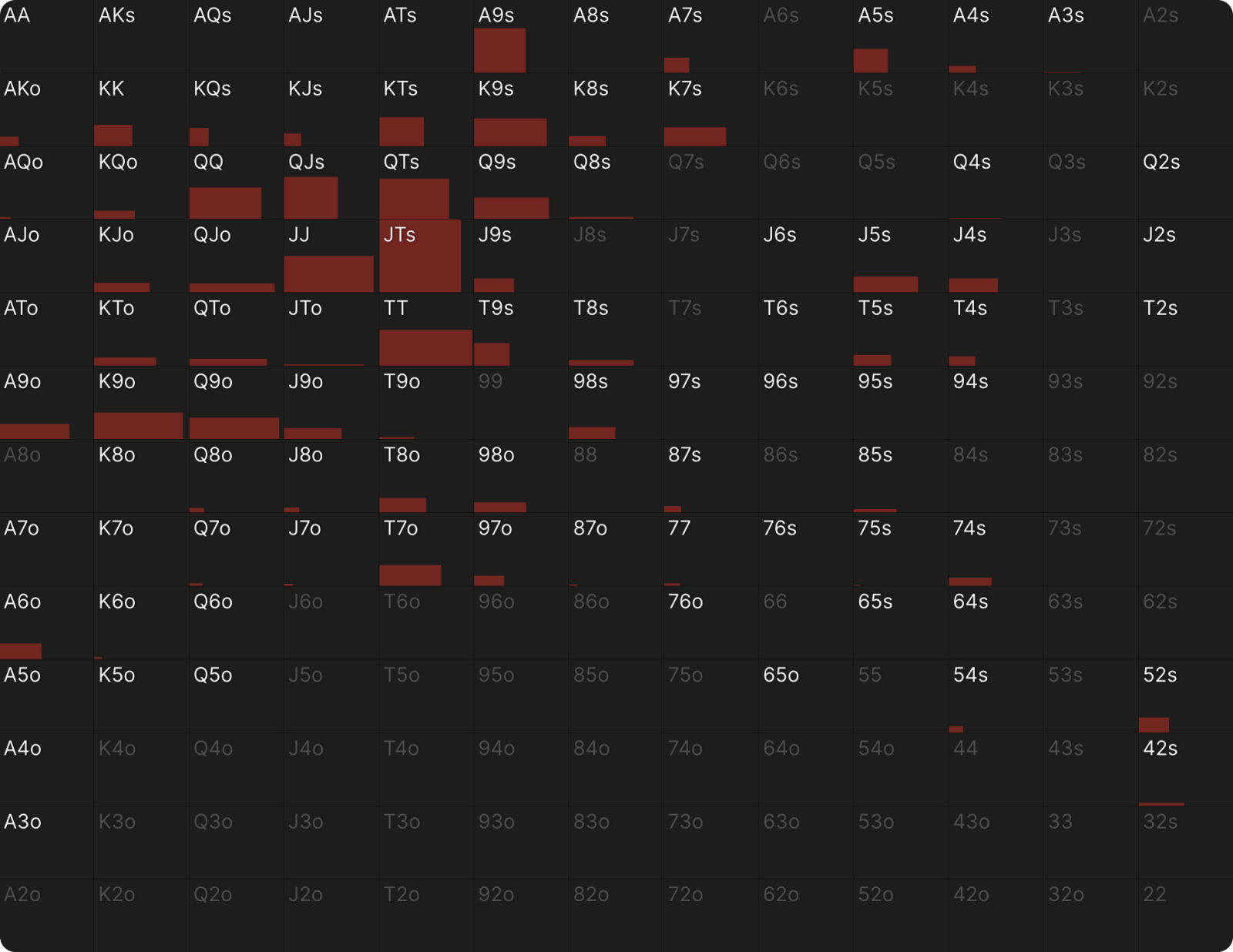
Larger pair are less vulnerable, so the small Blind is less likely to overbet with them. With AA, for example, he never puts an overbet.

5. Medium stacks
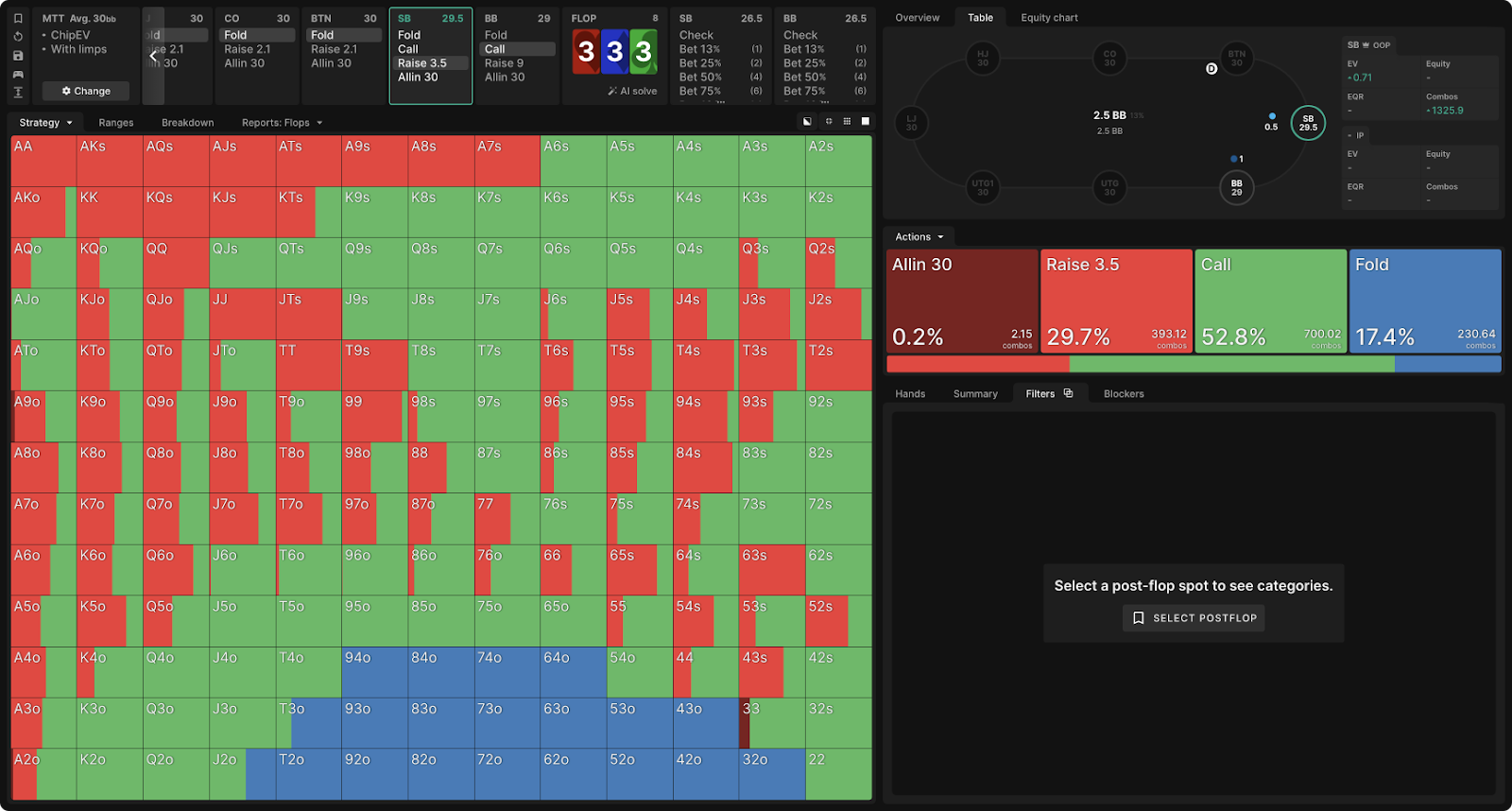
For analysis, let's take the depth of the 30bb stacks, since this is the minimum depth at which the Small Blind does not have a significant open-push range on the preflop. At this depth, it opens much more hands than at 60bb, although the emphasis remains on large pairs and A-x.
An important change is the emergence of more Q-x and K-x offsuited hands, as well as small suited combinations:
The big Blind makes relatively few 3-bets at this depth, as 30bb is an inconvenient size for push or rerace folds. When he is still 3-betit, these are mostly large pair and over A-x offsuited — the same hands that small Blind prefers to open.
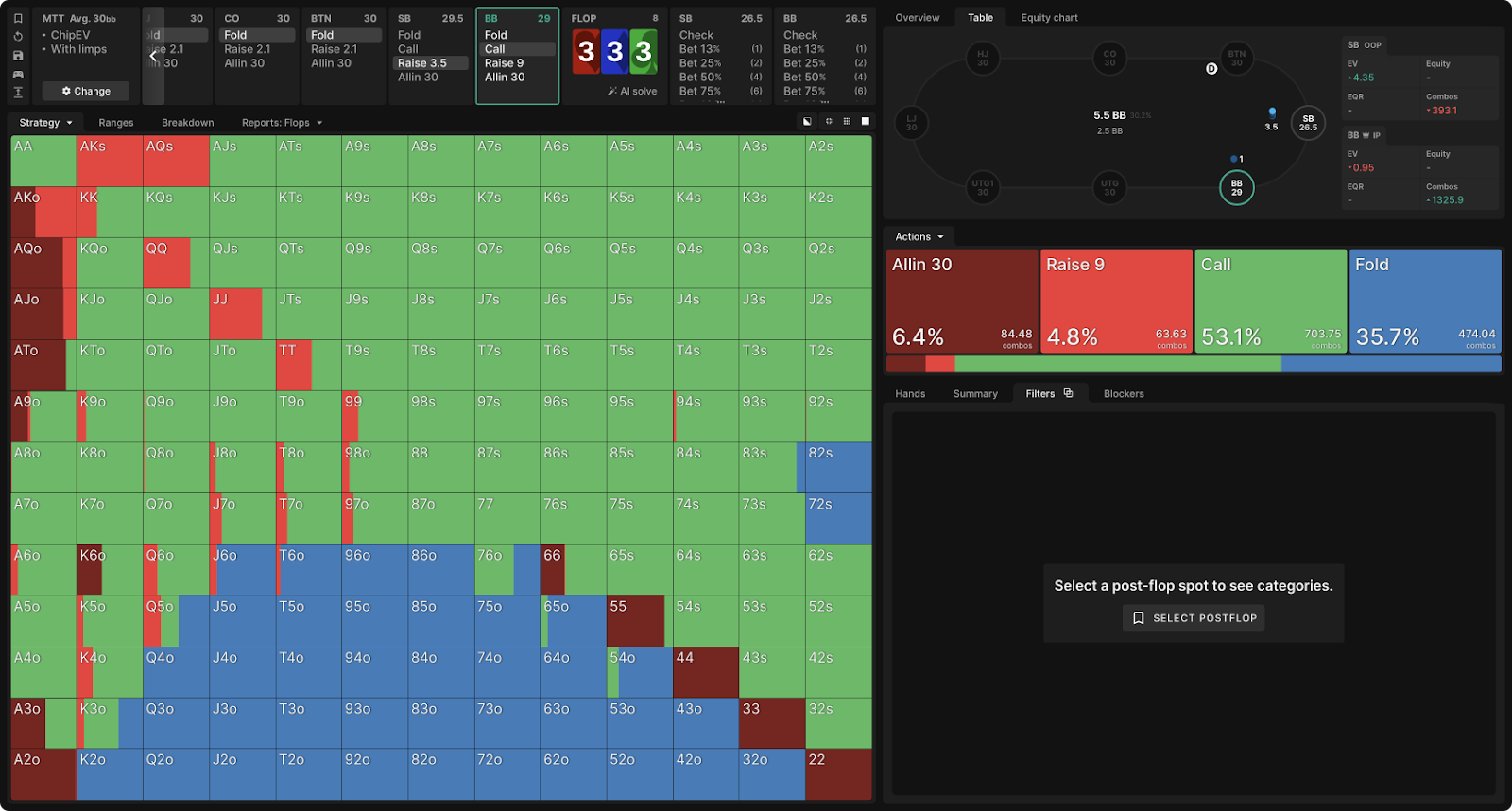
This means that the Small Blind will have many large pot and A-x pair in the range, while the Big Blind will have much less. As we will see, this has an important impact on the Small Blind's c-bet strategy.
At 30bb stacks, small Blind most often uses large bet on low paired flops and Broadway A flops.
At a depth of less than 60bb, the small Blind rarely makes overbets on the flop. With shorter stacks, sized bets of about 75% of the pot perform the same task. He more often uses large bet on low flops, where he has many advantages. Its pocket pair is very strong on such boards, but vulnerable and interested in investing money quickly, as we have already seen at 60bb. These low flops are also well-suited for small-size suited combinations and large A-x ones, as they often dominate unpaired hands in the Big Blind range and sometimes form gatshots. With the exception of Ace-high flops, which also favor the Ace-oriented Small Blind range, low flops are also the ones where he is least likely to make a check. The combination of equity advantage, nutritional advantage and the desire to deprive an opponent of an EV is too profitable to miss.
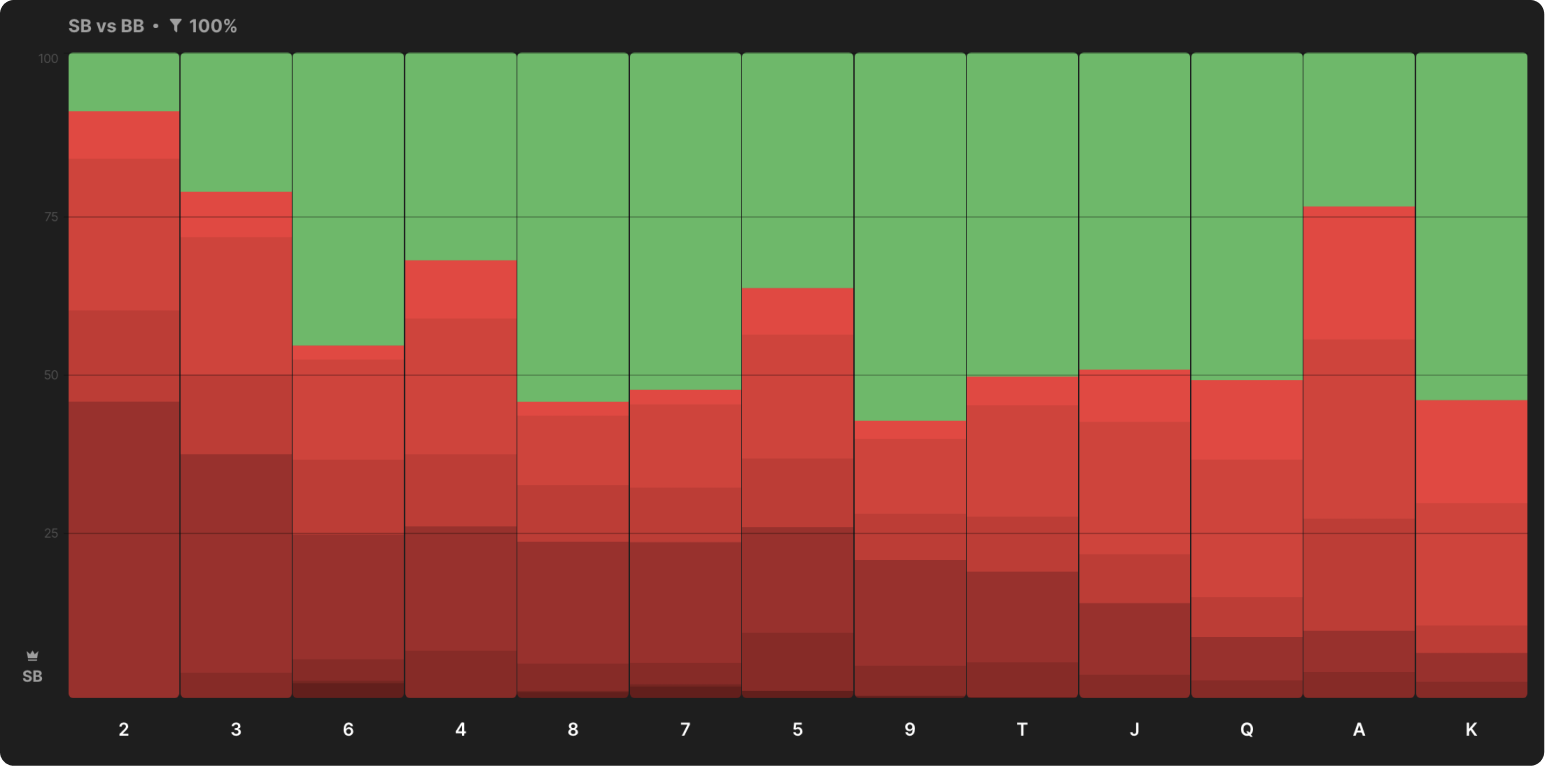
(dark color at the bottom of the red bars)
Instead of flops with medium straight draw, which small Blind prefers to overbet in the depth of 60bb, at 30bb he more often uses large bet on two types of boards:
- Low coaxial/coaxial flops
- Aceh-High Flops with Three Broadway Cards
Both of these types of boards give Small Blind significant advantages in equity and nats. At the same time, he has an interest in depriving the equity hands of the middle range of the Big Blind: unpaired overcards on low flops and second or third pair on Broadway flops.
6. 333 offsuited
The small Blind most often uses a large cbet on the 333 flop, which is generally one of the most frequently attacked boards. Therefore, it can serve as an example of the category of low paired/built boards. The range for a bet of 75% of the pot mainly consists of large A's and more vulnerable pocket pair.
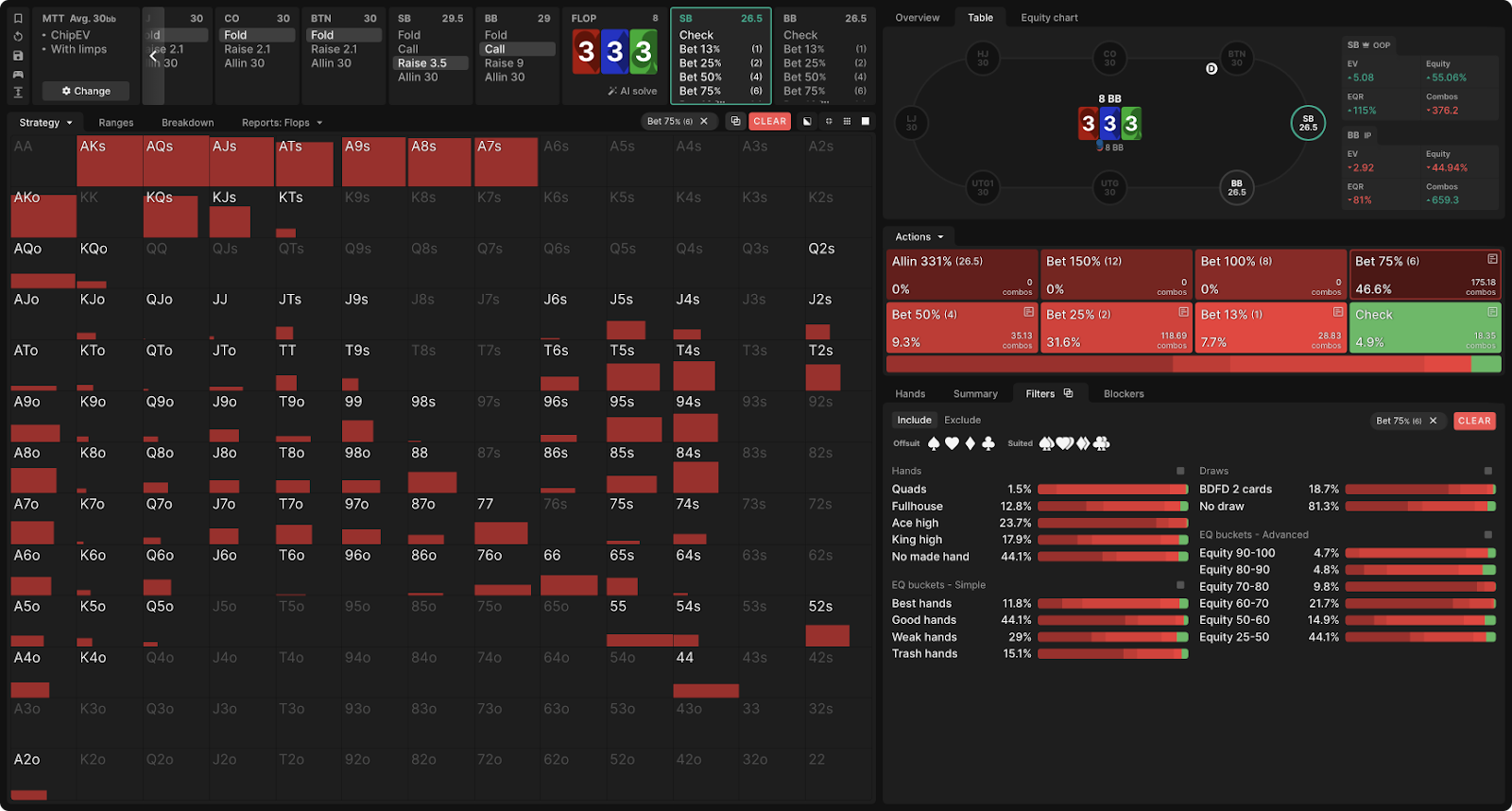
This is a polar bet range, but strong hands such as pocket pair are not the top of the Small Blind range. With quads and full houses (based on large pocket pair), he prefers to use small bet to lure an opponent.

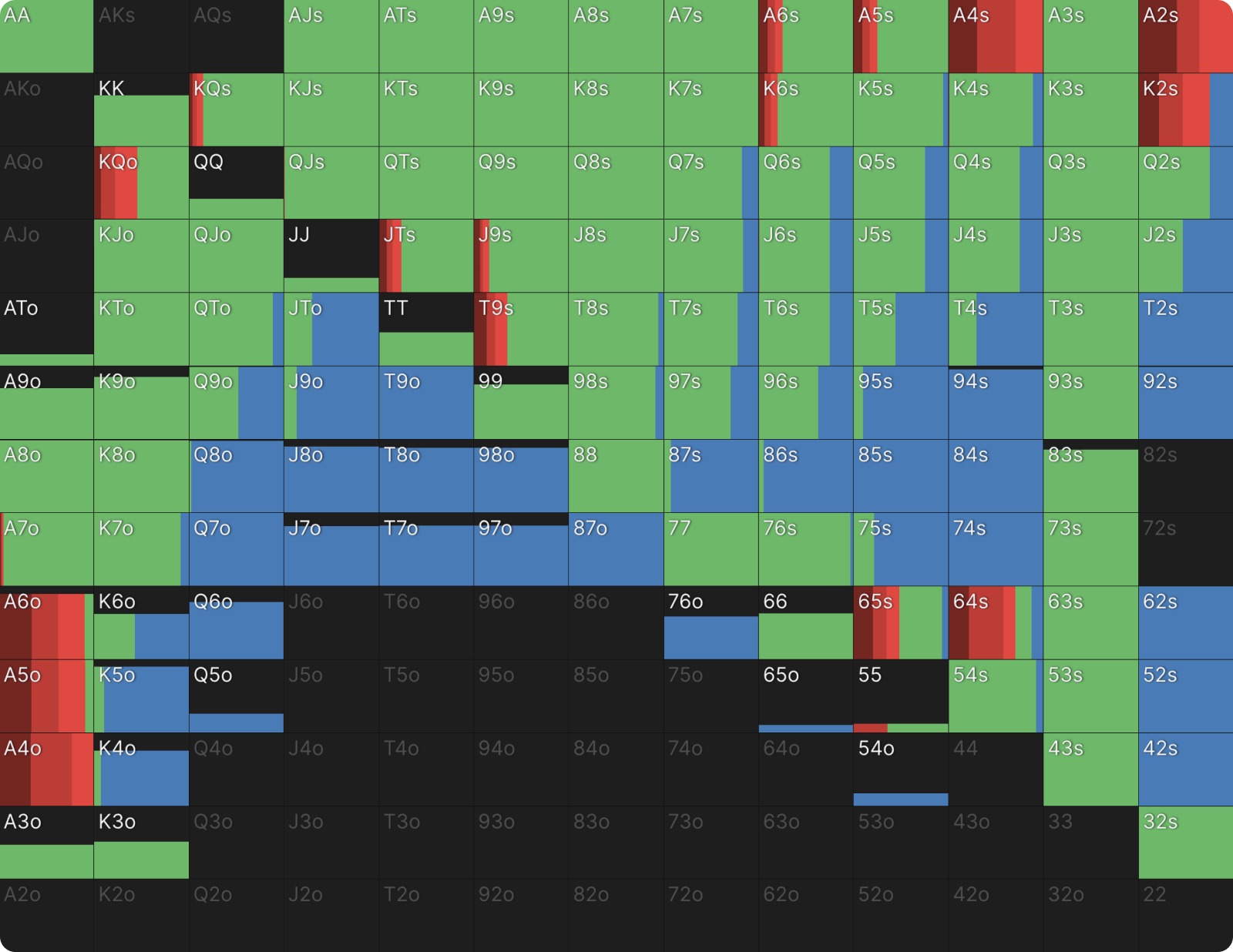
It is important to note that A-x and even KQ/KJ, with which small Blind puts, are not semi-bluffs. Big Blind collides the flop with all his A-x and almost all his K-x.
When the range is wide, and the pair is difficult to collect, these dominant overcards are in the upper half of the Big Blind range and are not reset even to a large cbet:
7. flop A♥J♥T♦
We chose 

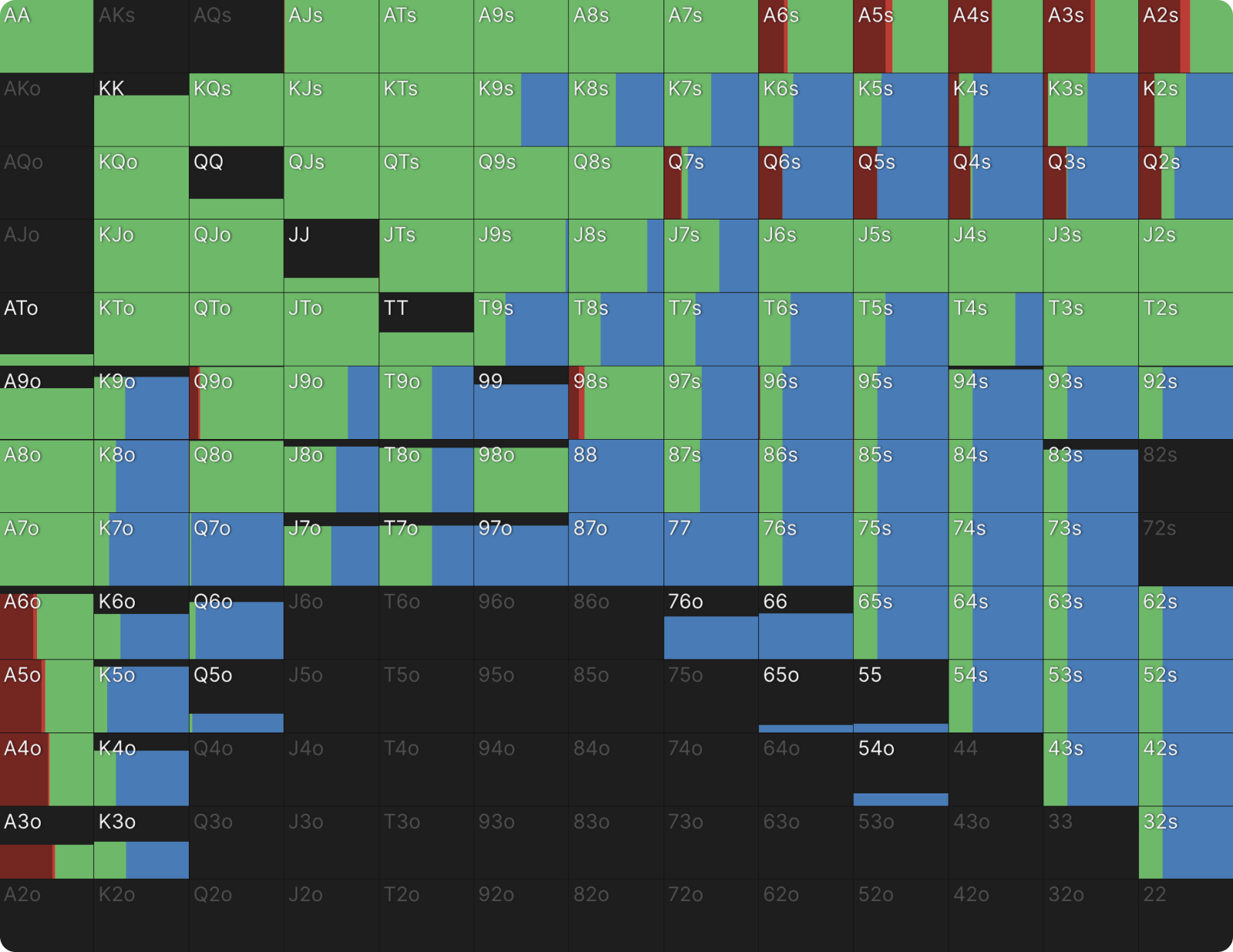
 the flop as an example of another category of boards, where the Small Blind most often uses a bet of 75% of the pot — flop Tuz-hai with Broadway maps. On such flops, the small blind basically skips smaller bet and checks if it does not bet. He uses his strong A-x edge to semi-bluff with a lot of street and flash draw.
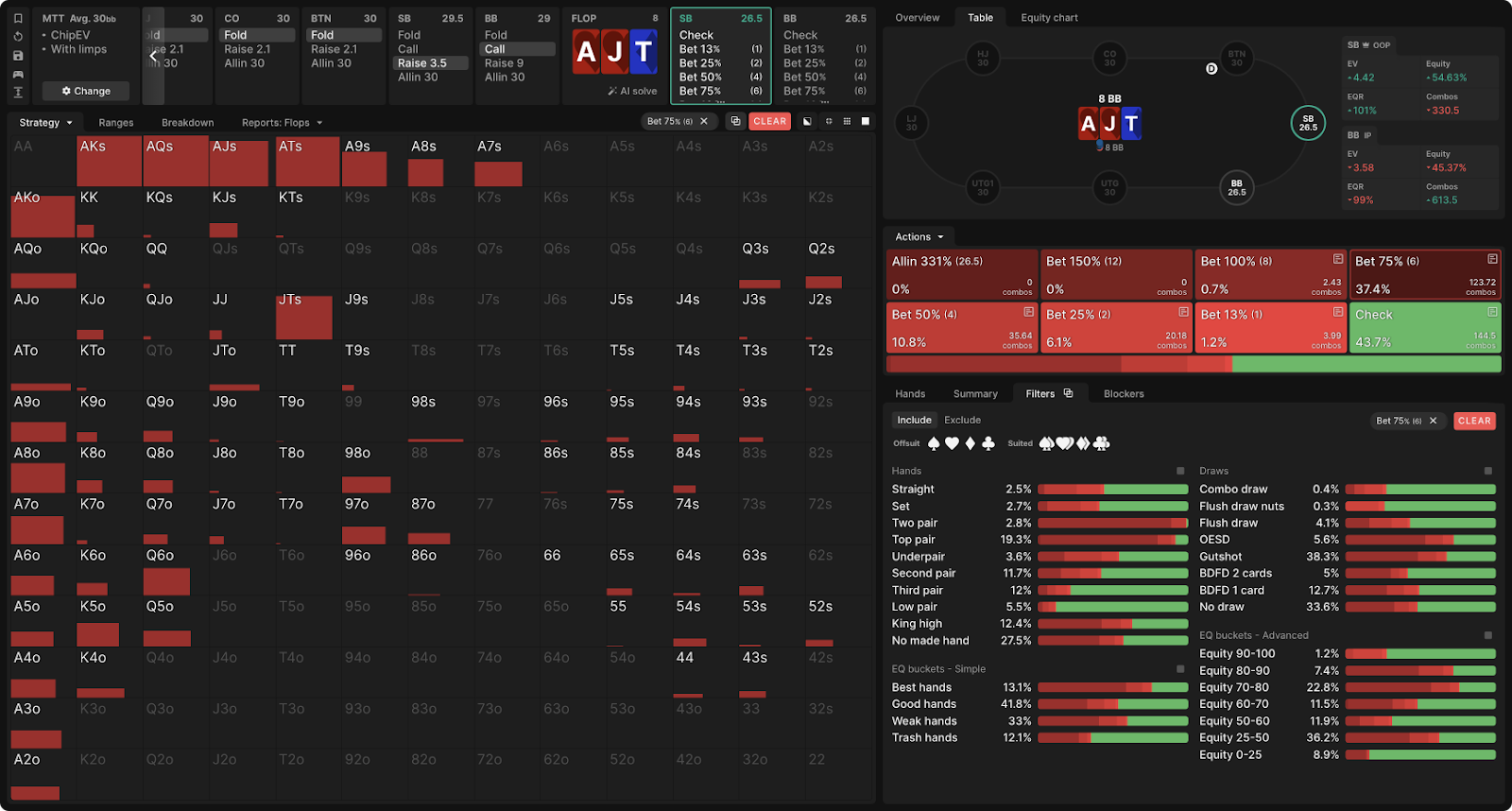
This strategy puts immediate pressure on the Big Blind's gatshots, as well as his second and third pair. It also sets the stage for big bluff in the late streets.
8. Small stacks
With stacks in 20bb, the small Blind goes all-in preflop with about 10% of hands, mainly with small pairs and weak non-mastic A-x.
Its rise range of up to 3bb becomes more polar, including strong unmasted K-x, suited A-x and stronger pocket pair balanced by weak unmasted “garbage”:
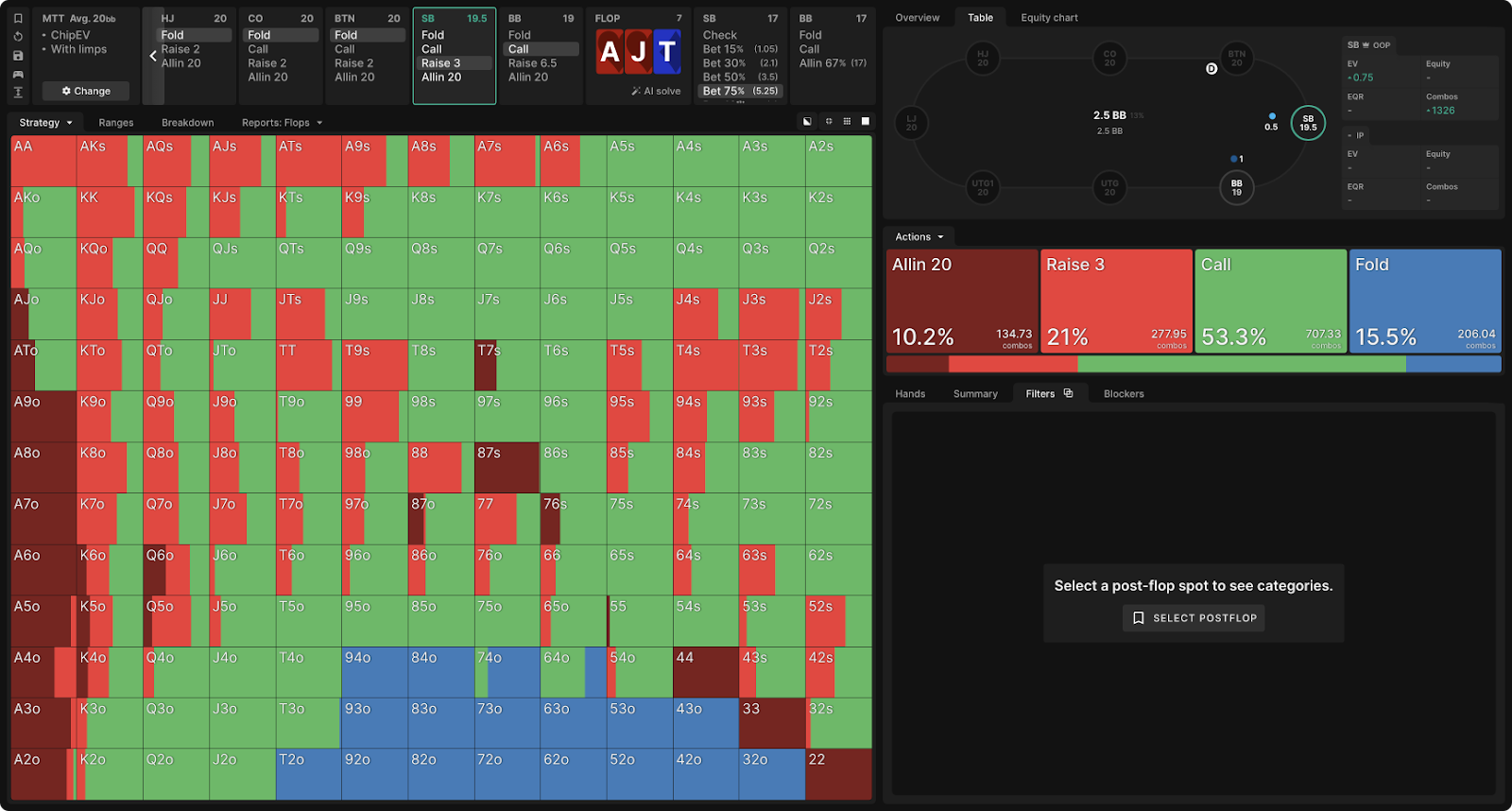
BB mainly responds with a call to an open-raise of sized 3bb, dropping only the worst hands with offsuited cards (and 72s), and also pushes most small pair and offsuited hands with an ace:
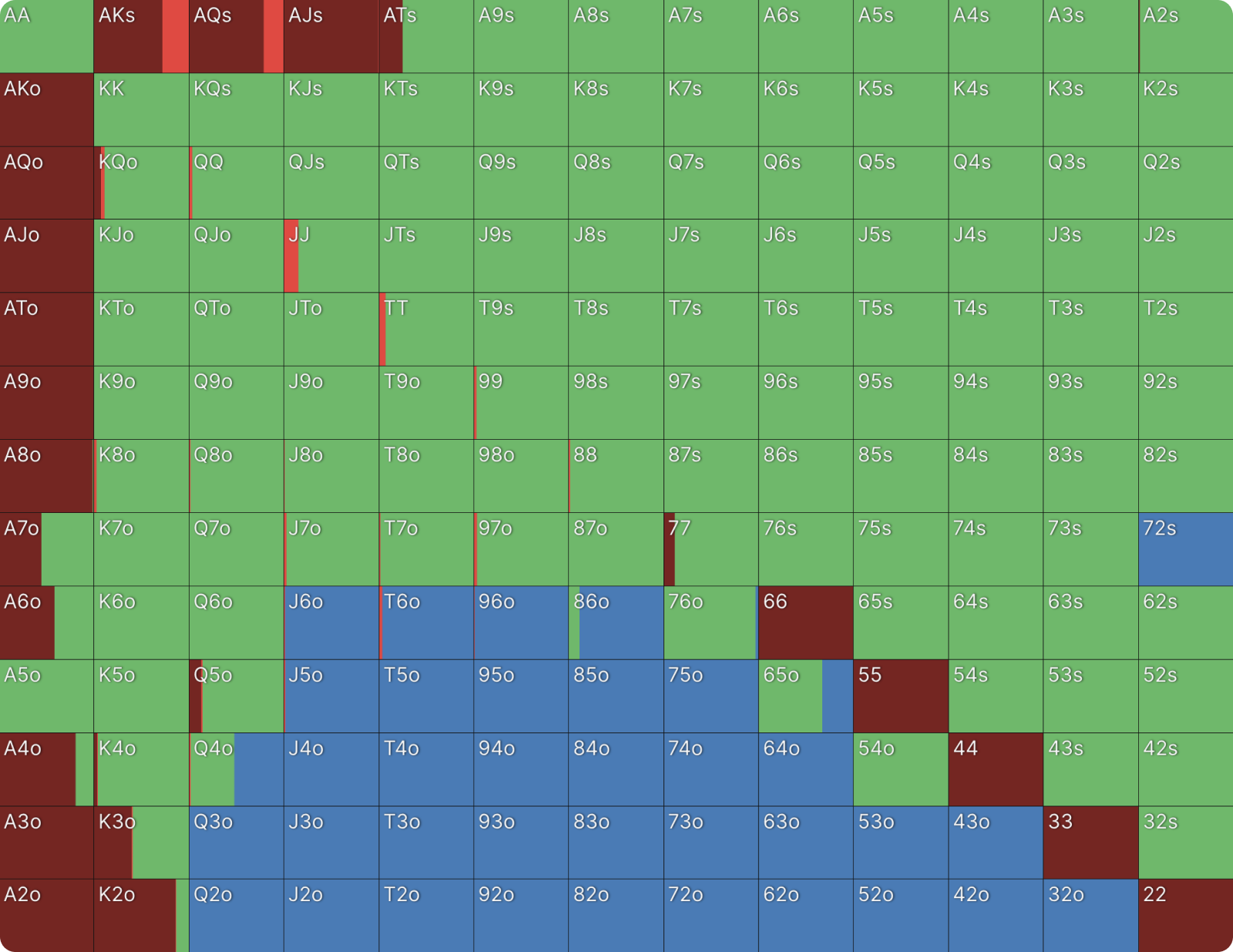
As a consequence, flops with high cards, such as Ace or king, are as beneficial for SB for frequent c-beta as low paired or built board. Medium cards on the flop create less favorable conditions for SB, which leads to larger and more polarized bets.
Most of the large SB c-bets concentrate on such flops:
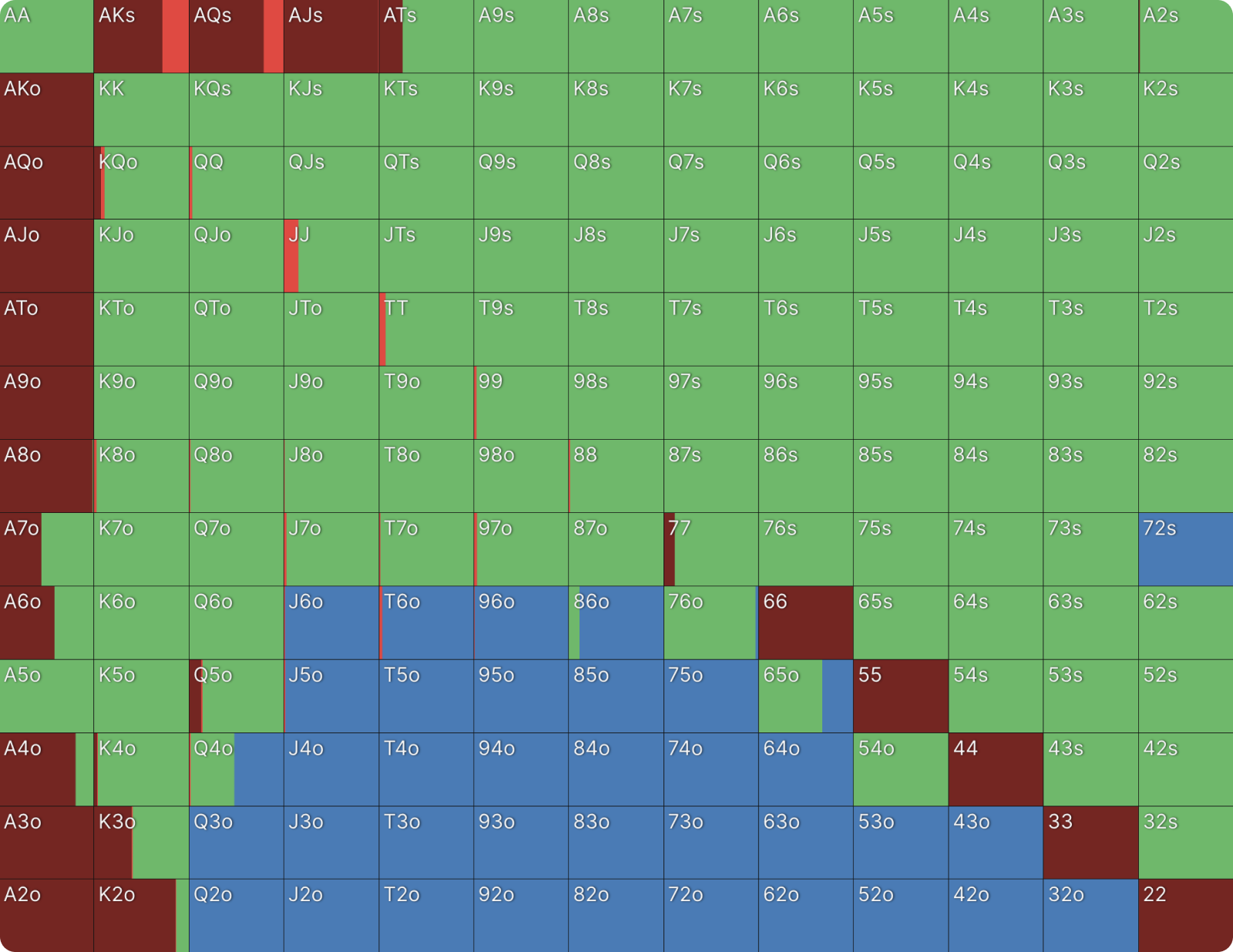
bet frequency sorting)
He also plays on unbound boards.
And on more related ones, he uses larger and polarized cbets:
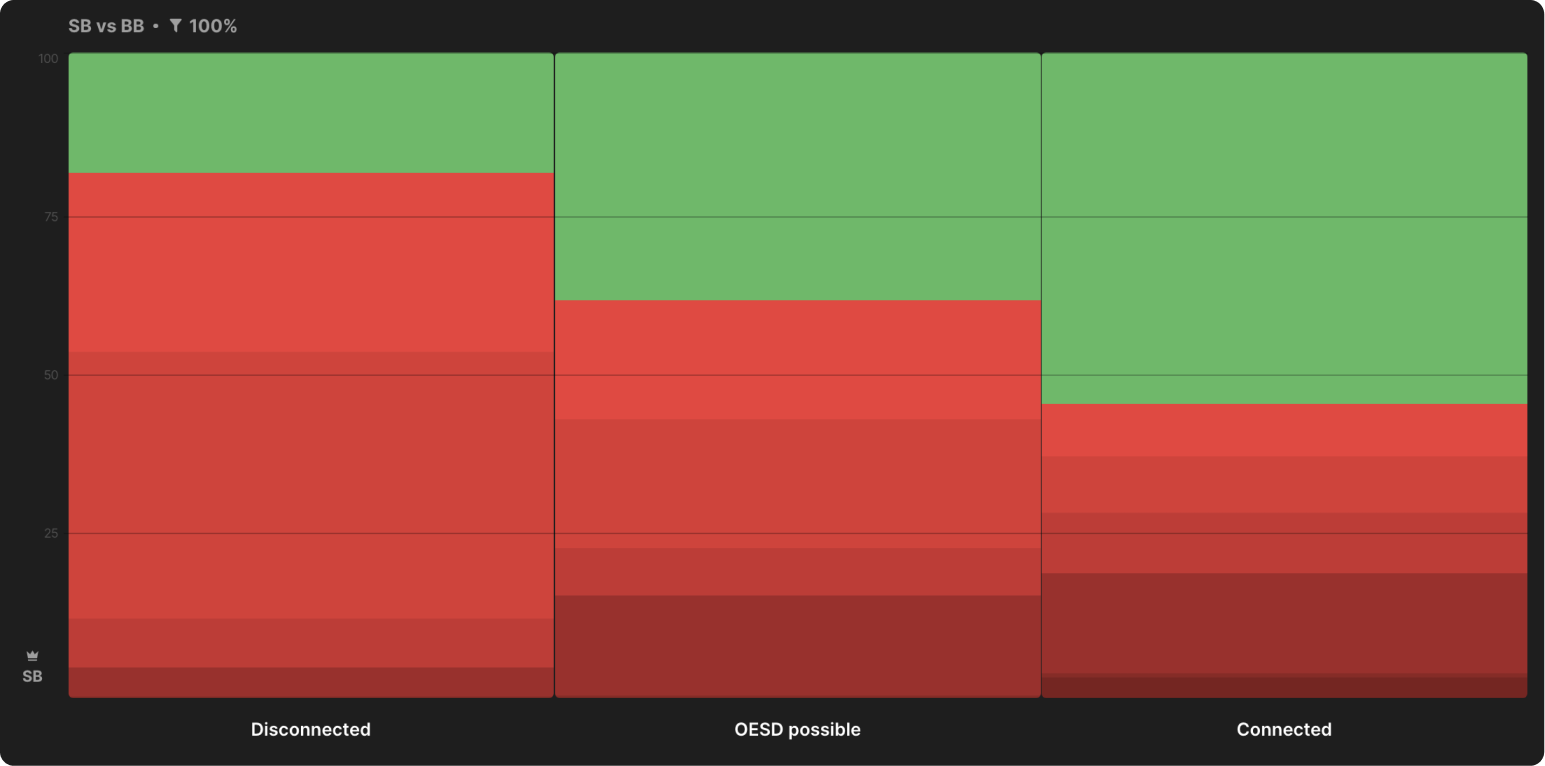
In the depth of 20bb, the most frequent and large bet (75% of sweat) is found in most cases on King or Knave boards, where there is draw on a straight or flush, but there are no ready-made straights or flushes yet:
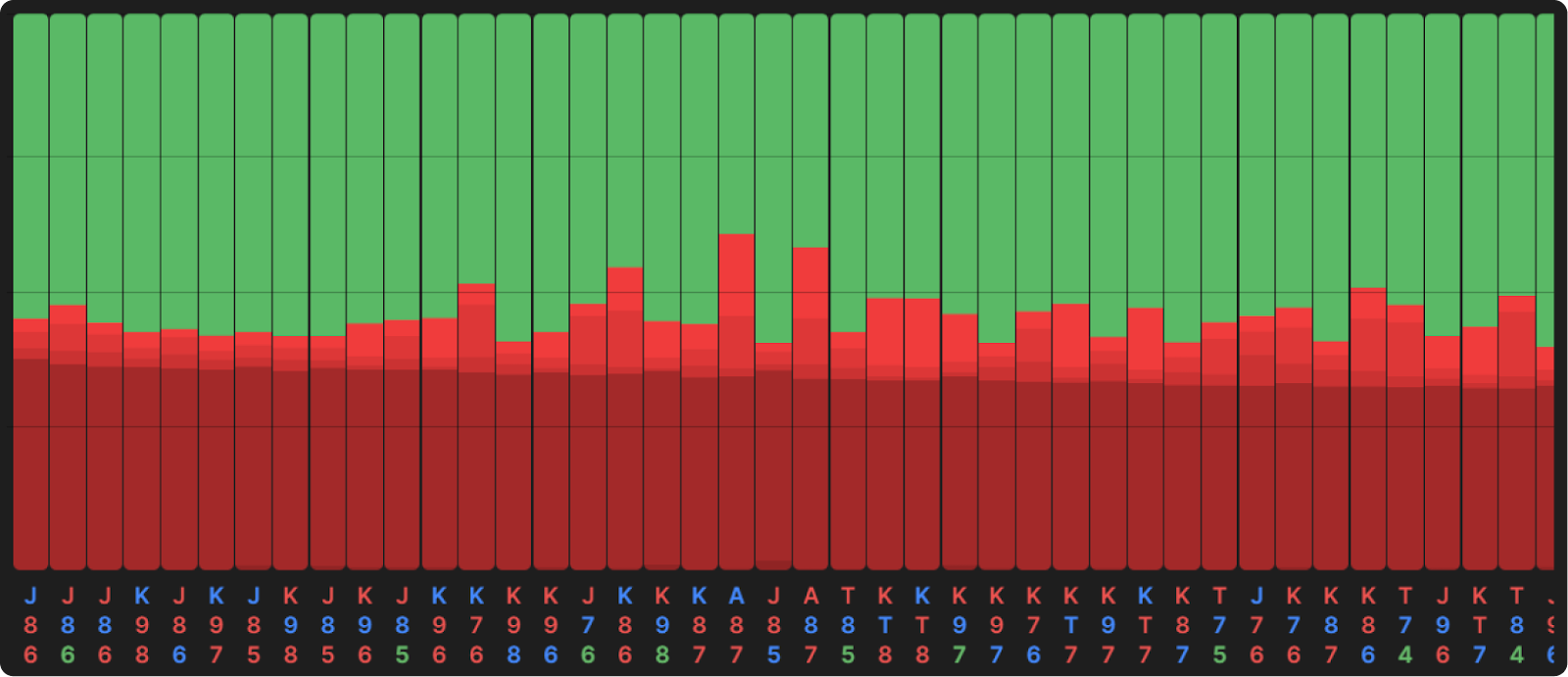
As in our past examples, the value part of the SB range consists not only of his best hands, but also his slightly worse hands, which are very vulnerable to unfavorable thorn cards, which will be extremely numerous, for example, on such a flop


 :
:

SB picks large bet for vulnerable hands such as TT, 99 and A8 to protect against potentially bad cards on the turn:
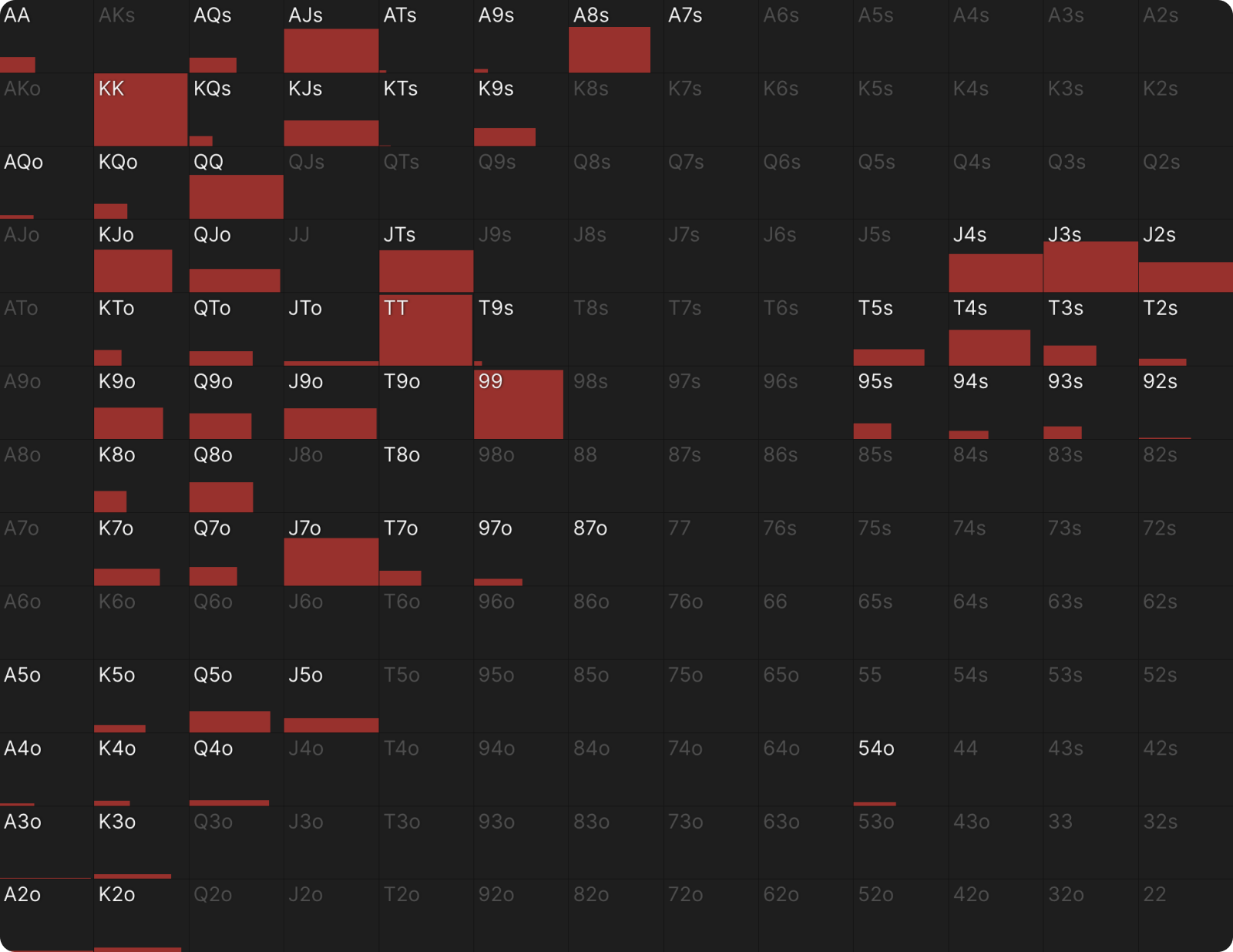
The lower pocket pair below the top pair is more often not suitable for large bet.
However, in the context of wide ranges and short stacks, BB often continues with low pairs, sometimes immediately going all-in, and sometimes doing it later (on suitable thorn maps):
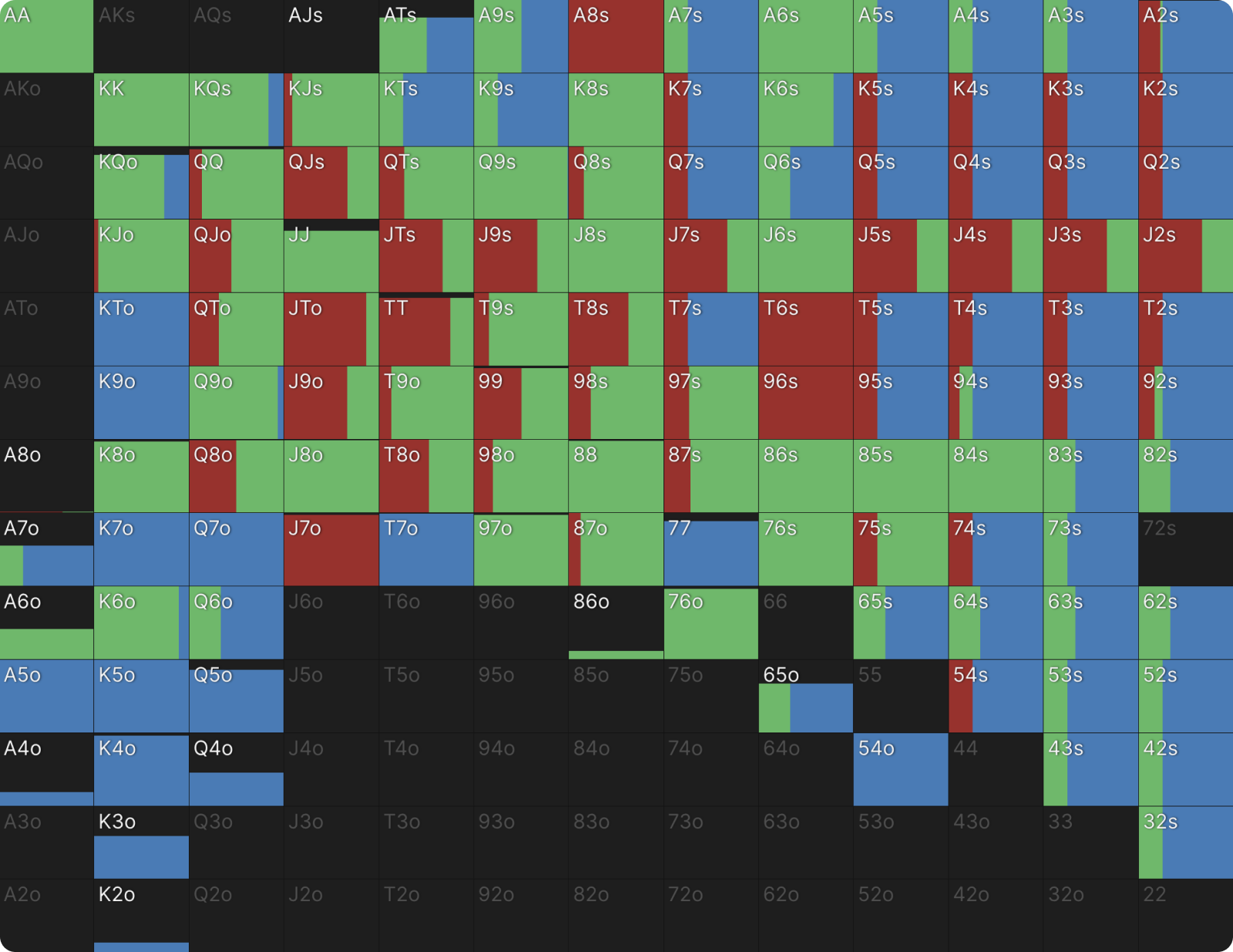
Most often, SB checks on flops, where ready-made strips are already possible.
And, as we have seen before, low bet frequency tends to increase the bet size and a more polarized range:
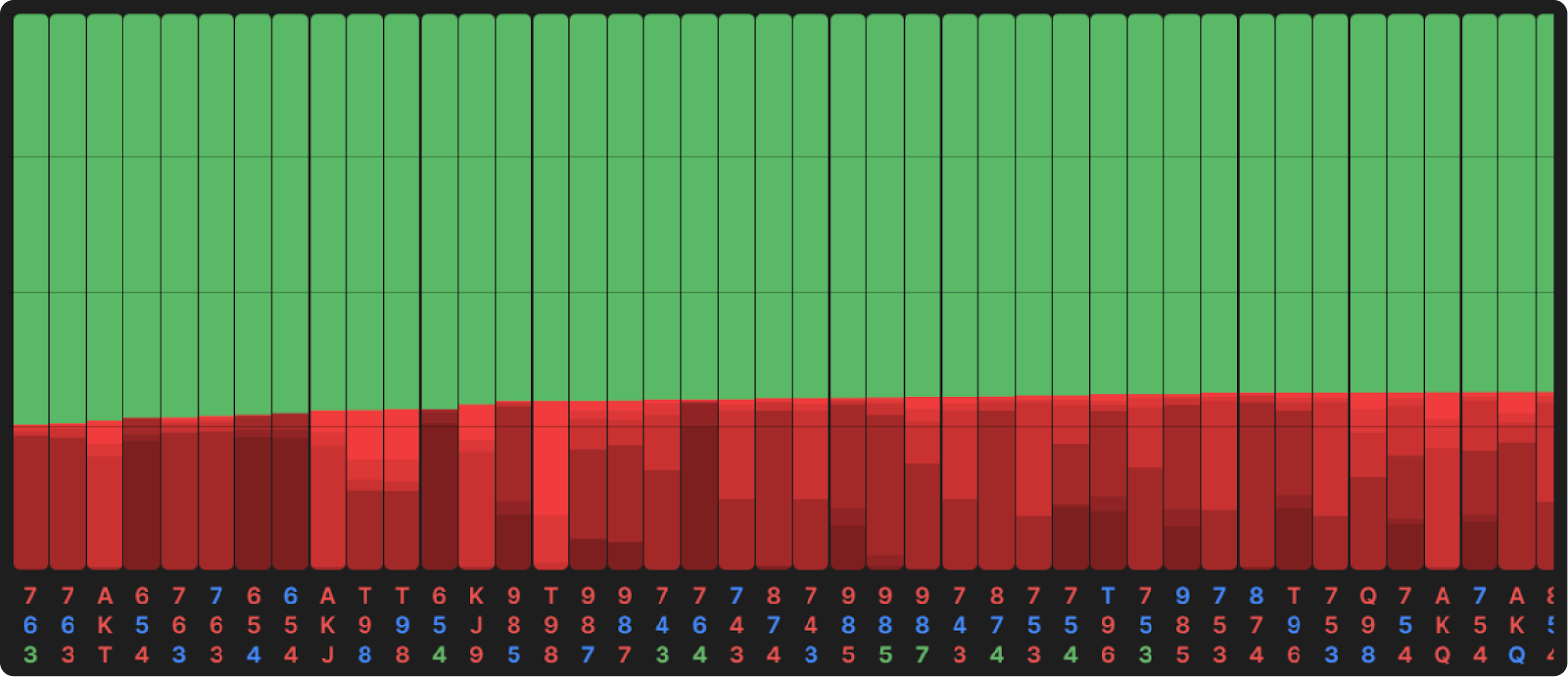
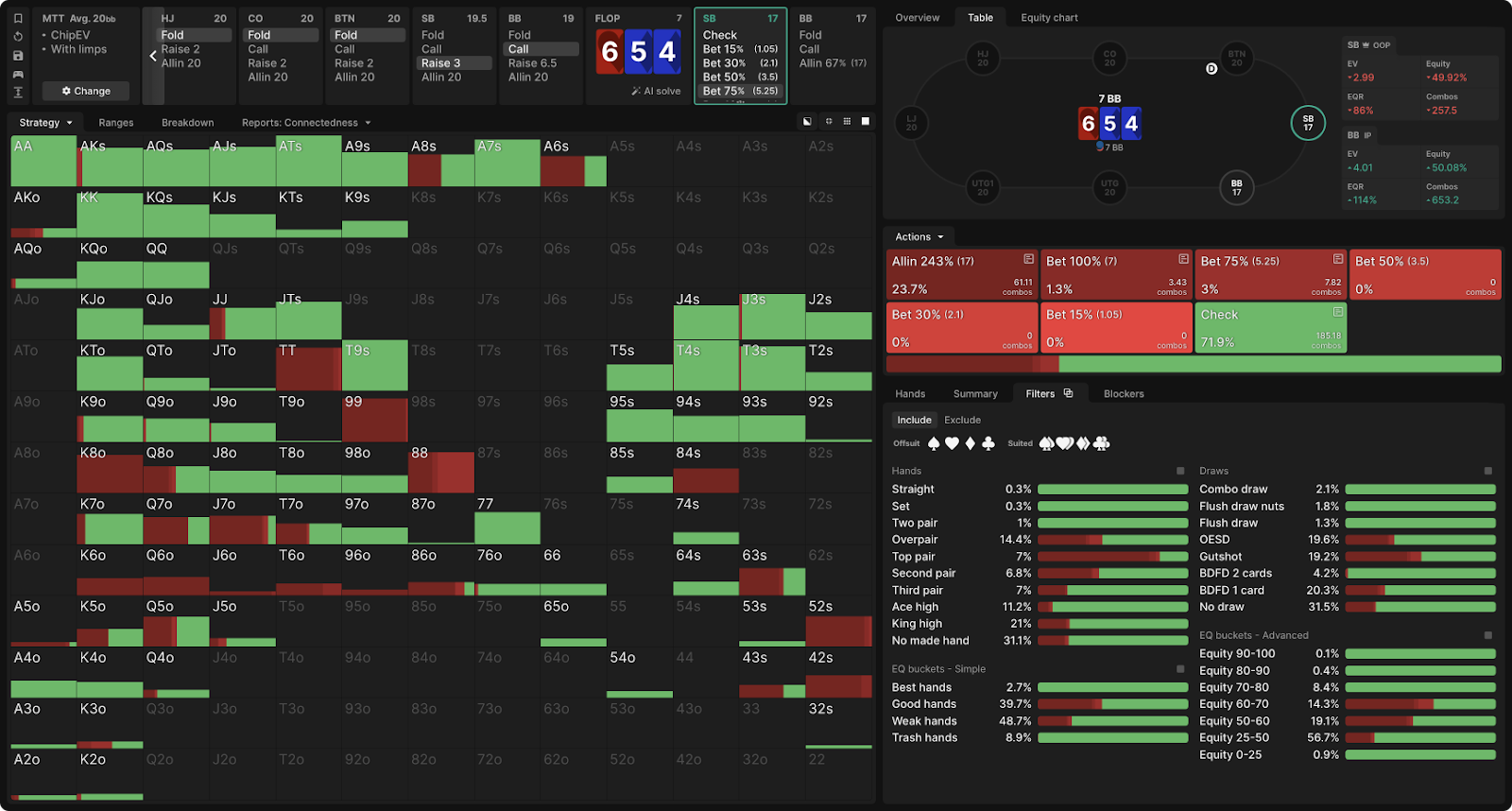
On low connected flops, where ready-made straights are already possible, SB more often chooses the "check or Push" strategy with a sized of 243% of the pot. Pushes without a low SPR position can often seem enticing, however they are only used with certain flops and make up less than 1% of the overall SB strategy with effective 20bb stacks.
For example, here:
9. Conclusion
Cbet with SB is a complex topic. Not only because the principles of an extended bet without a position from other positions do not fit well here, but also because the SB strategy changes markedly depending on the depth of the stack. However, there is one common feature that persists with any stacks:
There are few flops on which SB acts in the same way with its entire range.
A good starting point would be to consider pre-flop incentives and understand what your advantages are over BB.
With this in mind, flops can be divided into two categories:
- those on which you will make frequent cbets of small size,
- those on which you will make cbets less often, but larger.
What exactly is considered "large" depends on the size of the stack: with deep stacks, overbettes are more often used, with small stacks, 75% of the pot is suitable. The best board for large bet is more dynamic. Especially when straights and flushes are looming on them, but they are not yet complete. The best hands for such large bet are usually neither the strongest nor the weakest. The weakest are too vulnerable to invest a lot of money in them. The strongest ones are most often played through a check or small bet.
Big bet is better for semi-bluffs and strong but vulnerable pair:
- With deep stacks, these are top pairs and overpairs.
- When small — pocket pair below the top card and the second pair with a good kicker.
As always, a successful strategy must rest on a solid foundation. Understanding pre-flop stimuli is critical to getting to the flop with the right range. Once you're up to it, you can work on developing your intuition to better cope with the many complex decisions involved in Small Blind content.