
Translated with the help of AI. We apologize for any errors and would appreciate your help in correcting them.
Translated by order of the educational portal university.poker
Article by Patric Harvey, Original Source: UPSWING Poker
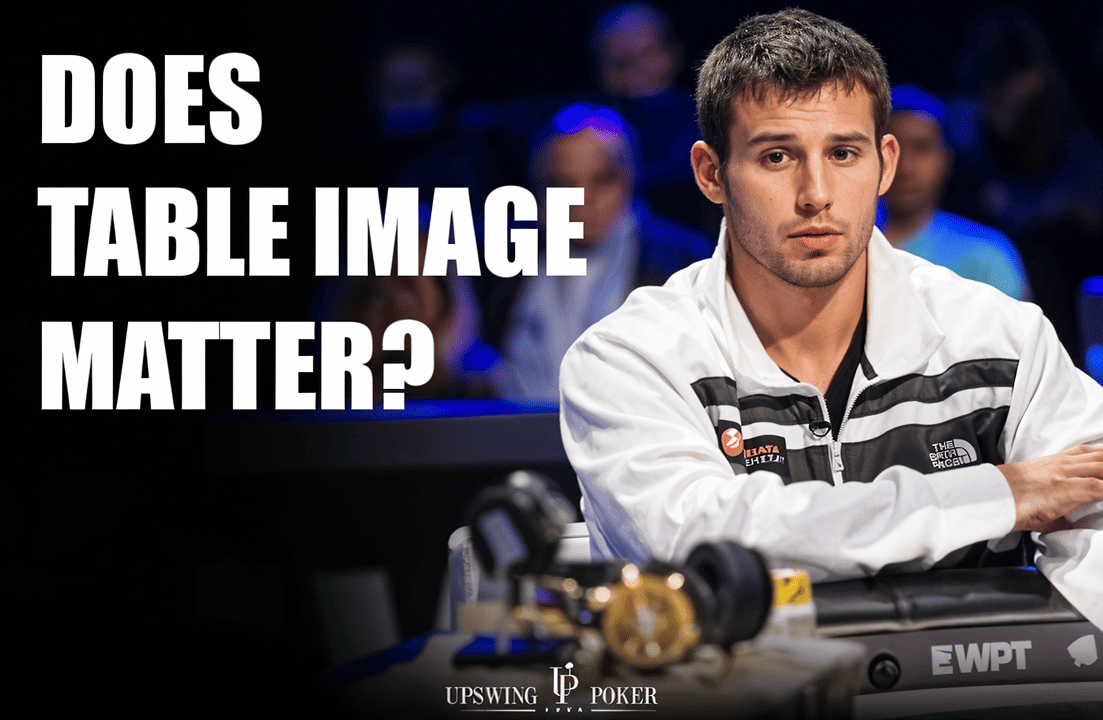
Playing a strong theoretical strategy is necessary to become a master of poker tournaments. However, there are some flexible skills that distinguish the best players from the rest, especially in large offline tournaments with a large number of weak players. One of these skills is understanding the image at the table, which is the topic of today's article. Let's figure it out.
1. Experience matters
The first thing to think about is how much you've played with someone who is influenced by your image.
Here's what tournament poker pro Darren Elias has to say about it:
When I play with someone for 15 years in a row, it makes very little difference what the opponent does in that particular villain session. It has little impact on how I will adapt my game to adjust to it. This is just a drop in the ocean of data that I need to somehow adjust the strategy against this enemy.
But when you play against someone for the first time, your opponents may have more bias about it. What they see in this session can affect their performance. This is something to consider when you think about image. When you play against new players, image really means more.
2. Profi vs amateurs: what they think about the image
Not surprisingly, professional poker players and amateur players think about the image at the table differently.
Here are Darren's thoughts on this topic:
I think amateur players and weaker players often abuse their image. And you should know that professionals will not attach too much importance to what has happened in the last hour or so.
I heard a lot of players come up to me and say, “Oh, I was playing so secretly for an hour or two, and then I pulled this bluff, and I couldn't believe this guy opened me up! After all, I played secretly all day!".
It can only make sense in their own heads. Let's try to think about what “all day” really means in a live poker tournament?He probably played less than a hundred hands, maybe 80 or 100, and would often fold and might just get bad cards. Therefore, I think that a professional understands this and will not make any serious adjustments just because someone played secretly for three or four hours.
But the amateur, on the other hand, may attach more importance to it. And this is exactly what you need to keep in mind when you talk about the image: professionals and amateurs can perceive you differently. Remember that professionals will be less likely than amateurs to use the information obtained in such a short period to evaluate the enemy. But we also need to remember that professionals can be more committed to their strategy.”
Understanding how your opponents assess your image is a critical skill to develop.
3. When image matters
Darren looks at several questions that serve as good guides to how image can be a factor in people's perceptions:
- Are we a professional player? Are we an amateur?Did we go through the selection in the satellite?
- Are we at the top of our buy-in range? Are we at the bottom of our buy-in range?
- Do our opponents know about this? Do they think about it at all?
Such things are often more important than players think. I often ask myself such questions when assessing my opponents. For example, I'm in the late stage of a major tournament, maybe more than a million dollars for first place, there are a few tables left, and I'm playing against a pro. What I will think about when I play against him is what this tournament means to him, and how often he finds himself in such conditions.
So if a player has an average buy-in of $500-$1000, and he finds himself in one of the high equity situations, a tournament like this probably means a lot to him, and this can affect his strategy. In my experience, this player may be less prone to a big bluff or going out of bounds. Often, the pressure of money can affect the player more than if you played in the same spot against a player whose average buy-in is $15K-$20K.
When playing against a high roller or reg player of this limit, you can be sure that this situation will probably not affect him so much and will not cause his strategy to deviate. Where is this buy-in in the player's buy-in range, and how important is this spot to him right now? This is what often influences strategy much more than the cards in your hand or the combination of your cards and board. This is a relevant strategy for your hand. ” Let's see what this would look like in a hypothetical example.
4. Example: playing on blinds against a strong professional (50bb)
Let's say everyone folds to us on the small blind, and we have an observant strong professional player on the big blind. Let's give this strong professional a hand that plays a mixed strategy against the limp. Depth is 50bb, and he has
 . With such a hand, he will sometimes raising, and sometimes waiting when we are limping. Let's to call such a raise about 50% times.
- Suppose we are a famous amateur who plays in an important tournament for us. We may have qualified through the satellite. Perhaps we said that this was an important tournament for us or it was perceived that we were playing secretly.
When we have such an image, and we are limping on the big blind against such an opponent, you can be sure that a good player will play an almost pure (i.e. 100%) raise against us here with . Most good players will adjust to try to take advantage of the fact that you are probably playing too secretly and will try to pick up the preflop pot. They have no problem building a post-flop pot against such a player.
- On the other hand, suppose you are a strong pro playing a tournament closer to the bottom of your buy-in range.
If you're limping on the small blind against the same strong pro, they won't raising as often . He can tap this hand more often than usual because he knows you are a strong opponent. Even the best tournament players in the world adapt their strategy based on the image of their opponents.
5. Conclusion
While having a theoretical and practical foundation is the most important part to winning poker tournaments, there are also skills you need to have (like understanding the image at the table) to really break those fields.