


Translated with the help of AI. We apologize for any errors and would appreciate your help in correcting them.
Translated by order of the educational portal university.poker
Article by Geoffrey Fisk, Original Source: UPSWING Poker
The article was written by international chess master and WSOP poker bracelet winner Alex Villamier. In it, he shares one of his favorite and most effective techniques: the exploitation of players who do not bet 3 often enough. It will also teach you a simple method of using range blocking in a solver, which will help you find even more ways to exploit your opponents' trends.
1. How to exploit weak 3-betters
This example deals with the situation when the author opens from Katoff, and behind him is a player on Button, whose 3bet range is not built according to GTO.
(ante = 1 bb. CO 2.5 bb open-raise size.)
First, take a look at how aggressively the solver proposes to play Button against the Katoff Raise:
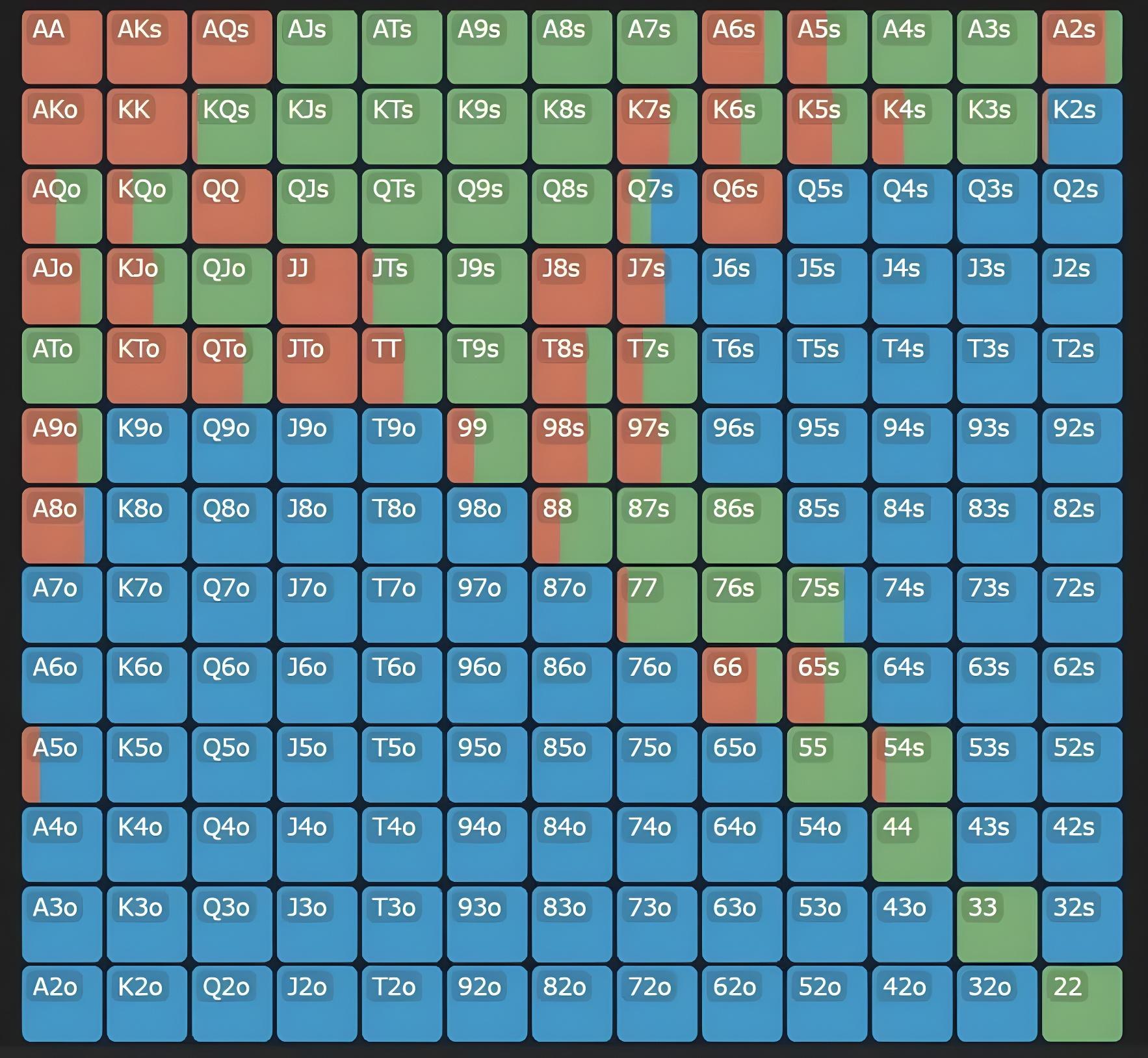
If you think: "King-ten offsuited and jack-seven suited?! Players in my limits would never 3 bet with such a wide range!”, then this article is for you. The next step will be to lock the nodes in this range so that the button reaction is closer to reality.
Here's what Alex changed:
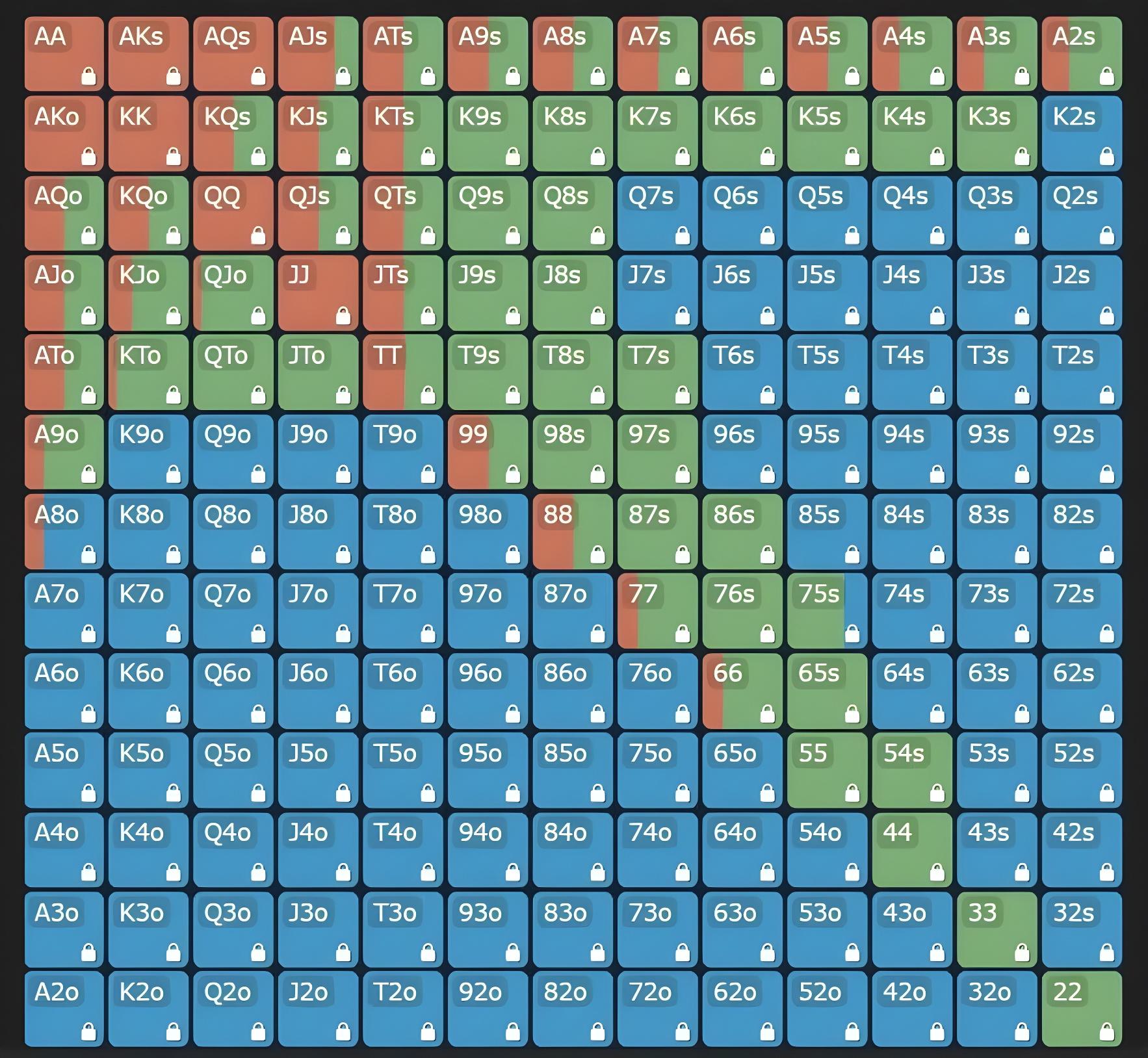
This is much closer to how most people would play Button against the Katoff Raise. If you're playing live, it's probably still more aggressive than you'd expect from players with your limits.
Now let's compare Katoff's response to both of these 3bet button ranges:
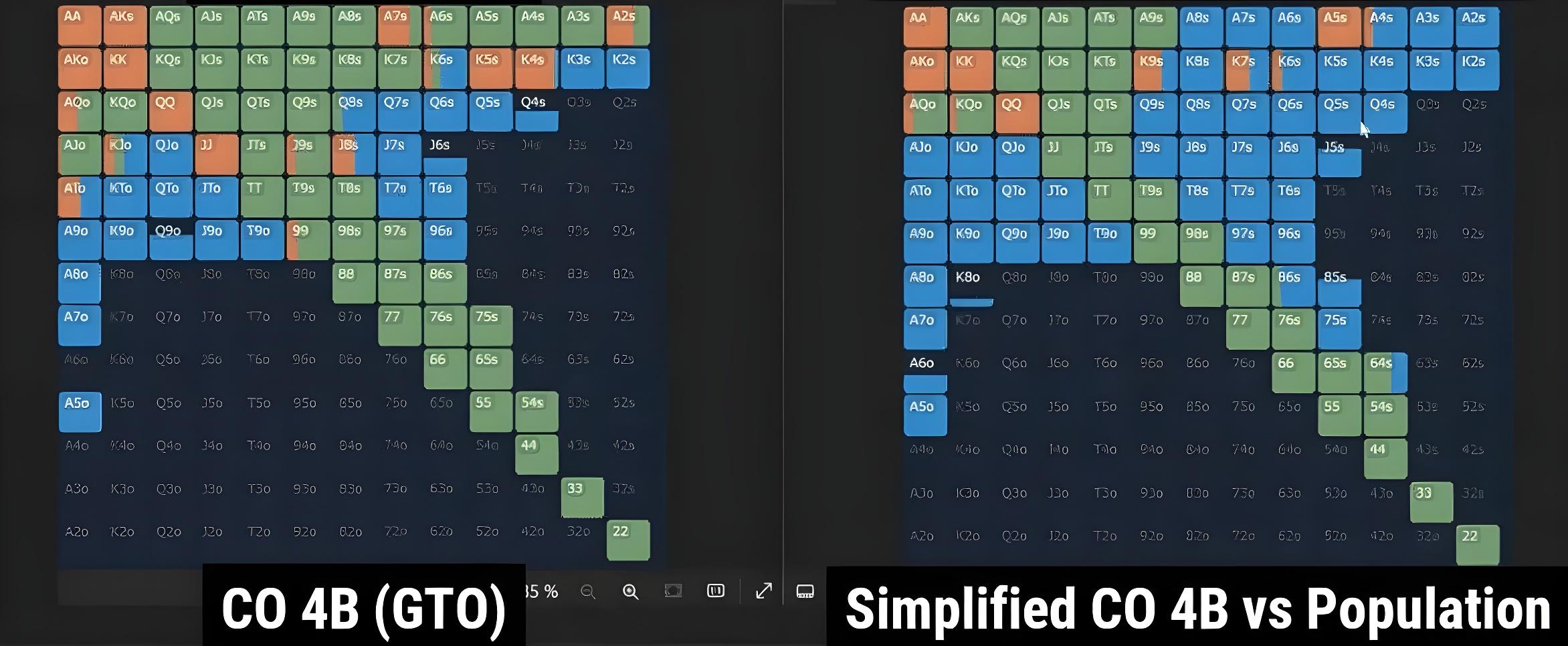
- (Catoff GTO 4-beta and simplified 4-beta range against the field)
The result is a greatly simplified 4-beta strategy that removes many mixed-frequency call/fold/4-beta lines from the simulator. Rather than playing a complex blended strategy with hands such as KJo and K6s, the 4-beta range on a simplified strategy against the field provides a clear solution for virtually every hand in the range. In general, Katoff's reaction is more secretive: fewer calls and 4-bets. The 4-beta range itself is much more Velu-oriented: just a few A-x bluff hands, such as the A5s, AQo, and K9s, balance the value on QQ+ and AKo. This range can be used against any opponent you know little about — and effectively.
Every time someone doesn't play GTO, either because they don't follow the frequencies or the composition of the range, your task is simplified. Try as a workout yourself to take any available solver and independently fix the range of players on your limits to come up with more exploitative counter-strategies based on the style of play of your opponents.