

Translated with the help of AI. We apologize for any errors and would appreciate your help in correcting them.
Translated by order of the educational portal university.poker
Article by Andrew Brokos, original source: GTO Wizard
On some flops, the preflop raiser simply cannot place an extended bet too often. The solver GTO strategy is already to put on its entire range. But in some cases, everything is so subtle that such a simplification - put on the entire range - does not open up significant opportunities for operation. This becomes even more important when the blinds respond with appropriate aggression.
However, the raiser should not bet even half of its range on less profitable flops. Because if he starts bet too often in such situations, the villain may start to exploit him in different ways, some of which are more intuitive and others less. In this article, we will conduct several experiments using the hand lock function to learn how to exploit aggressive players who make excessive bet extensions.
1. Experiment
These simulations are based on preflop bands in a ChipEV environment in 30bb stack depth, single raise pot. One player made a raise on the button, the other player made a call on the BB. Although the general principles of how to exploit an opponent (being in a position against him) who bets too often are applicable to other scenarios, the depth of the stack and the positions make these principles particularly clear. BB, acting first, can make a check or a bet of 33%, 66% or 100% of the pot.
The single size of the extended button bet is 33%, and we will experiment with what happens when we set the solver to bet its entire range. A player on BB can react to this bet by leveling, folding, or twisting even more. If he makes a raise, BTN will have the same opportunities. Options on subsequent streets are determined using the "Automatic" function.
2. Low bound board
In the equilibrium strategy, dock betas are an important part of the BB strategy on the board. He 

 has a lot of 6-x hands that are strong enough to play a pretty big pot on the flop, but he loses a lot of equity on the late streets, since turn and river will almost certainly have overcards.
BB bet strategy for donk
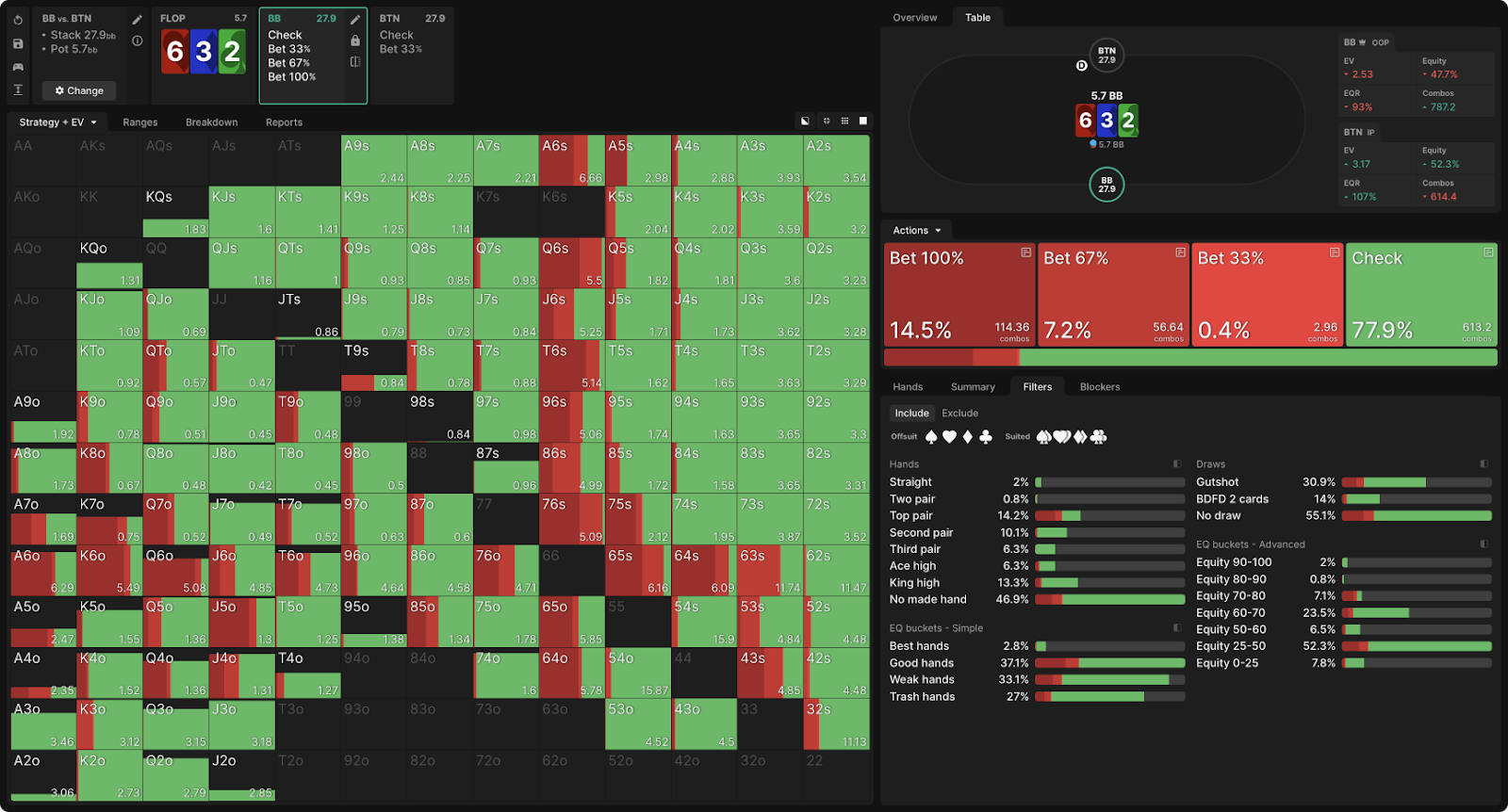
If BB checks out, BTN will bet 62.5% of its range, after which BB will respond mostly with a call, racking up only 11% of its range. So many of his best hands entered the donk beta range that they did not have enough valley left to balance the wider checkraise range.
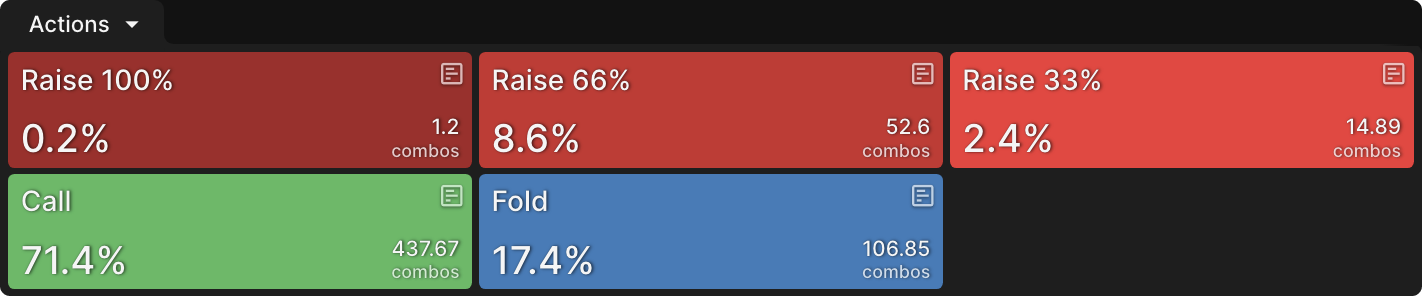
BB makes a dock bet to prevent BTN from making a return check on the flop. If there are notes on a player on BTN that he is never going to make such a return check, then BB prefers a check instead of a donk to encourage BTN to make a bet itself.
When we in the solver fix that BTN will put its entire range, BB has no incentive to dunk bet. The main reason for BB to place a bet with a hand like J6 (suited and not) is to prevent BTN from making a return check on the flop. If BTN is never going to do this, then BB prefers to wait to induce many weaker hands in the BTN range to bet.
Then he can cut all these top pairs to get even more money in the bank and deprive equity of live overcards BTN:
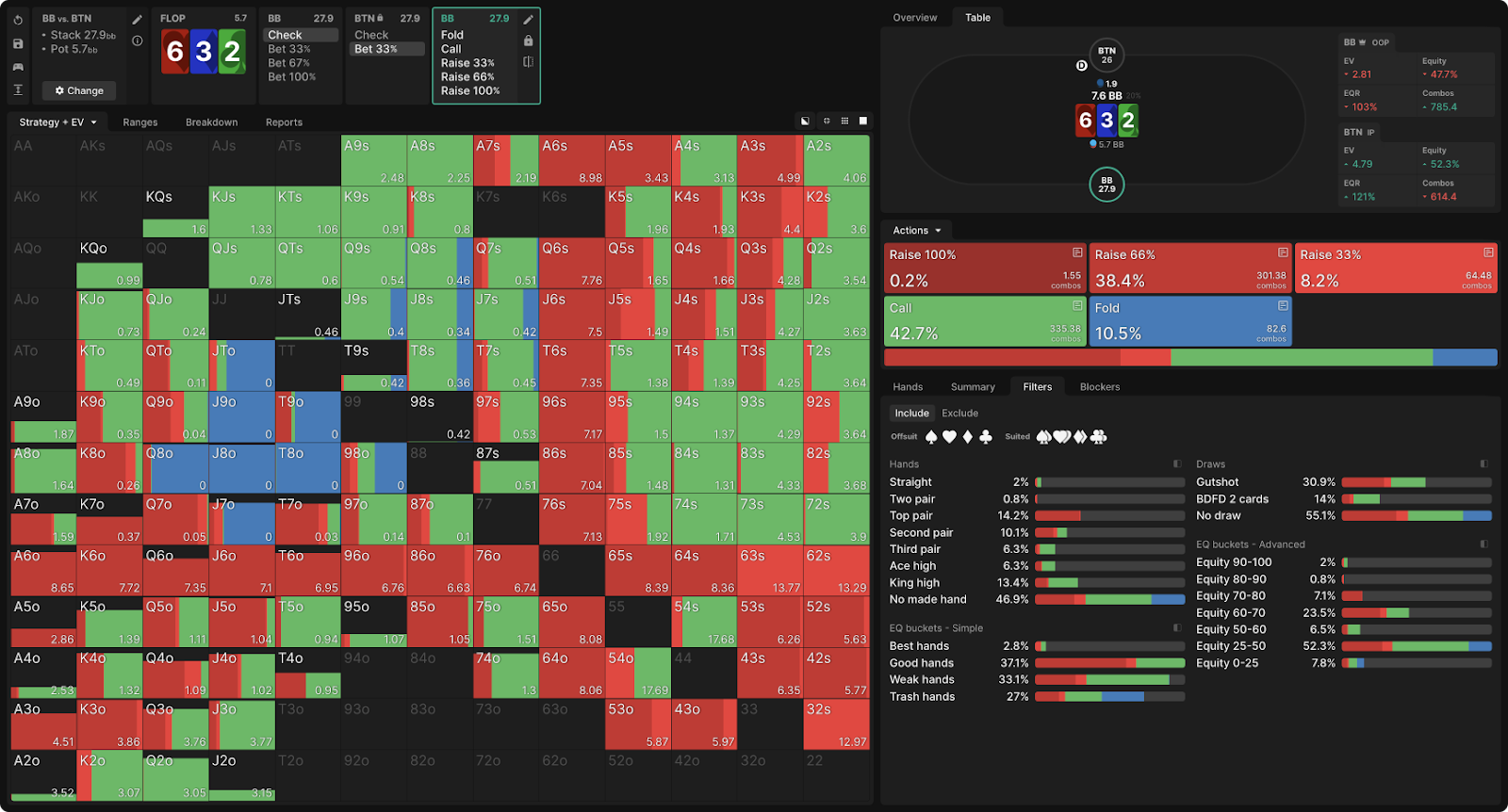
Note that the main exploit for a player on BB is to raising more, not to call more. Callers don't really “penalize” a player on the bet for betting too often, as they can still realize the equity of their bluff on the turn and possibly also on the river. And these raises are not pure bluff. Indeed, BB still has a fold range, which means that the raise of any two cards will not necessarily be profitable. Rather, it is a rise range with a large velly, centered around the top pair (BB raises literally any of its older pair, the second pair with a good kicker and the lower pair with a gatshot). These hands are not a bluff, but they still benefit from fold equity because they are very vulnerable to getting knocked out on the late streets.
The

raise of the top pair here is a bit like the raise with AK on preflop: you probably have the best hand, but you are still happy to get folds. You are so far ahead that the profitability of the raise does not depend on the reaction of your opponent. If it often folds, you benefit from depriving the equity of many hands, which have a probability of about 25% against you, which can intensify and move you. If he calls often, he invests far behind. And if he often raises your bet, your hand is strong enough to reach the showdown. The only thing opponents can't do is constantly have a hand better than yours. Check-raise of the top pair benefits from an already made mistake (too frequent bet on the flop), and not from the mistake that you hope that the villain will make in response to your raise.
The raise of the top pair here is a bit like the raise with AK on preflop: you probably have the best hand, but you are still happy to get folds.
However, after such frequent bets, it will be easy for BTN to make a mistake in response to a raise from BB.
In particular, it would be easy for him to fold because the GTO recommendations for him entail some terribly ambitious and illogical calls and raises:
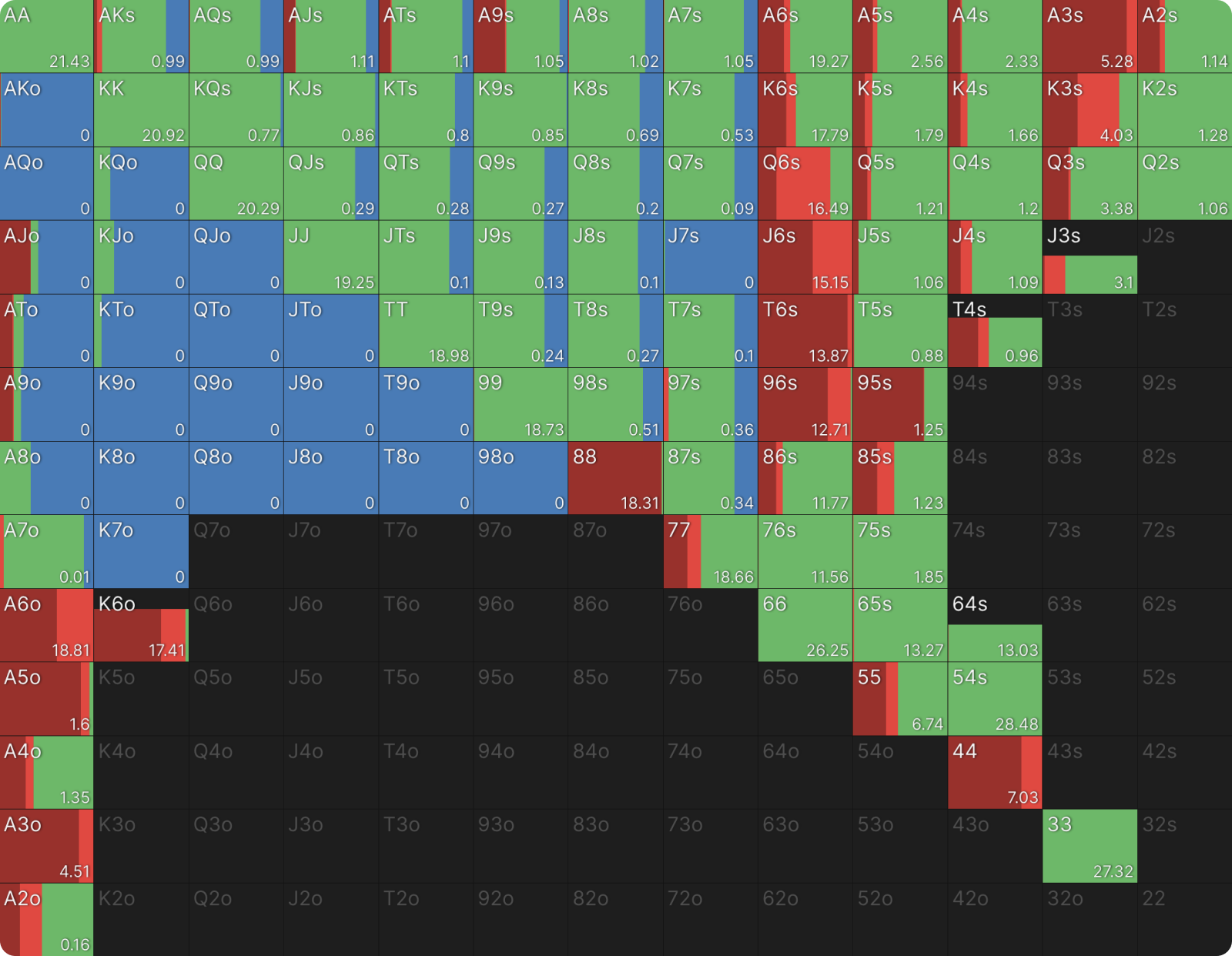
Is your typical villain going to call a check-raise with 
 ? Is he going to launch AJo?
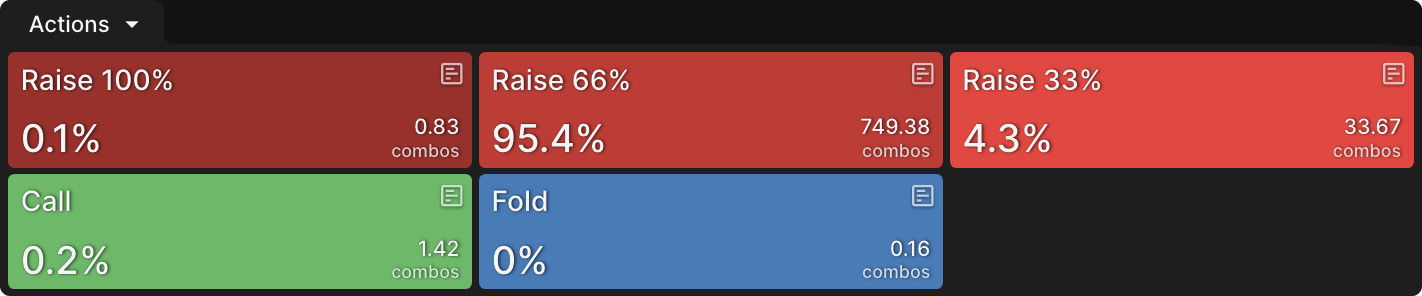
If we set up the solver so that BTN drops 50% of hands on this check-raise, and not 44%, then BB will be able to raising almost any two cards profitably:
Let's sum up the results of actions against an opponent who makes cbet too often:
- Stop doing dock betas.
- Check-raise more aggressively on a thin veil and for value protection.
- If he falls on your raise, which will be quite common, if he makes the mistake of betting so often with weak hands, then you can also bluff the check-raise more often.
3. Coordinated medium flop


 – another board on which the BTN equilibrium strategy assumes many checks of approximately 40% of its range. Unlike the flop, BB doesn't make donk betas. Faced with a counter-bet of 33% of the pot, BB check-rate with a moderate frequency, especially with a top pair with a good kicker. Although the older pair is less vulnerable to overcards on this board than on the board, they are more vulnerable to cards completing a straight on the turn, which may result in a smaller win. Therefore, BB folds the lower 30% of its range.
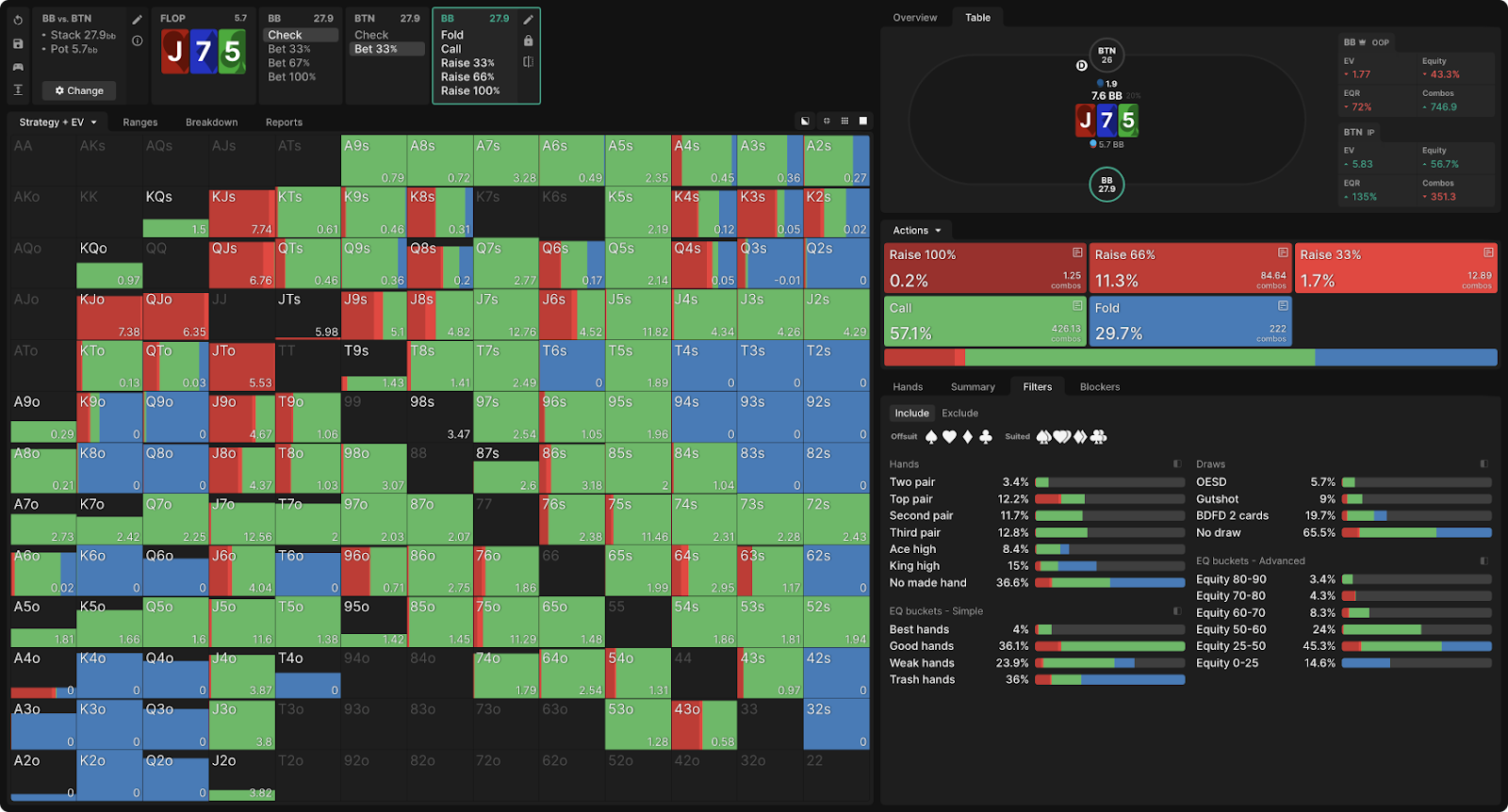
If we set up the solver so that the BTN will bet, then BB will fold a little less, but, as is the case with the board , the main change is the frequency of his raise, which increases almost threefold.
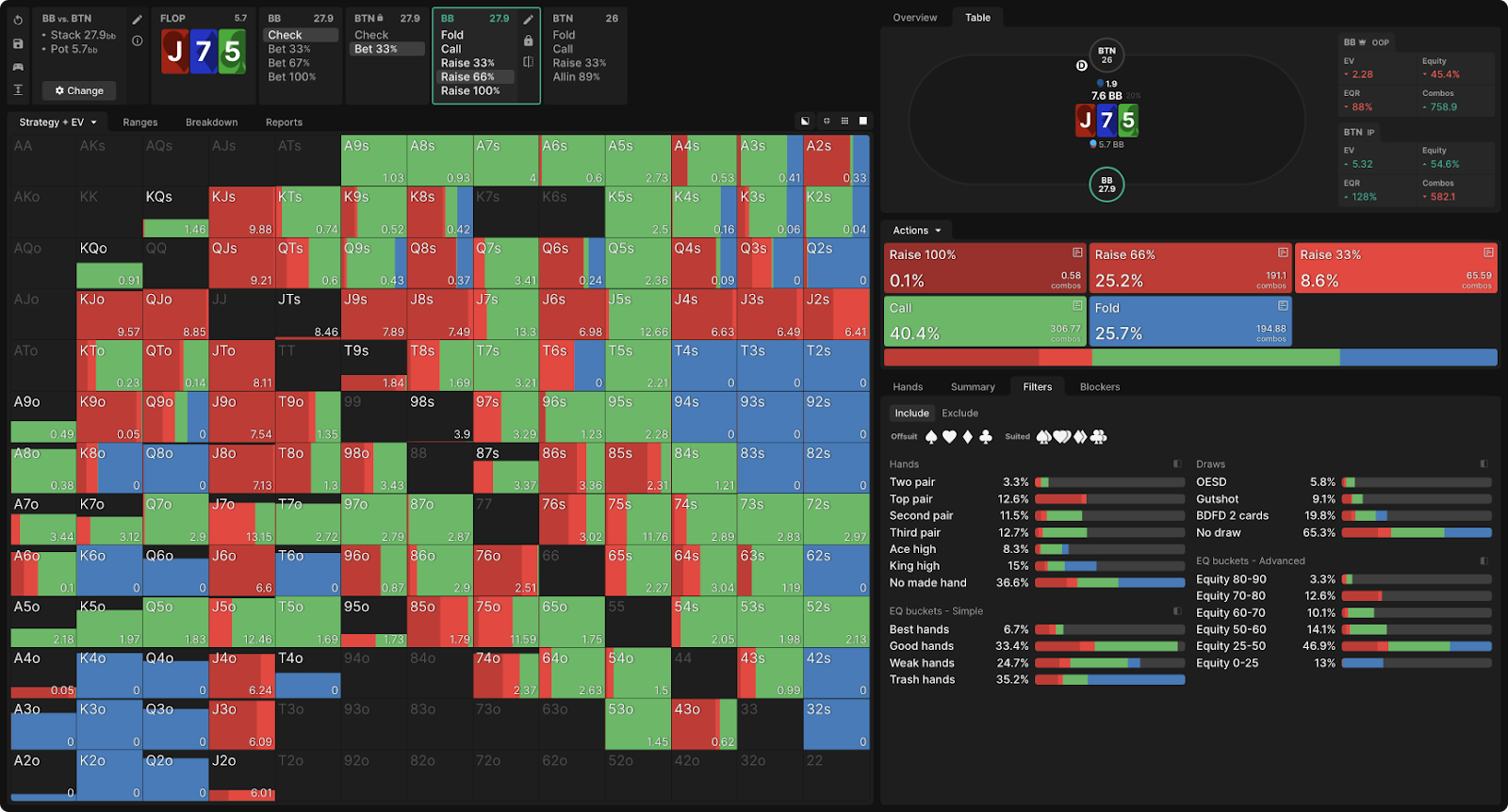
He raises all his older pair, as well as much more backdoor straights and flush draw. It will basically slouple the two pair, which requires the BTN to hit the top pair. As for these folds, they can easily become profitable bluff raises. GTO Wizard's response to the check-raise of 66% of the pot is a net call to KQo and with a lower pair. Against real opponents in the real game who are less likely to find such calls, you should raising rather than dropping your worst hands.
4. Senior card, junior pair
This effect is most pronounced on the board

 , where the frequency of equilibrium continued bet on BTN is only 42.8%. Despite this, BB responds with an aggressive strategy of small raises with more than a third of its range, including most of its thrips and Kx.
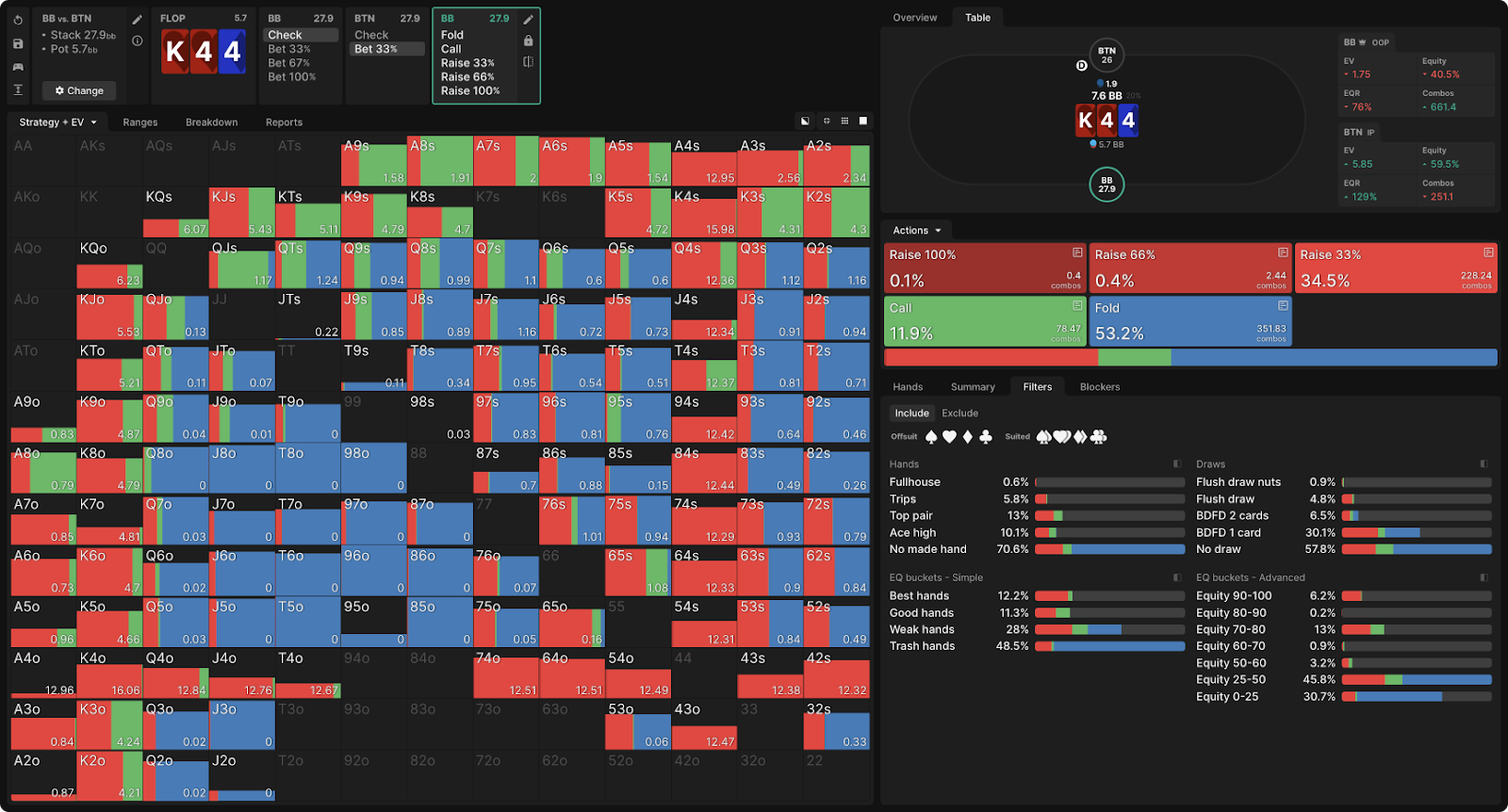
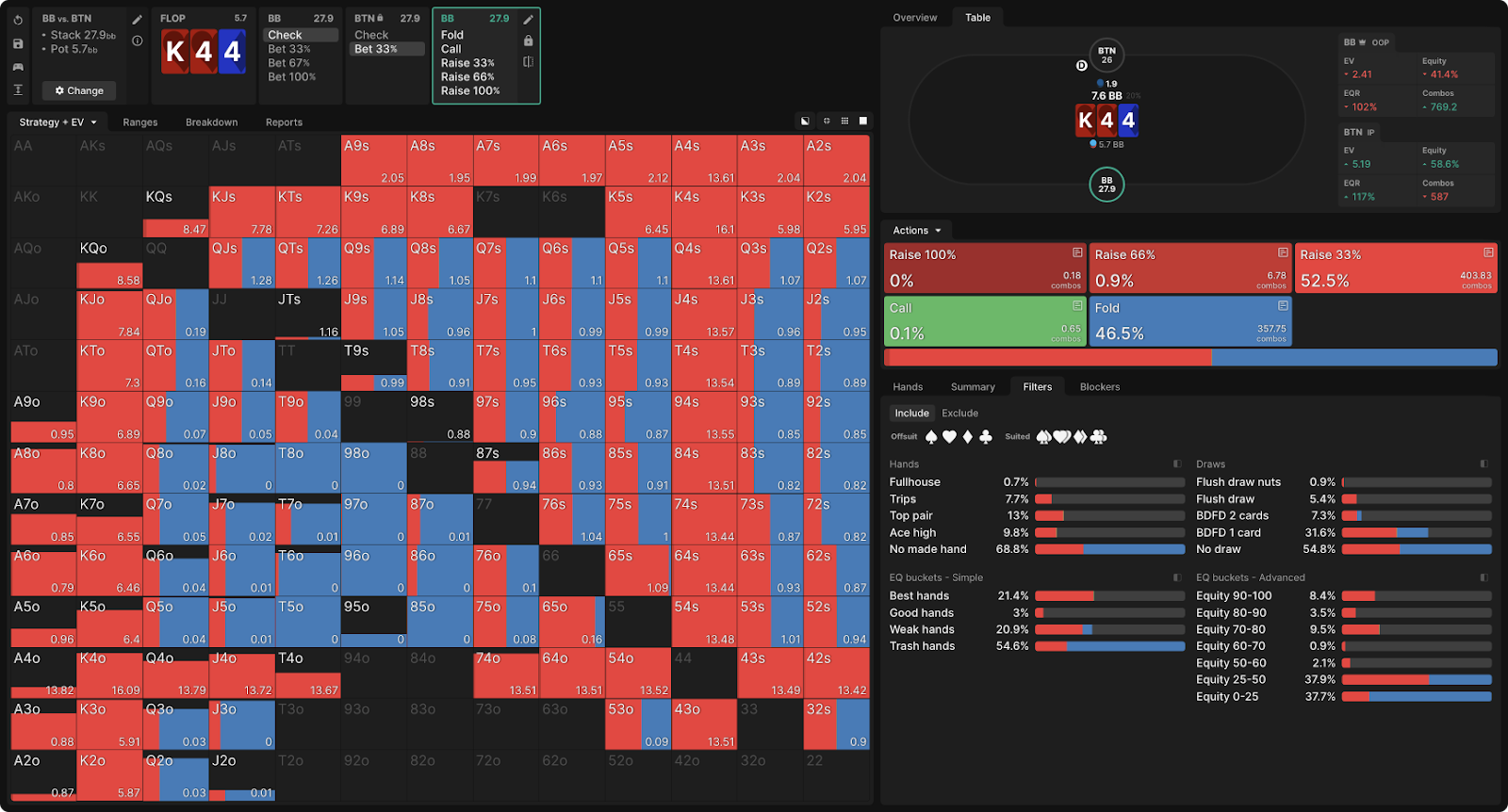
When we adjust the solver so that the button will put its entire range, we again do not see donk betas from BB (it donk beta about 13% in equilibrium). We also don't see any call.
Almost all of the increase in the frequency of BB raises is due to the hands that collided in equilibrium, and not due to the hands that folds the cards:
5. In-Depth Stacks
In this last experiment, we keep the same bet options, but change the effective stacks to 100bb. Will this make the call more appealing on the board if weaker top pairs are no longer strong enough to play on the stack? Will this make large raises more attractive, since BB will want to overclock the pot more often with its thrips?
Let's find out. With a 100bb stack, the solver does not involve larger raises, but includes a small donk-bet range of about 6% of the hands, mostly with 4s: BTN puts 47.4% of its range after the BB check, which is slightly more than 42.8% in the 30bb depth scenario. BB still prefers a small raise size, but as predicted, the top pair (King-x) now makes a lot more calls as the stack is not as attractive for billing (due to the higher SPR).
This supports a wide call range that also includes some pocket pair, hands with higher cards, and backdoor hands:
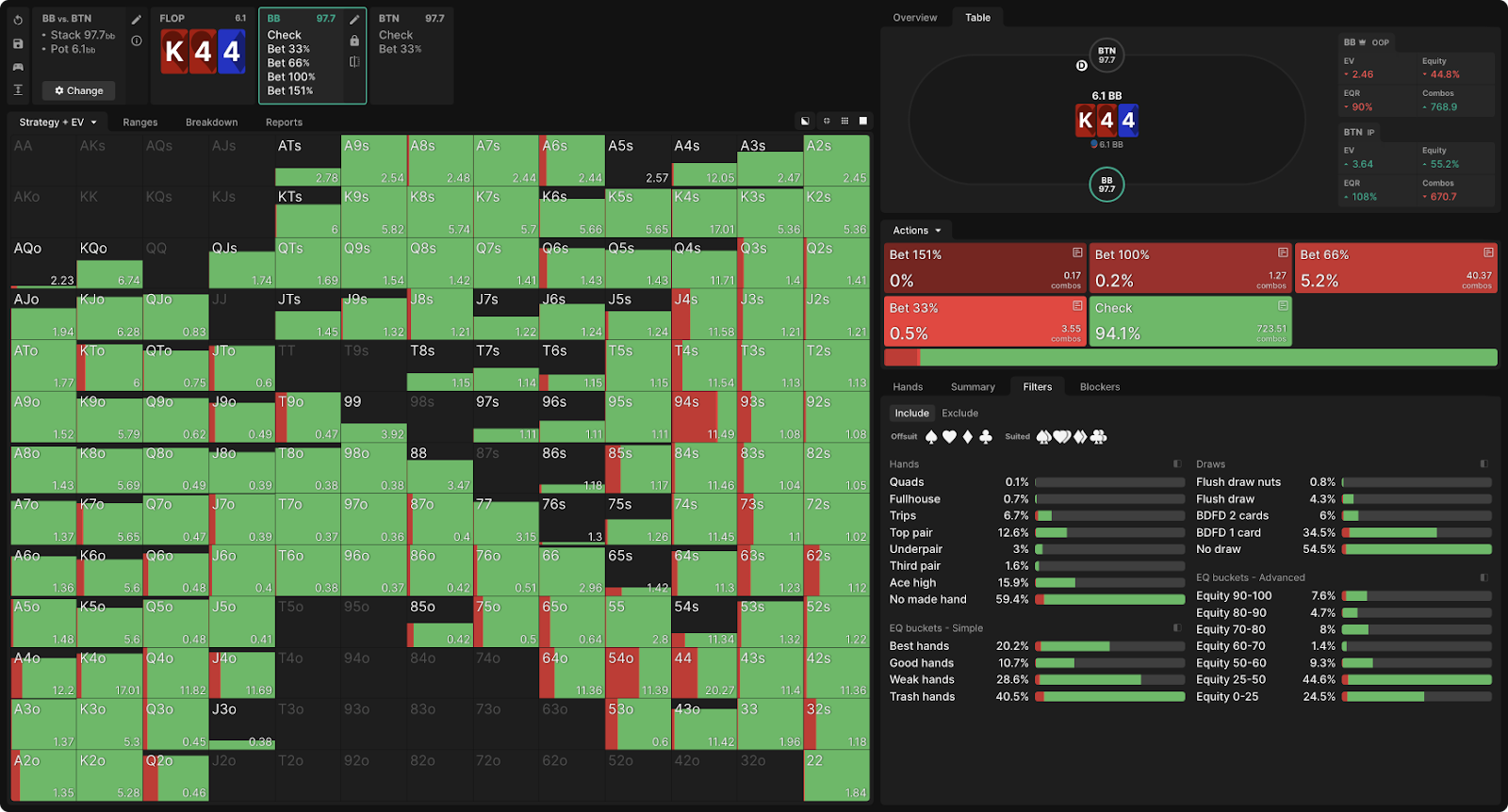
Most of these calls are offered when we fix in the solver that the BTN will bet the entire range.
BB still almost exclusively uses the small size of the raise, but most of its calls have turned into raises:
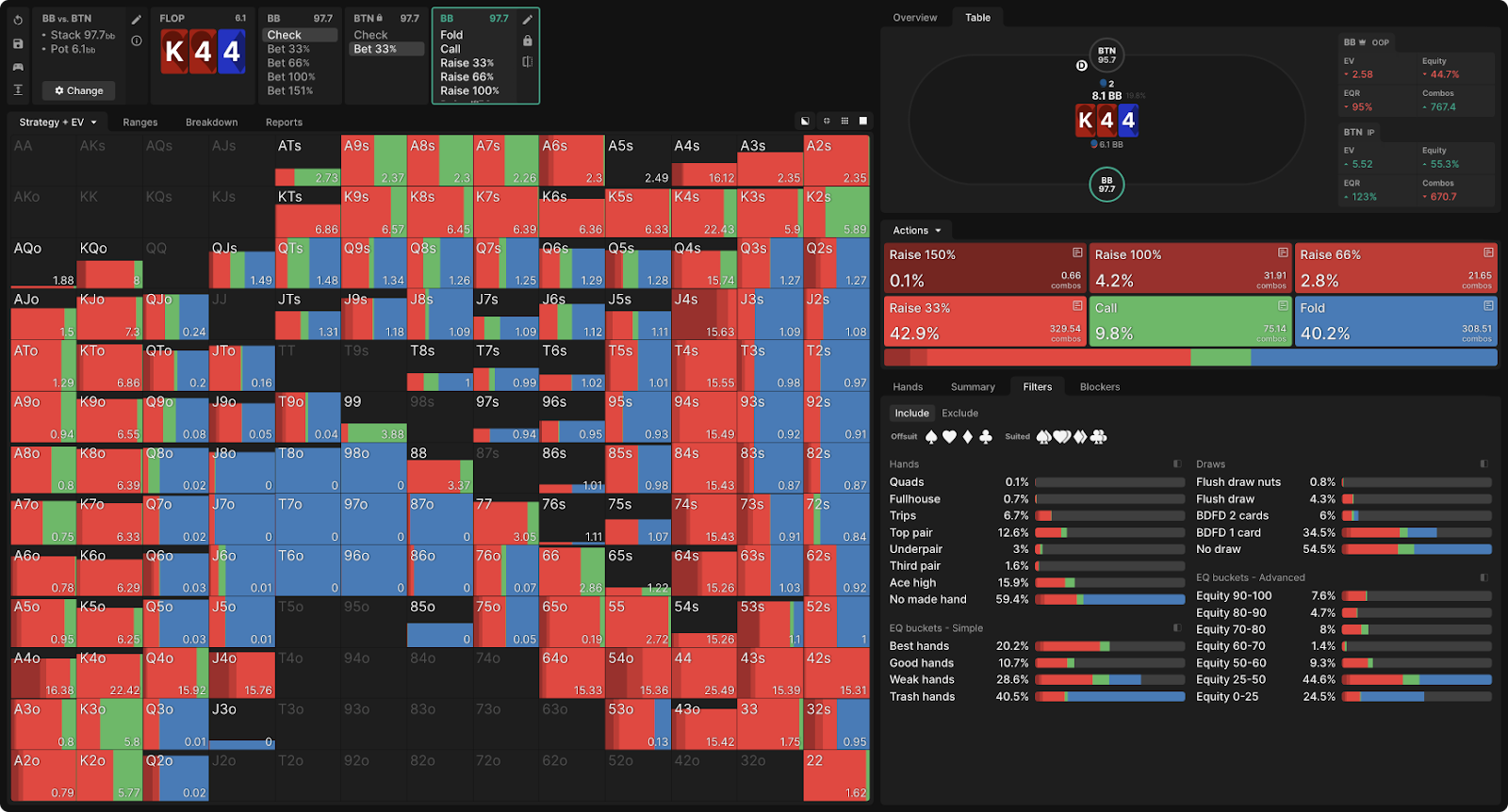
Hands like QT with backdoor flush draw and A8o have too much equity to fold on this flop. Raise is tempting because it benefits from denying the equity of the opponent, even when the raiser himself is ahead, but it is risky because these hands work very poorly against the best hands of BTN. Once we expand the BTN bet range, these better hands will account for a much smaller share of it. The equilibrium bet range of BTN already included most of its best hands, so these “extra” bet comes almost entirely from weaker hands. This alters the incentive for hands like A8 and QT, which carry little additional risk but can reap much greater rewards from raising in such a large number of an opponent's weak hands.
6. Conclusion
The main conclusion from this article is to beat the enemy with his own weapon! Raise is the most important technique against overly aggressive opponents.
This is especially true on the early streets and when you are out of position. A call instead of a raise allows them to realize the value of both their hand and their position on subsequent streets, mitigating the magnitude of their mistake. The few hands you could have are strong enough to take such a risk, and even if you have such a hand, you will still have an incentive to raising so many other hands that you should have no problem making a decision.
The best candidates for these “extra” raises are not your worst hands, but rather the middle hands of your range, hands that might otherwise make a call against a less aggressive opponent. Like AK on preflop, these hands benefit from folds, but work reasonably well against calls.
Bluff raises can also be profitable, but this will require your villain to make an additional mistake in the form of an overfold, which is easier to do after a bet with too many weak hands. Finally, it is important to understand the theory behind why dock betas are a bug. This is not necessary when your villain is betting too often.

If you expect your villain to make a mistake in some possible future situation, you have an additional incentive to adapt your game at earlier stages of decision making to increase the likelihood that your villain will make the mistake you intend to exploit.